

Share this
by Meghann Butcher on March 28, 2026
Golf in 2026 is not stabilizing. It's evolving. Participation continues to grow, the customer base is shifting, and retail dynamics are changing in ways that favor brands that simplify buying and meet demand earlier in the cycle.
For brands selling into green grass shops and specialty retail, the opportunity is real, but so is the complexity.
Below are the key trends shaping golf and golf retail, with direct implications for wholesale strategy.

1. Participation Growth Is Sustained, Not Temporary
The post pandemic surge has become a durable shift in behavior.
-
US on course participation exceeded 29 million golfers in 2025, continuing a multi year growth streak.
-
Rounds played reached record levels, with more than 80 million rounds logged.
-
Total rounds remain significantly above pre pandemic levels.
Implication for brands:
Demand is not the constraint. Execution is. Brands that reduce friction in ordering, inventory visibility, and fulfillment will capture more of this sustained volume.
2. The Golfer Is Changing Faster Than Most Brands Are
The composition of the golfer is evolving in ways that many brands have not fully adapted to.
-
Women now represent a record share of on course golfers.
-
Younger players are driving growth in both participation and spend.
-
There is a large pool of interested but under engaged players who represent future demand.
Implication for brands:
Assortment strategy needs to evolve. Merchandising built for legacy buyers will underperform against a more diverse and experience driven audience.
3. Golf Retail Is Becoming Experience Driven
Retail is shifting from transactional to experiential.
-
Off course formats such as simulators and entertainment venues are expanding the customer base.
-
Shorter and more flexible play formats are increasing accessibility.
-
Golf is increasingly positioned as a social and lifestyle activity.
Implication for brands:
Retailers need flexible ways to sell. Event driven selling, curated assortments, and digital storefronts are becoming core capabilities.
4. Merchandise and Logo Apparel Are Surging
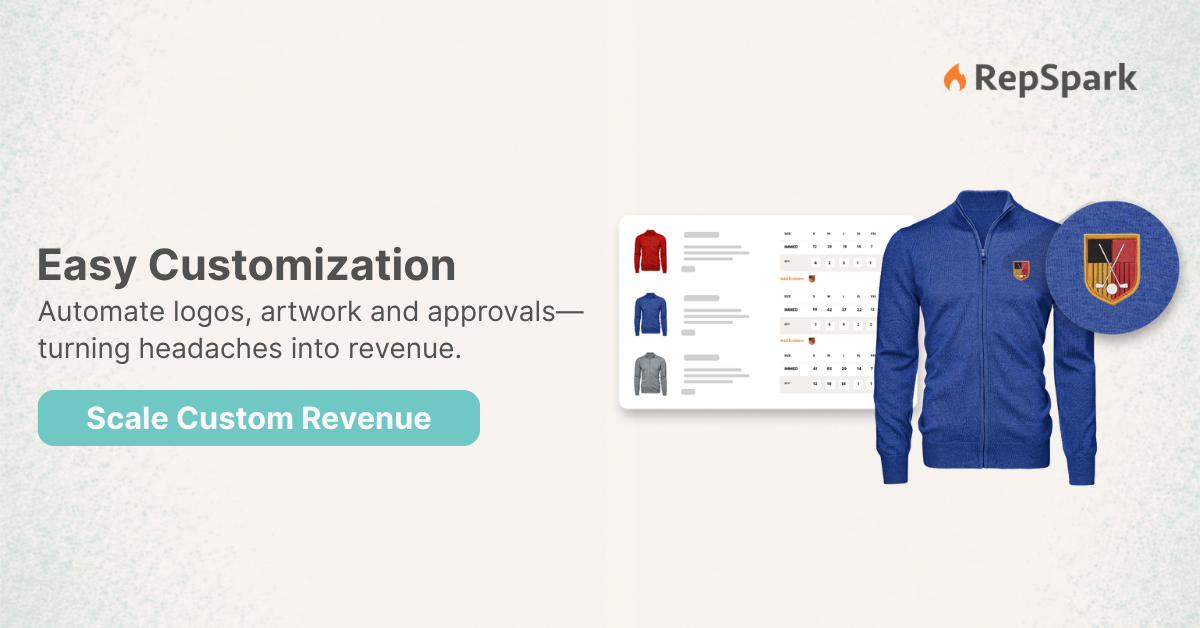
Golf retail is no longer just about equipment. Apparel and branded merchandise are major revenue drivers.
-
Logo driven apparel continues to gain traction across clubs and events.
-
Pro shops are evolving into full retail environments with significant merchandise revenue.
-
Digital channels are expanding access beyond physical locations.
Implication for brands:
The opportunity extends beyond wholesale distribution. Brands need to control how they show up in retail and enable direct to consumer extensions through their retail partners.
5. Product Expectations Are Increasing
Consumers are buying with more intent and expecting measurable value.
-
Custom fitting and performance driven equipment continue to grow.
-
Players are adopting more data driven tools and technologies.
-
Convenience and accessibility are influencing purchasing decisions.
Implication for brands:
Product alone is not enough. Education, guided selling, and digital merchandising are required to convert demand.
6. Growth Is Strong, but Complexity Is Increasing
The macro outlook for golf is positive, but operating conditions are becoming more complex.
-
The global golf equipment market continues to grow steadily.
-
Tariffs and supply chain pressures are impacting pricing and margins.
-
Operational inefficiencies remain a constraint across many brands.
Tariff refunds can provide meaningful financial relief for brands, with the US government required to pay interest on refunded duties, accruing daily from the original deposit date. This can materially improve cash flow for brands with capital tied up over long periods.
Implication for brands:
Growth does not guarantee profitability. Margin management, pricing agility, and operational efficiency are now competitive advantages.
7. Wholesale Is Becoming a Strategic Advantage
In an uncertain environment, wholesale is emerging as a stabilizing force.
-
High volume, repeatable orders provide predictability.
-
Retail partners remain the primary point of discovery and trust.
-
Strong retailer relationships drive consistent revenue.
Implication for brands:
Wholesale is not legacy. It is leverage. But it only works if the buying experience is easy, fast, and aligned with how retailers operate today.
8. Golf Retail Is More Resilient Than Headline Data Suggests
Not all retail signals are aligned. While broader industry data shows softness in some categories, top performing golf shops are growing by adapting faster than the market.
According to the Association of Golf Merchandisers 2025 Membership Survey:
-
74 percent of golf shops reported YoY sales growth in 2024
-
Nearly 1 in 5 shops achieved double digit growth above 11 percent
-
Average gross merchandise sales increased significantly across top operators
-
Online sales penetration increased, with 50 percent of shops selling through digital channels
-
Leading shops are aggressively adopting technology to streamline operations and improve performance
This contrasts with broader market data showing declines in equipment and apparel sales, indicating a widening gap between high performing retailers and the rest of the market.
Implication for brands:
The opportunity is not evenly distributed. Growth is concentrating among retailers that invest in merchandising, digital capabilities, and operational efficiency. Brands that align with these retailers and support how they sell will capture disproportionate share.
What Winning Brands Are Doing Differently
The gap is widening between brands that adapt and those that do not.
The brands outperforming in 2026 are focused on three things:
- Making ordering easier for reps and retailers
- Activating demand through events and branded merchandise
- Using technology to gain visibility across sales, inventory, and customers
That's where RepSpark shines. Everything else is secondary.
Sources
The Golf Wire: Association of Golf Merchandising (AGM) 2025 membership survey
https://thegolfwire.com/2025-agm-membership-survey/
National Golf Foundation (NGF) research and participation data
https://www.ngf.org/the-clubhouse/golf-industry-research/
USGA participation and rounds data
https://www.usga.org/content/usga/home-page/articles/2026/01/golf-boomed-2025-more-than-82-million-rounds-posted.html
Golf Monthly equipment and consumer trends
https://www.golfmonthly.com/features/the-7-biggest-golf-gear-trends-in-2025
Business Insider golf retail analysis
https://www.businessinsider.com/golf-clubs-merch-hype-logo-collecting-sports-revival-2025-9
Global Market Insights golf equipment market
https://www.gminsights.com/industry-analysis/golf-equipment-market
Shop Eat Surf Outdoor tariff refund analysis
https://shop-eat-surf-outdoor.com/news/tariff-refunds-crucial-advice-from-a-former-u-s-customs-attorney/617952/
FAQ: Navigating the 2026 Golf & Green Grass Retail Landscape
What are the top golf participation trends for 2026?
Participation has reached a record-setting baseline with over 29 million on-course golfers and an all-time high in total engagement (including off-course simulators and entertainment venues). The most significant shifts include record participation from women and girls (up 46% since 2019) and a surge in younger players who prioritize a "social-first" lifestyle approach to the game.
Why are AGM-member golf shops outperforming the broader market?
According to the 2025 AGM Membership Survey, 74% of AGM-member shops reported sales growth in 2024, contrasting with general market declines in equipment and apparel. This resilience is attributed to high technology adoption—80% of these top shops use RepSpark—enabling them to move faster, manage inventory more accurately, and sell through digital channels (now utilized by 50% of shops).
How does tariff volatility affect golf brands in 2026?
Tariffs and supply chain pressures have made margin management a top priority. A critical financial lever in 2026 is the pursuit of tariff refunds. Brands are increasingly working with specialized counsel to recover duties on misclassified goods, with the U.S. government required to pay daily interest on original deposits, providing essential cash flow for operational reinvestment.
What is the "K-shaped" economy in golf retail?
The "K-shaped" economy describes a market split: high-performing, intentional operators are seeing double-digit growth, while legacy-minded shops are stagnating. Top retailers are succeeding by focusing on quality over price, experiential retail (simulators and events), and providing an "ease of purchase" that matches the direct-to-consumer (DTC) experiences golfers have elsewhere.
How are brands like Oakley and Ray-Ban using technology to scale?
Global leaders (under EssilorLuxottica) are moving beyond traditional rep appointments by using branded customer Microsites. These portals provide always-on access to assortments, allowing pro shops to place "at-once" reorders and event-driven purchases (like tournament tee gifts) 24/7, capturing incremental revenue that manual systems miss.
What role does AI play in 2026 golf wholesale?
AI has moved from a futuristic concept to a practical tool for demand forecasting and error reduction. Through platforms like RepSpark Flow, 67% of B2B firms now use AI to flag expiring drafts, recognize unusual order patterns, and ensure that pro shops are buying the right size curves for their specific geographic demographic.
Golf Retail Scorecard: 2026 Market Pulse
| Metric | Industry Trend | Winning Brand Strategy |
| Participation | 29M+ On-Course (Record High) | Focus on diverse assortments (Women/Juniors) |
| Sales Performance | 74% of AGM Shops Growing | Support digital self-service & pro shop tech |
| Retail Format | Shift to Experiential/Social | Use Microsites for events & simulator venues |
| Operations | 80% struggle with inventory | Integrate ERP to B2B Portal for live ATS |
| Financials | High Tariff Pressures | Pursue Tariff Refunds & Daily Interest |
Strategic Takeaway for Golf Brands
The "magic" of golf wholesale in 2026 is actually math. By reducing the friction between your warehouse and the pro shop floor, you aren't just selling product—you're providing the certainty that today's high-performing merchandisers demand. The goal is to move from a legacy "sales-first" model to an "operations-first" reality that protects your margins and your retail relationships.
