

Share this
by Tim McLain on June 11, 2026
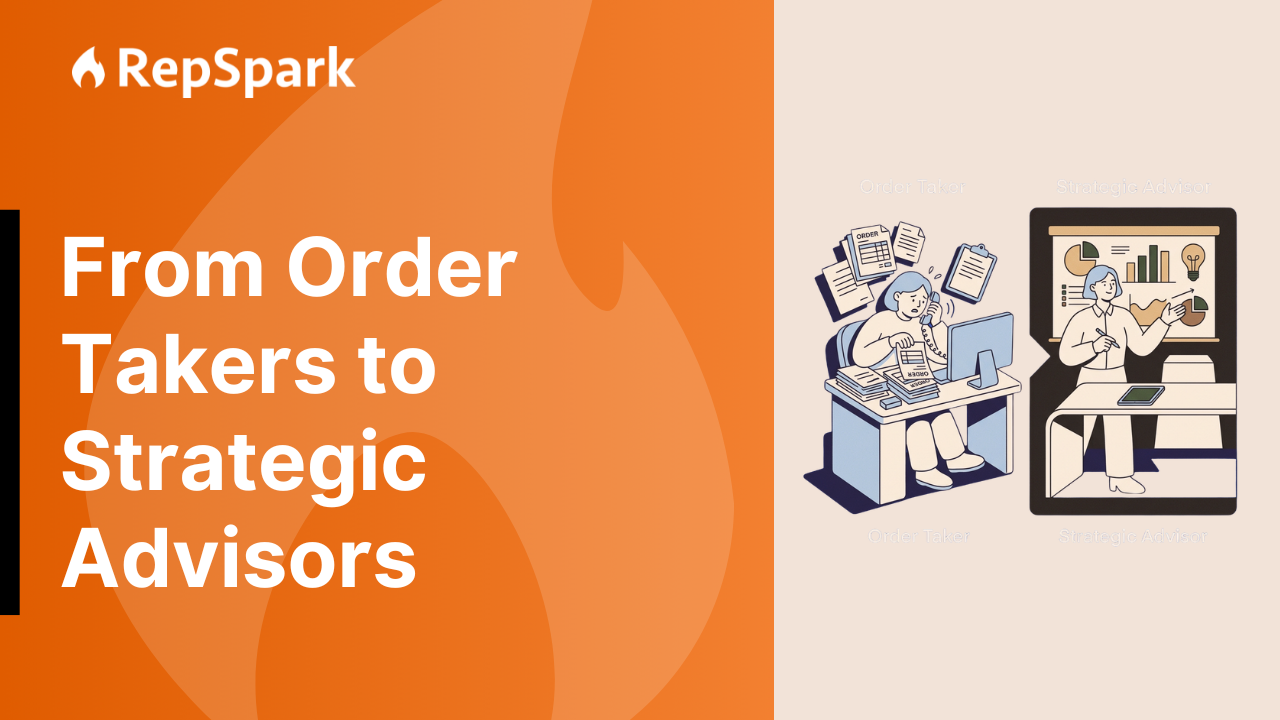
Most B2B sales reps aren't underperforming because they lack hustle. They're underperforming because the brand they represent has handed them a line sheet and a price list and called it enablement.
When a rep walks into a buyer meeting armed with nothing more than availability and a catalog, the conversation can only go one direction: the buyer tells the rep what they already planned to order, the rep writes it down, and everyone calls it a sale.
That's order-taking. And it's leaving margin, upsell, retention, and competitive advantage on the table in every single account.
The reps who become true strategic partners, the ones buyers call before they make a merchandising decision, aren't a different breed of salesperson. They're the same people, equipped differently. The transformation from order taker to strategic partner is almost always a brand and enablement problem, not a talent problem.
Let’s break down the difference, why reps default to order-taking, and the specific levers your brand can pull to change it.
Order taker vs. strategic partner: what's the difference?
An order taker processes demand that already exists. A strategic partner creates demand, shapes assortments, and helps the buyer grow their business. The order taker reacts to what the buyer wants; the strategic partner tells the buyer something they didn't already know about their own business.
That distinction sounds simple, but it shows up in nearly every dimension of how a rep operates:
|
Dimension |
Order Taker |
Strategic Partner |
|
Role in the conversation |
Records what the buyer requests |
Advises on what the buyer should do |
|
Information advantage |
Knows the catalog |
Knows the buyer's sell-through and category trends |
|
What they sell |
Individual SKUs |
Assortments, stories, and outcomes |
|
Time spent |
On order entry and admin |
On strategy and relationship |
|
How the buyer sees them |
A vendor to negotiate down |
An expert to consult |
|
Impact on the account |
Maintains existing volume |
Grows category share and basket size |
The strategic partner isn't working harder on the same task. They're doing a fundamentally different job, and that job is only possible when the brand puts the right tools in their hands.
Why do reps default to order-taking?
Reps slide into order-taking because the path of least resistance points there. Four root causes show up again and again:
They don't have access to the right data. A rep who can't see what's selling through at the retailer, what's sitting in stock, or how a category is trending can't say anything more insightful than "what would you like to reorder?" Without data, advice is just opinion, and buyers don't pay for opinion.
They don't have a compelling brand story to tell. When the only assets a rep carries are spec sheets and prices, the conversation collapses into price. Reps who can't articulate why a product matters, who it's for, and how it fits an assortment have nothing to sell but availability.
The transactional work eats their time. If a rep spends most of every meeting keying in orders, chasing reorders, and fixing entry errors, there's no time left for strategy. The administrative load crowds out the consultative work.
They have no visibility into the buyer's business. The strategic partner walks in already knowing where the buyer is over-indexed, where they have gaps, and what's working in comparable doors. The order taker walks in blind and asks the buyer to fill in the blanks.
Notice that none of these are personality flaws. They're all things the brand controls.
The core argument: your brand does the heavy lifting
Here's the shift that matters: reps become strategic when the brand equips them to be strategic. The intelligence, the story, the data, and the frictionless tools don't originate with the individual rep. They originate with the brand and flow to the rep. A rep can only be as consultative as the platform behind them allows.
This reframes "rep development" away from sales training alone and toward enablement infrastructure. You can send reps to every consultative-selling workshop in the world, but if they go back into the field with a PDF line sheet and no data, they'll be order takers by Friday. What brands need to do to change this is to operationalize consultative selling, baking it into the tools reps use every day.
Five levers that turn reps into strategic partners
1. Equip reps with data that makes them smarter than the buyer about the buyer's own business
This is the single highest-leverage move. When a rep can open a meeting with sell-through data, replenishment signals, and category trends specific to that account, the dynamic flips. The rep is no longer asking what to write down. They're showing the buyer where the opportunity is. Real-time inventory and sell-through analytics convert a rep from a note-taker into the most informed person in the room.
2. Give them a digital catalog and virtual showroom
When selling starts from a static line sheet, the conversation starts at price and SKU. When it starts from a digital catalog or virtual showroom, it starts from story, assortment, and merchandising. The rep can build a curated, visual buy that reflects the buyer's doors instead of reading off a list. The format of the tool shapes the level of the conversation.
3. Automate the transactional work
Every minute a rep spends on manual order entry, reorder processing, and error correction is a minute not spent advising. Automating the transactional layer, such as fast order entry, easy reorders, and accurate availability, isn't just an efficiency play. It's what frees the rep to do strategic work at all. Remove the friction, and you reclaim the time consultative selling requires.
4. Provide assortment and merchandising recommendations reps can bring as advice
A rep who can walk in with a data-backed assortment recommendation, such as "based on your sell-through, here's the buy that fills your gaps and leans into what's working," is operating at a different level than one who waits for the buyer to decide. When the brand generates these recommendations centrally, every rep can deliver expert-level merchandising guidance, not just the top performers.
5. Arm them with the brand narrative
Consistent storytelling assets, including the why behind the product, the positioning, and the customer it serves, let every rep reinforce the brand's value in every conversation. This is how reps sell on value instead of defending on price. When the narrative is built into the selling tools, it travels with the rep into every meeting.
What "good" looks like
Picture the same rep, same buyer, two different setups.
As an order taker: The rep arrives with a line sheet. The buyer flips through, says "we'll do the same as last season plus a few of the new colors," and the rep keys it in. Twenty minutes, transaction complete, no growth, and the buyer has no particular reason to take the next competitor's call any less seriously.
As a strategic partner: The rep arrives having reviewed the account's sell-through. They open with, "Your performance category is outpacing the rest of your assortment, but you're under-assorted there versus comparable retailers. Here's a recommended buy that closes that gap, and here's the story to merchandise it." The buyer leaves with a bigger, smarter order and the sense that this rep is an extension of their own team. That's the relationship competitors can't easily displace.
Same rep. Different tools. Entirely different outcome.
The transformation from order taker to strategic partner is real, repeatable, and almost entirely within your control as a brand. It doesn't hinge on hiring different people or running another training.
It hinges on what you put in your reps' hands: the data to be the smartest person in the room, the content to tell a compelling story, the recommendations to advise like an expert, and the automation to free up time for all of it.
This is exactly the gap RepSpark was built to close. By bringing digital catalogs, virtual showrooms, B2B commerce, and real-time analytics into a single platform, RepSpark gives reps the data, story, and frictionless tools that turn everyday selling conversations into strategic partnerships, so your reps stop taking orders and start growing accounts.
If your reps are still selling off a line sheet, the fastest path to a more consultative sales force isn't a new playbook. It's better tools. Check out how our tools can start helping your brand and reps by scheduling time with our team.
Frequently asked questions
What's the difference between an order taker and a strategic partner in sales? An order taker processes demand that already exists, recording what the buyer planned to order. A strategic partner creates and shapes demand by bringing data, assortment guidance, and insight the buyer didn't have, helping grow the buyer's business rather than just maintaining existing volume.
Why are my reps just taking orders? Reps default to order-taking when they lack the data to advise, a brand story to sell on, time freed from administrative work, and visibility into the buyer's business. These are enablement gaps the brand controls, not personality flaws in the reps themselves.
How do you make B2B sales reps more consultative? Equip them with sell-through and inventory data so they understand the buyer's business, give them digital catalogs and assortment recommendations to lead the conversation, and automate transactional work so they have time to advise rather than just process orders.
What tools turn sales reps into strategic advisors? Real-time analytics and sell-through data, digital catalogs and virtual showrooms, automated order entry and reordering, and centrally generated assortment and merchandising recommendations. Together these give reps the intelligence and time required to advise instead of transact.
Is turning reps into strategic partners a training problem or a tools problem? Primarily a tools problem. Training alone won't stick if reps return to the field with only a line sheet and no data. Lasting transformation comes from enablement infrastructure that operationalizes consultative selling in the tools reps use every day.
