

Share this
by Sawyer Frank on August 12, 2026
A golf tournament is one of the highest-intent selling moments in retail. You've got a captive audience for six-plus hours, most of them dressed to impress, many of them there on someone else's expense account, and every single one of them primed to buy a logoed polo, a better hat, or a dozen balls before they tee off. And yet, walk the merchandise table at most corporate outings, charity scrambles, or member-guest events and you'll still see the same three problems: a guessing-game inventory order, a spreadsheet tracking sizes and payments, and a pro shop that wasn't set up to move volume on the one day it actually could.
Having worked both sides of the counter — helping golf brands build assortments and helping shops merchandise them — I can tell you the tournaments that generate real incremental revenue aren't the ones with the biggest budget. They're the ones that treat merchandise as a planned selling event, not an afterthought bolted onto the tee sheet. Here's how to do that well.
1. Know Who's Actually Buying
Tournament buyers aren't your regular member traffic. They fall into a few predictable groups, and each one buys differently:
- Corporate groups want coordinated team looks — polos, quarter-zips, and hats in company colors or with a sponsor logo, purchased in bulk and often expensed.
- Charity and fundraiser participants buy emotionally. A well-designed event logo on a quality piece becomes a keepsake, not just swag.
- Member-guest and club events skew toward upgrade purchases — guests who want to leave with something that signals they were there, and members topping off their wardrobe while they're already in a buying mindset.
Design your assortment and your pitch around whichever group dominates your event. A corporate scramble needs bulk-order simplicity and fast turnaround on logo placement; a charity event needs a story and a price point people don't have to think twice about.
2. Curate a Tournament-Specific Assortment: Don't Just Point at the Floor
The biggest merchandising mistake at tournaments is treating the whole pro shop as "the tournament assortment." Buyers in a hurry between the range and the first tee don't want to shop — they want to be shown three good options and pick one. Build a tight, tournament-specific capsule: a polo, a layering piece like a quarter-zip, a hat, and one or two accessories (towels, headcovers, balls) that can carry the event or sponsor logo cleanly.
This is exactly the kind of focused, fast-turn assortment that golf brands build for outing season, and it's worth leaning on your brand's line sheet or rep to pull a tournament-ready capsule rather than assembling one from general stock. If personalization is part of the offer — names, sponsor logos, club crests — make sure product customization options are locked in with your supplier well before the event, not the week of.
3. Let People Order Before They Ever Show Up
The single biggest revenue leak at most tournaments is that merchandise sales are capped by whatever is physically on the shelf that day. If you only stock what you guessed you'd sell, you either run out of the popular sizes by the second wave of golfers or you're stuck marking down leftovers in November.
The fix is pre-ordering: give participants a way to browse the assortment, pick sizes and logo options, and pay before tournament day — so you're fulfilling confirmed demand instead of guessing at it.
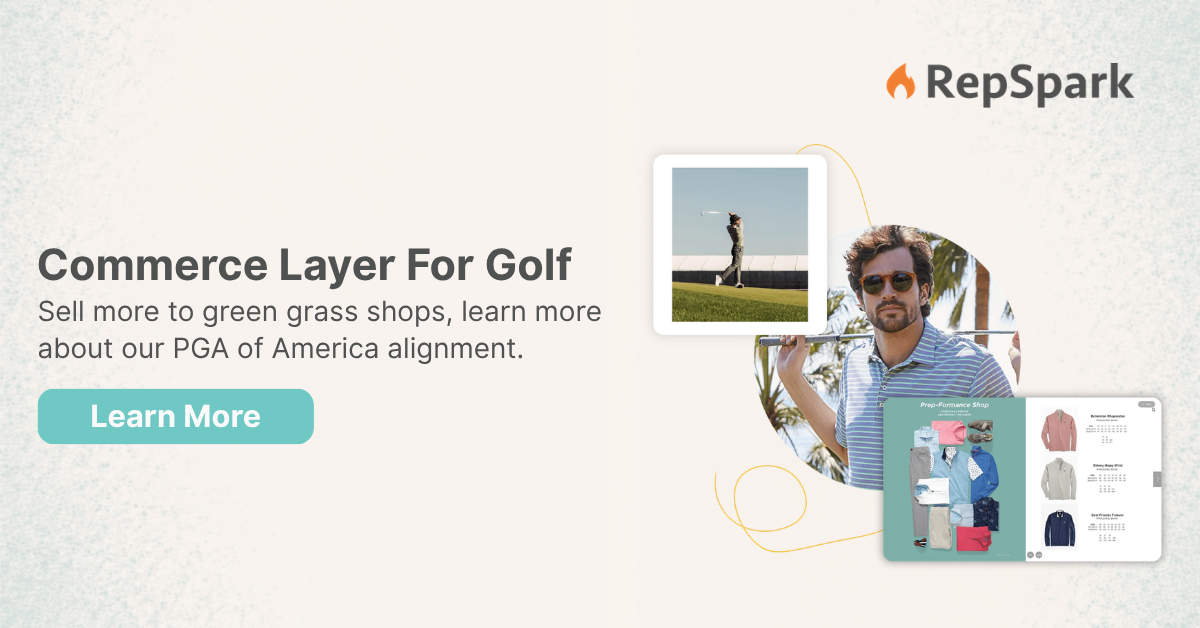
This is precisely the problem RepSpark's Event Microsites were built to solve for golf tournaments, fishing tournaments, and corporate outings: a branded, mobile-friendly storefront where brands curate the assortment and pricing, attendees pick their sizes and logo options, and orders roll up into one consolidated summary — with the brand shipping directly, so nobody's carrying inventory risk on a one-day event. It turns "we'll see what sells" into "we already know what sold."
4. Merchandise the Physical Table (or Pro Shop) Like It's the Big Day
For whatever inventory you do carry on-site, treat the tournament setup like a pop-up, not a slow Tuesday at the shop:
- Build complete looks, not size runs on a rack. A styled polo-and-hat combo on a mannequin outsells the same pieces folded on a table.
- Cross-merchandise by category, not by brand — put headwear and accessories next to the polos they were designed to pair with so add-on sales happen naturally.
- Signal urgency with simple signage: "Tournament Exclusive," "Only Available Today," or "New Logo Drop" all outperform silence.
- Staff the table, not just the register. A tournament is a five-second sale window between holes — someone needs to be actively showing product, not waiting for people to browse.
5. Price and Bundle for the Occasion
Tournament buyers respond well to simple, bundled decisions rather than itemized pricing. A "polo + hat" bundle at a set price converts better than the same two items priced separately, and a small volume discount for foursomes or corporate teams (buy four, get a break on the fifth) encourages group buy-in rather than one person footing the bill. If gift cards or credits are part of your event structure, load them before the event so spending feels frictionless on the day.
6. Get the Logo Right and Get It Right Early
Nothing kills a tournament merchandise program faster than a logo that's misaligned, off-color, or delivered the day before the event. Confirm sponsor and event logo files, placement, and colorways with your supplier well ahead of time, and if you're offering any on-site or pre-order personalization, make sure that workflow is tested before the first order comes in — not during it. This is where having branded, digital selling tools in place pays off: line sheets, logo approvals, and order details live in one system instead of scattered across email threads and text messages with three different vendors.
7. Capture the Data and Reorder Fast
The tournament doesn't end when the last group finishes. If a polo color sold out by noon, that's information — not a missed opportunity, if you can act on it. Brands and shops using AI-driven order insights can see which styles, sizes, and colorways moved fastest and get a reorder in motion while demand is still warm, rather than waiting until the next market cycle to notice what sold. Pair that with tighter B2B operations between brand and retailer, and a one-day tournament can turn into a real reorder cycle instead of a one-off event.
The Bottom Line
Selling branded merchandise at a golf tournament well comes down to three things: know who's buying and design for them, let people commit to a purchase before they arrive instead of guessing at inventory, and merchandise the day itself like the selling event it actually is. Do those three things and a tournament stops being a break-even logistics exercise and starts being one of your best sales days of the season.
If you're a golf brand or retailer looking to build this into your event playbook, see how RepSpark's platform supports everything from event microsites to day-to-day retail operations, or browse customer case studies to see how other brands are running tournament and event merchandise programs today.
Frequently Asked Questions
Q: What's the best way to sell branded merchandise at a golf tournament? A: Curate a small, focused assortment (a polo, a layering piece, a hat, and a couple of accessories) rather than opening your full inventory, and give participants a way to pre-order before the event so you're fulfilling confirmed demand instead of guessing at sizes and quantities on the day.
Q: How do I avoid running out of sizes or being stuck with leftover tournament merchandise? A: Use a pre-order system, such as an event microsite, so golfers select sizes and logo options ahead of time. This lets brands and retailers see real demand before committing to inventory, which reduces both stockouts on popular sizes and markdowns on leftover product after the event.
Q: What merchandise sells best at corporate golf outings? A: Custom polos are the top request, followed by branded accessories like hats, quarter-zips, towels, and golf balls that provide additional branding touchpoints. Companies want pieces that are comfortable, look coordinated across the group, and are good enough quality that participants actually wear them again after the event.
Q: Should I price tournament merchandise differently than my regular pro shop pricing? A: Bundling works better than itemized pricing for tournament buyers — a polo-and-hat bundle at a set price converts better than pricing each item separately. Volume discounts for foursomes or corporate teams also encourage group purchases rather than a single person covering the full cost.
Q: How far in advance should I plan merchandise for a golf tournament? A: Start assortment and logo approval at least four to six weeks out, especially if personalization (names, sponsor logos, club crests) is involved. Logo files, placement, and colorways should be finalized well before the event, and a pre-order window should open early enough to give brands and shops time to plan fulfillment.
Q: How can technology help brands and pro shops sell more merchandise at tournaments? A: Tools like branded digital storefronts let attendees pre-order before the event, while AI-driven order insights show brands and retailers which styles and sizes are selling fastest so they can reorder while demand is still active. Together, these remove the guesswork that typically caps tournament merchandise revenue.
Q: Who typically buys the most merchandise at a golf tournament — members, guests, or corporate groups? A: It varies by event type, but corporate groups tend to generate the largest single purchases because they buy in bulk for coordinated team looks, often on a company expense account. Charity event participants and member-guest attendees tend to make smaller, more emotionally driven purchases tied to the event itself.
Book a discovery call to learn more and see the RepSpark platform in action.
