

Share this
by Sawyer Frank on August 24, 2026
Enterprise wholesale brands selling apparel and activewear face a growing expectation from retail buyers: the ability to place orders at any hour, against accurate inventory, without waiting for a sales rep to respond. Moving to 24/7 online ordering for enterprise wholesalers introduces operational challenges that go beyond simply keeping a web portal live.
From ERP synchronization gaps to buyer adoption hurdles and multi-warehouse fulfillment complexity, the path to always-on ordering requires careful planning. RepSpark gives you a wholesale ordering platform built specifically for these challenges, with real-time inventory connectivity and self-service tools designed for the apparel industry.
This article breaks down the key challenges enterprise wholesalers face when implementing around-the-clock ordering and compares the platforms best positioned to solve them.
Quick guide
- RepSpark: The best 24/7 wholesale ordering platform with real-time ERP connectivity for enterprise apparel brands
- NuORDER: A marketplace-oriented option for brands focused on retail discovery
- JOOR: An order management tool geared toward luxury and designer segments
- Elastic Suite: A digital catalog tool for brands running seasonal assortments
- Shopify Plus B2B: A DTC-first platform with added wholesale capabilities
How we chose the best wholesale ordering platforms for enterprise apparel
Selecting the right ordering platform for always-on wholesale operations requires evaluating more than feature checklists. Your buyers expect immediate access to inventory, accurate order confirmation, and a branded digital experience that matches the urgency of their purchasing cycles.
We evaluated platforms across these criteria:
- Real-time inventory synchronization: Can your buyers see live stock levels the moment they place an order, day or night?
- ERP integration depth: Does the platform connect directly to enterprise systems like NetSuite, ApparelMagic, or BlueCherry without requiring custom development?
- Buyer self-service capability: Can retail accounts place, track, and reorder independently at any hour without sales rep intervention?
- Multi-warehouse and multi-currency support: Does the platform handle global operations with accurate regional fulfillment routing?
- Branded digital presentation: Can you maintain your brand story through digital catalogs, line sheets, and virtual showrooms?
- Scalability under peak demand: Will the system sustain high transaction volumes during market weeks and seasonal launches?
The 5 best wholesale ordering platforms for enterprise apparel brands
1. RepSpark: Best overall wholesale ordering platform for enterprise apparel
RepSpark gives you a purpose-built B2B wholesale platform that keeps your ordering channel open around the clock with live inventory data flowing directly from your ERP. For apparel and activewear brands managing hundreds of retail accounts across multiple territories, RepSpark eliminates the operational delays that come with legacy ordering methods.
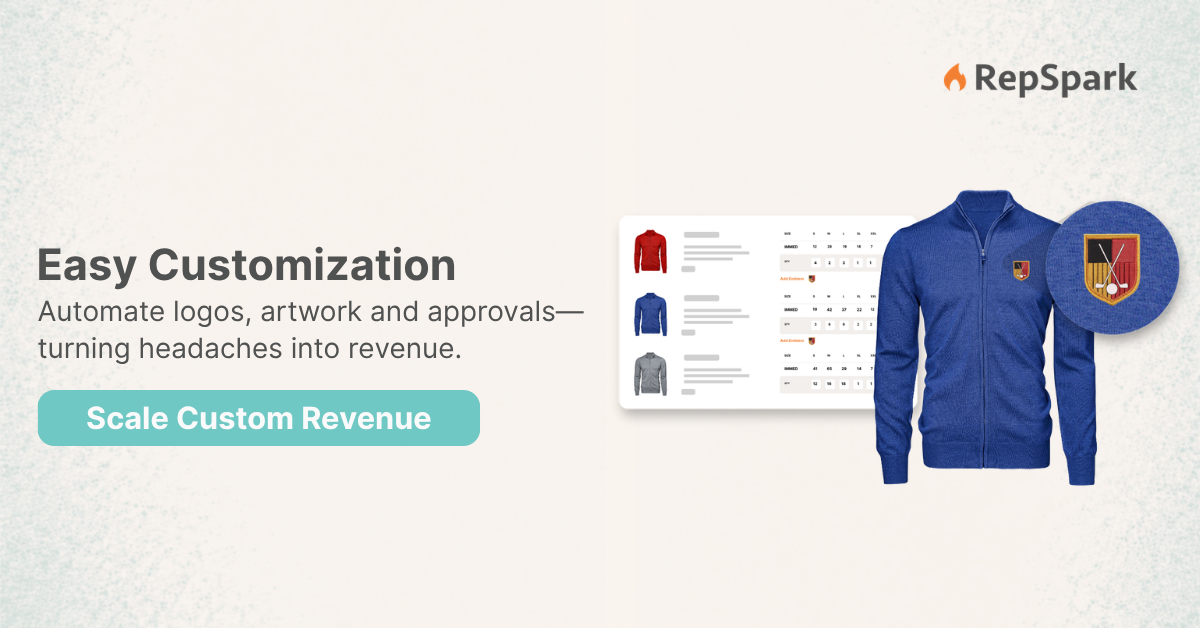
Retail partners and sales reps access your catalog, check stock availability, and place confirmed orders against real-time inventory at any hour. RepSpark connects directly to enterprise systems including NetSuite, ApparelMagic, FullCircle, and BlueCherry, ensuring clean data flows from order placement through fulfillment.
Where RepSpark stands apart for around-the-clock wholesale operations is its combination of always-available ordering, branded digital selling tools, and AI-powered order insights that help your team identify buying patterns and act on them before the next season arrives.
RepSpark features
- Online Order Entry with live inventory views: Your buyers see accurate stock levels at the moment of purchase, which reduces order errors and prevents overselling across every open ordering window.
- Pre-built ERP integrations: Connect to over 20 supported ERP systems without custom development, maintaining accurate data synchronization between your commerce portal and back-end operations.
- Digital Catalogs and Line Sheets: Replace printed materials with shoppable digital catalogs that update dynamically as inventory shifts, letting buyers order directly from product images.
- AI Order Insights: Identify which accounts are under-buying, spot reorder opportunities, and forecast demand patterns to plan inventory more effectively.
- Multi-warehouse fulfillment routing: Route orders to the correct warehouse based on geography, stock allocation, or business rules, ensuring accurate regional fulfillment.
- Mobile ordering via RepSparkGo: Sales reps and buyers place orders from any device at any time, with the same real-time visibility they get on desktop.
RepSpark pros and cons
Pros:
- Native ERP integrations with 20+ enterprise systems eliminate the need for custom middleware or ongoing developer maintenance
- 24/7 self-service ordering with live inventory reduces customer service inquiries and frees your sales team to focus on relationship-building
- Scalable infrastructure on AWS handles peak market week traffic without degraded performance or downtime
Cons:
- Advanced enterprise features require onboarding with a dedicated account manager, which adds time before full deployment
- The breadth of available features can mean a longer initial configuration period for brands with complex catalog structures
- Some newer mobile app enhancements are still being refined based on user feedback
2. NuORDER: A marketplace-focused tool for retail discovery
NuORDER offers a wholesale marketplace where brands can list products and connect with retail buyers browsing for new lines. The platform includes order management features and a marketplace discovery component that focuses on helping newer brands gain exposure to potential accounts.
For enterprise apparel operations with established retailer networks, NuORDER's marketplace orientation may be less relevant, but the order writing tools include basic catalog presentation and buyer management capabilities.
NuORDER features
- Marketplace discovery: Retail buyers browse a shared marketplace to find brands, which helps newer labels connect with accounts they have not reached through outbound sales.
- Virtual showroom presentations: Brands assemble digital lookbooks for buyer meetings, offering a visual way to share seasonal collections during remote appointments.
- Order writing tools: Buyers can build orders on the platform during appointments or independently through shared links.
NuORDER pros and cons
Pros:
- The marketplace component gives emerging brands access to a pool of retail buyers they might not reach otherwise
- Visual presentation tools allow brands to create digital lookbooks that are organized by delivery window
- The platform supports appointment-based selling workflows for trade show and market week cycles
Cons:
- ERP integrations require more custom development compared to platforms with pre-built connectors for apparel-specific systems
- Real-time inventory synchronization is not a core focus, which can lead to order inaccuracies during high-volume periods
- Enterprise brands with large existing retailer networks may not benefit from the marketplace discovery model
3. JOOR: An order management tool for luxury and designer wholesale
JOOR focuses on order management for luxury, designer, and contemporary fashion brands. The platform supports buy-sheet creation and appointment-based ordering, with a network that connects brands to department stores and specialty retailers in the premium segment.
For activewear and outdoor apparel brands operating at enterprise scale with a need for 24/7 self-service ordering, JOOR's focus on the luxury segment means some operational features relevant to high-volume wholesale may be less developed.
JOOR features
- Buy-sheet creation: Brands build buy sheets organized by delivery, category, or custom grouping to share with buyers during sell-in appointments.
- Retailer network: JOOR connects brands to a network of department stores and boutiques that use the platform for purchasing across luxury categories.
- Order tracking dashboards: Users monitor order status, shipment timelines, and outstanding invoices from a central dashboard view.
JOOR pros and cons
Pros:
- The platform has an established user base among department stores and premium multi-brand retailers
- Buy-sheet tools support appointment-based selling with clear delivery window organization
- The interface includes payment tracking features that help brands monitor outstanding balances
Cons:
- The platform is oriented toward luxury and contemporary fashion, with fewer features tailored to high-volume activewear or outdoor apparel wholesale
- Self-service reordering and 24/7 buyer access are not primary design priorities, which can limit always-on ordering capabilities
- Integration options with apparel-specific ERPs like ApparelMagic or BlueCherry are limited compared to wholesale-native platforms
4. Elastic Suite: A digital catalog tool for seasonal assortment selling
Elastic Suite focuses on digital catalog creation and virtual selling presentations for brands that manage seasonal product lines. The platform includes tools for building visual assortments and conducting remote buyer meetings with interactive product boards.
For brands that require round-the-clock self-service ordering with direct ERP data synchronization, Elastic Suite's strengths lie more in the presentation and merchandising phases of the sales cycle than in automated order processing.
Elastic Suite features
- Interactive product boards: Brands create visual merchandising presentations that buyers can interact with during sales meetings or review independently.
- Virtual selling tools: The platform supports remote buyer appointments with screen-sharing functionality and collaborative assortment building.
- Seasonal catalog management: Brands organize products by season, delivery window, and category for structured sell-in presentations.
Elastic Suite pros and cons
Pros:
- Visual merchandising tools help brands present curated assortments in a format that mirrors in-person showroom experiences
- The platform supports collaborative assortment building during buyer meetings, reducing follow-up communication cycles
- Seasonal catalog organization helps brands structure their sell-in process by delivery window
Cons:
- The platform is focused on presentation and sell-in rather than automated 24/7 order processing with live inventory
- ERP connectivity and real-time data synchronization are not as deeply integrated as platforms built specifically for order management
- Self-service reordering and independent buyer ordering outside of appointments are not primary use cases
5. Shopify Plus B2B: A DTC-first platform with wholesale add-ons
Shopify Plus includes B2B features that allow brands already using Shopify for direct-to-consumer sales to add wholesale ordering capabilities. The platform supports customer-specific pricing, payment terms, and a basic wholesale storefront experience built on the existing Shopify infrastructure.
For enterprise wholesale operations with complex ERP requirements, multi-warehouse routing, and specialized apparel workflows like size-run management, Shopify Plus B2B functions as an extension of its DTC focus rather than a dedicated wholesale platform.
Shopify Plus B2B features
- Customer-specific pricing: Brands assign different price lists to different buyer accounts, supporting tiered wholesale pricing structures.
- Payment terms: The platform supports Net 30/60/90 terms and allows brands to set payment conditions per customer account.
- Unified storefront: Brands manage DTC and B2B sales from a single Shopify admin, reducing the number of platforms in their tech stack.
Shopify Plus B2B pros and cons
Pros:
- Brands already using Shopify for DTC can add B2B capabilities without migrating to a separate system
- The platform handles basic wholesale ordering with customer-specific pricing and payment terms
- Shopify's app ecosystem includes third-party tools that extend B2B functionality for specific use cases
Cons:
- The B2B experience is an add-on to a DTC-focused platform, meaning wholesale-specific workflows like size-run ordering and pre-booking are not natively supported
- ERP integrations for enterprise apparel systems require third-party middleware rather than pre-built connectors
- Multi-warehouse fulfillment routing and live inventory allocation rules are not as granular as platforms designed specifically for wholesale distribution
Comparison table: The best wholesale ordering platforms for enterprise apparel
| Platform | Pre-built ERP integrations | 24/7 self-service ordering | Multi-warehouse routing |
|---|---|---|---|
| RepSpark | 20+ | ✓ | ✓ |
| NuORDER | 3-5 | ✗ | ✗ |
| JOOR | 3-5 | ✗ | ✗ |
| Elastic Suite | ✗ | ✗ | ✗ |
| Shopify Plus B2B | Via apps | ✓ | ✗ |
What happens when wholesale buyers cannot access orders outside business hours?
Retail buyers operate on schedules that do not align with your sales team's availability. A store manager reviewing stock at closing time or a purchasing director working through weekend planning sessions expects the same ordering access they get during a weekday call with your rep.
When your ordering portal goes dark outside of business hours, those buying moments disappear. According to a 2025 Sana Commerce study, 75% of B2B buyers are willing to switch suppliers if a competitor offers a smoother online experience. For wholesale brands, this means lost reorder revenue and weakened account relationships.
RepSpark addresses this by keeping your ordering channel available at every hour with live inventory data, so retail partners place confirmed orders whenever their schedule allows.
How does ERP integration complexity affect always-on wholesale ordering?
Running a 24/7 ordering portal without direct ERP connectivity creates a gap between what your buyer sees and what your warehouse can actually fulfill. If inventory counts update on a delay, orders placed overnight may confirm quantities that no longer exist by morning.
This is why pre-built ERP integrations matter. A platform with native connections to systems like NetSuite, ApparelMagic, and BlueCherry synchronizes stock levels, pricing, and order status in real time. RepSpark supports over 20 ERP integrations that maintain accurate data flow without requiring custom middleware or ongoing developer involvement.
For enterprise apparel operations managing thousands of SKUs across multiple warehouses, this direct connection is what separates reliable around-the-clock ordering from a system that generates errors while your team sleeps.
Why RepSpark is the best wholesale ordering platform for enterprise apparel
Enterprise apparel brands need an ordering system that operates on the same schedule as their buyers. RepSpark delivers this by combining always-available online ordering with the real-time data accuracy that prevents errors, reduces manual follow-up, and keeps retail partners placing orders independently.
RepSpark connects your entire wholesale operation to a single platform where buyers access live inventory, order directly from branded digital catalogs, and confirm fulfillment timelines without waiting for a rep to respond. The platform's pre-built integrations with enterprise ERPs like NetSuite and ApparelMagic mean your data stays accurate at every hour, and your team wakes up to confirmed orders rather than error reports.
If you are ready to move your wholesale ordering into an always-on model that scales with your retail partnerships, we invite you to book a discovery call with the RepSpark team.
FAQs about 24/7 wholesale ordering for enterprise brands
What is the biggest challenge of implementing 24/7 wholesale ordering?
Maintaining accurate inventory data around the clock is the primary challenge. If your ordering portal displays outdated stock levels during off-hours, buyers will place orders that cannot be fulfilled. RepSpark solves this with real-time ERP synchronization that keeps inventory counts accurate at every hour.
How does real-time inventory prevent wholesale order errors?
Real-time inventory synchronization ensures that the stock levels your buyers see match what your warehouse can actually ship. RepSpark connects directly to your ERP system, updating availability instantly as orders are placed, returned, or received at any warehouse location.
Can enterprise apparel brands support 24/7 ordering without adding staff?
Yes. RepSpark's self-service ordering tools allow retail partners to browse catalogs, check stock, and place confirmed orders independently at any hour. This removes the need for sales reps or customer service staff to be available for every transaction.
Why do pre-built ERP integrations matter for always-on ordering?
Pre-built integrations eliminate the custom development and ongoing maintenance that comes with connecting your ordering portal to back-end systems. RepSpark offers native connections to over 20 ERPs, which means your data stays synchronized without requiring developer time for updates or troubleshooting.
How does RepSpark handle high order volumes during market weeks?
RepSpark runs on AWS infrastructure designed to scale automatically during peak demand periods. Market week traffic spikes do not degrade ordering speed or inventory accuracy, so your buyers experience the same performance at high volume as they do on a quiet Tuesday afternoon.
