

Share this
by Tim McLain on July 30, 2026
How an ecommerce platform became the backbone of green grass customer experience, and why the PGA of America just made it official.
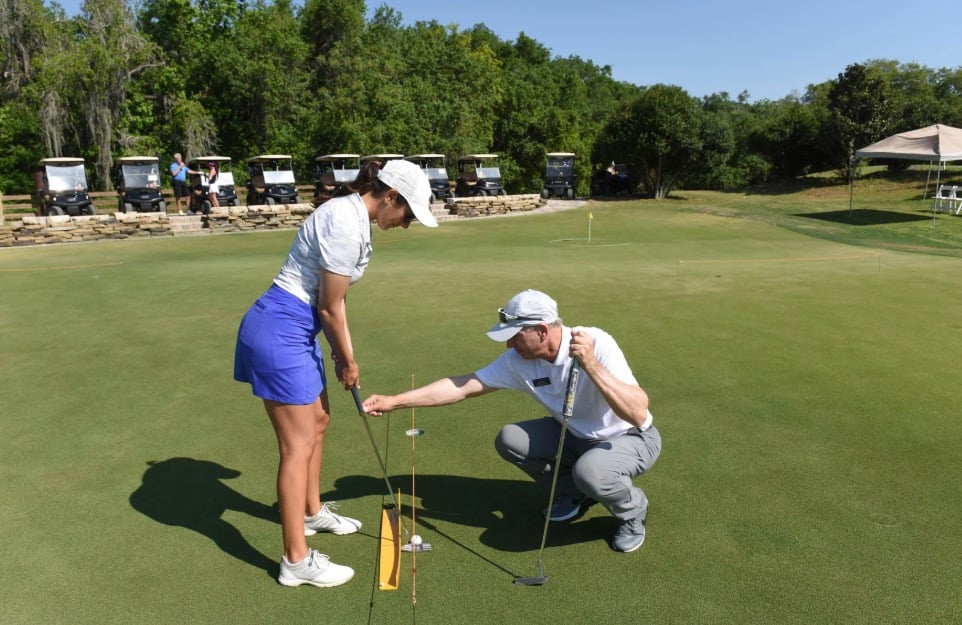
The pro shop at any well-run golf club is, in its own quiet way, one of the more operationally complex retail environments in existence.
A pro shop merchandiser is managing live inventory across hundreds of SKUs, handling custom logo orders that would make a luxury tailor's head spin, running pre-season buying programs across dozens of brands.
At the same time, PGA Professionals work with the shop to plan and execute member events and coordinate tournament merchandise for member-guest weekends... all while the facility keeps the shelves stocked for walk-in traffic that expects something available right now.
For most of golf's history, the people who did this well did it through sheer force of relationship and memory. Pros and shop buyers knew which sales reps at their stocked brands would move fastest on a custom order. They knew which brands most likely had inventory when others couldn't fulfill fast enough, or on time.
They kept it all in their heads, their clipboards, their notebooks, and their phones. This entirely manual system produced some extraordinary merchants. It also produced enormous, largely invisible operational friction.
Ask everyone involved in serving Members what the single biggest problem in the green grass channel has always been, and the answer comes quickly: time.
Not the time it takes Pros and shops to write orders, but the time it takes to manage everything around it. Tracking par-level inventory for a membership of 300 versus 800. Coordinating six different apparel vendors, each with their own ordering systems, lead times, minimums, and wholesale prices and discounts. Reconciling what their PGA Professional thinks they ordered for an event, with what actually arrives.
The administrative burden of running a golf facility has always been disproportionate to its size, and it has always fallen on people whose real value to their club has nothing to do with data entry.
What the PGA of America's alignment with RepSpark signals to every PGA Professional, pro shop merchandiser, and golf sales rep in the country is that this is the problem the industry is now formally committed to solving.
RepSpark is an efficient, easy to learn technology platform that consolidates vendor programs, manages inventory benchmarks relative to membership size, and automates the ordering workflows that have consumed hours of every PGA Professional's week represents a different kind of ROI than a new product line or a better margin structure.
It's time returned to the work that actually matters, and money recovered from the inefficiencies that have always been accepted as the cost of doing business in golf.
Golf Is Growing Faster Than Its Infrastructure Could Keep Up
The timing of the PGA of America's strategic alignment with RepSpark, announced at the PGA Buying Summit in July, is not coincidental.
According to the National Golf Foundation, U.S. on-course participation exceeded 29 million golfers in 2025, the eighth consecutive year of growth, with more than 82 million rounds played, a record. Women are up 46% since 2019. Younger players are driving both participation and spending in ways the industry hasn't seen before.
These aren't casual participants. They're members shaped by fast, personalized, digital consumer experiences everywhere else in their lives. A generation that orders everything on a phone and receives it in two days does not arrive at a pro shop prepared to wait three weeks for a custom polo.
The PGA Professionals serving them know it.
Now the PGA of America does too.
The Numbers Behind the Platform
RepSpark isn't a household name outside golf's wholesale community. Within it, the numbers are hard to ignore.
According to the 2025 AGM Membership Survey, 80% of Association of Golf Merchandisers at pro shops use RepSpark — more than any competing platform. The company processes more than $4 billion in annual B2B transactions across 250+ brands and 100,000 retailers worldwide, and has made the Inc. 5000 list of fastest-growing private companies four consecutive years.
Founder and CEO Meghann Butcher built RepSpark not as a software product, but as an operator's solution. Her father built clothing brands. She grew up at trade shows understanding the pain on both sides of the manufacturer-retailer relationship.
"I came at this from the business side, not the software side," she has said. "I knew the workflows, the relationships, the places where brands and retailers were losing time and money."
The results across RepSpark's brand partners reflect that foundation:
- OluKai: Like most golf brands on RepSpark, they use event microsites to bring branded, curated merchandise directly to golf tournaments and resort events — without the inventory risk of stocking every location.
- johnnie-O: Powered a 744% increase in B2B order volume.
- Primo Golf: Tripled wholesale revenue with 75% self-service order adoption in year one.
- L*Space: 214% pre-book order growth year over year.
- Full Turn Custom Apparel: Three new lines of business launched, zero home-office headcount added, trade show costs slashed — all powered by a direct RepSpark–ERP integration.
The Golf Polo Isn't the Product.
Member Experience Is.
Golf retail has never been a transactional business. A member-guest tournament isn't a sales event, it's a club experience that happens to involve merchandise. Getting the logo placement wrong, the size wrong, or the timing wrong isn't a retail error. It's a hospitality failure.
"Green grass retail isn't a margin business," Butcher has said. "It's a relationship business. The PGA Professionals who are winning understand that every touchpoint with a member is an opportunity to deepen that relationship."
What RepSpark changes is the operational layer beneath that experience. With branded event microsites, members and guests can browse and order custom tournament merchandise before they arrive. Their order is waiting when they walk in on event morning. It's one of the most important things a PGA Professional can leverage to provide a white glove experience to members.
It is the difference between "here's what we have" and "here's what you ordered."
The experience begins before the first tee shot

The Professional Who Owns It
Ask the PGA Professionals running the best operations in the country how they think about their career, and you'll hear the same word come up: entrepreneur.
"My success is my responsibility," is how one longtime professional framed it. Not the association's responsibility. Not the brand's. Mine.
That mindset, creating value, building relationships, growing a business through your own initiative, is exactly who RepSpark was built to serve. The platform doesn't run a pro shop or a member event for you. It removes the friction that keeps you from running it the way you actually want to.
Growing the game is what PGA Professionals do every day. Teaching a beginner. Introducing a junior. Welcoming a new member. Running a veteran clinic. Creating a golfer where there wasn't one before. None of that happens at a headquarters. It happens at the local level, through the professionals closest to their communities.
What those professionals need from the industry around them isn't programs built on their behalf. It's infrastructure: tools, platforms, and partnerships. Things that give every professional the strongest possible foundation to do the work only they can do.
That's what this alignment is.
Technology Has Caught Up
For decades, being a great pro shop merchandiser or PGA Professional meant doing something technology couldn't replicate: getting a member exactly what they wanted, even when that meant weeks of phone calls, favors pulled with busy sales reps, and treating a single custom order like the most important transaction in the business.
That was heroic.
Today's infrastructure lets professionals deliver that same level of service faster, more accurately, and with zero manual effort. Which means more time on the lesson tee. More time on the course. More time with the members they joined this profession to serve.
"They don't necessarily want to be coordinating custom apparel orders for an event," Butcher has observed. "They want to be out teaching. They want to be out playing the game."
That's what the PGA of America's alignment ultimately recognizes. Not that golf retail is changing. But that the tools have finally caught up with the people running it.
Golf has never lacked great professionals. It has never lacked great pro shop merchandisers. What it lacked was infrastructure designed around the way they actually work.
That infrastructure has arrived. In RepSpark.

Book a discovery call to learn more and see the RepSpark platform in action.
