
What 24/7 Ordering Actually Requires for a Multi-Division Enterprise Brand
- Chapter 1 What "24/7 Ordering" Actually Means — The Gap Between Portal Availability and Genuine Anytime Commerce
- Chapter 2 The Multi-Division Data Architecture Problem — Why Division Boundaries Break Most Wholesale Platforms
- Chapter 3 Inventory Accuracy Across Time Zones — The Available-to-Sell Synchronization Requirements That Determine Whether 24/7 Orders Are Real
- Chapter 4 The Buyer Experience at 2 AM — What Self-Serve Wholesale Requires When There's No Rep Available
- Chapter 5 Configured and Customized Products Without Rep Guidance — The Self-Serve Ordering Requirements That Generic Platforms Skip
- Chapter 6 Always-On Cart and Draft Order Management — The Infrastructure That Turns Browse Sessions Into Revenue
- Chapter 7 The Rep's Role in a 24/7 Ordering Environment — What Changes and What Doesn't
- Chapter 8 Glossary & Frequently Asked Questions
What "24/7 Ordering" Actually Means — The Gap Between Portal Availability and Genuine Anytime Commerce
Enterprise brands describe their wholesale ordering capability as "24/7" when their B2B portal is technically accessible around the clock. What they typically mean is that a buyer can log in at 11 PM on a Tuesday and see the brand's catalog. What they often don't mean — but need to if the 24/7 capability is going to produce revenue — is that the buyer can place an accurate, complete order at 11 PM with confidence that the inventory shown is what's actually available to ship, that the order will route correctly into the brand's ERP without manual intervention during off-hours, that the configured product ordering workflow works without a rep to guide the buyer through option selection, and that a draft order started on a Tuesday evening doesn't disappear or require re-entry when the buyer returns on Thursday morning to finish it. Those four requirements — accurate available-to-sell data, ERP integration that operates without business-hours dependency, self-serve configurability for complex products, and persistent draft order preservation — are the actual infrastructure of 24/7 wholesale ordering. Most enterprise wholesale portals meet the first requirement on paper and none of the last three in practice.
The business-hours dependency problem — how "24/7 portals" actually work at 2 AM. A wholesale ordering portal that is technically available 24/7 but whose ERP synchronization runs on a nightly batch schedule is not a 24/7 ordering system — it's a portal with a 24-hour inventory accuracy window. A buyer who places an order at 2 AM is ordering against inventory data that may be 18 hours stale: inventory committed to orders placed during the previous business day hasn't been decremented, orders fulfilled overnight haven't been subtracted, and the available-to-sell quantities shown in the portal may not reflect what's actually in the warehouse when the fulfillment team arrives in the morning. At low order volumes, that staleness is manageable — most orders will be for quantities well within the true available-to-sell, and the rare over-committed order is caught and corrected before it ships. At enterprise scale, with thousands of orders flowing through the system across multiple divisions and multiple time zones, 18-hour inventory staleness produces a steady stream of post-submission corrections that erode buyer confidence in the platform's reliability and drive accounts back to rep-assisted ordering where "the rep will check and confirm before it ships."
The multi-division complexity multiplier — how 24/7 gets harder at enterprise scale. For a single-brand enterprise, 24/7 ordering is a function of platform uptime, inventory synchronization frequency, and buyer experience quality — significant requirements, but tractable ones for a well-resourced platform implementation. For a multi-division enterprise — a brand operating multiple product lines, multiple business units, or multiple acquired brands under a parent company structure — 24/7 ordering is those requirements multiplied by the number of divisions, complicated by the fact that different divisions may run different ERPs, may have different inventory allocation rules, may require different buyer access controls, and may need different ordering experiences for their respective channel segments. A multi-division enterprise whose golf equipment division runs SAP, whose decorated apparel division runs NetSuite, and whose accessories division runs ApparelMagic isn't just running a 24/7 wholesale operation — it's running three 24/7 wholesale operations from what the buyer expects to be a single ordering environment. Without a platform that handles multi-ERP, multi-division architecture natively, that expectation can't be met.
The time zone dimension — what international 24/7 actually requires. For enterprise brands with international wholesale distribution — green grass facilities in Europe, specialty retail accounts in Asia-Pacific, or distributor networks across multiple continents — 24/7 ordering isn't a nice-to-have. It's the only commercially viable model for a channel where a buyer in Japan who wants to place a pre-season order can't wait for U.S. business hours. 5.11 Tactical operates RepSpark across more than 1,600 B2B buyers in four global regions — a deployment that demonstrates what genuine multi-timezone 24/7 wholesale ordering requires at the enterprise level: regional inventory allocation, currency-specific pricing that's accurate at the moment of ordering in each region's business hours, and a platform that handles the full ordering workflow without regional business-hours dependency at any point from order placement to ERP confirmation. The infrastructure that makes 24/7 ordering work for a single-region enterprise fails when it encounters the distributed time zone reality of a global wholesale channel because the failure modes — stale inventory data, off-hours ERP routing errors, draft orders that expire during the buyer's time zone's business hours — compound across regions in ways that produce a disproportionately large volume of corrections and buyer confidence problems. See how RepSpark's enterprise platform handles multi-division, multi-timezone 24/7 ordering requirements.
Questions to Assess Whether Your Current "24/7" Capability Is Genuine
- For your current wholesale ordering portal, what is the actual frequency of available-to-sell synchronization with your ERP — and specifically, is that synchronization continuous (inventory updates flow from the ERP to the ordering portal immediately when the ERP records an inventory change), batch-scheduled (inventory updates run on a fixed schedule, typically nightly or multiple times per day), or manual (a member of your operations team triggers a synchronization at defined intervals) — and for each order placed during the longest synchronization gap in your current configuration, what is the probability that the inventory shown in the portal when the buyer placed the order differs from the actual available-to-sell at the time the order reaches your fulfillment team?
- For your enterprise's multiple divisions — each with its own product line, its own buyer segment, and potentially its own ERP or ERP entity — how does a buyer who purchases from two divisions in the same ordering session experience that cross-division order: is it a single cart with a single checkout, two separate carts requiring separate checkouts, or something that requires the buyer to navigate to a different ordering environment entirely for each division, and does the cross-division ordering experience hold together as a coherent buyer workflow at 11 PM without a rep present to explain which portal to use for which product type?
- For the international wholesale accounts in your channel — buyers in time zones where your U.S. business hours represent the middle of the night — how many orders per month do you estimate are placed outside your business hours, and for those orders, what is the post-submission correction rate compared to orders placed during U.S. business hours, and is the correction rate difference attributable to the off-hours inventory accuracy gap, to the absence of rep assistance for buyers who need guidance during complex ordering sessions, or to both?
- For a buyer who starts a wholesale order at 9 PM, adds 30 products to their cart over 45 minutes, and then stops because they need to check a detail with their store manager before finalizing — what happens to that cart in your current ordering platform, and specifically: does the cart persist indefinitely until the buyer returns, does it expire after a fixed session timeout, or does the buyer receive any indication that their in-progress order is at risk of being lost before they complete the checkout?
- If you surveyed the 10% of your wholesale accounts with the lowest digital ordering adoption rates — accounts that consistently route through phone, email, or rep-assisted ordering despite your portal being available — and asked them specifically whether they've attempted to place an off-hours order and had a negative experience (inventory inaccuracy, a cart that disappeared, a checkout that failed because of a routing error that would have been caught during business hours), how many do you think would identify an off-hours platform failure as a contributing factor in their adoption decision?
The Multi-Division Data Architecture Problem — Why Division Boundaries Break Most Wholesale Platforms
Most wholesale ordering platforms were designed for a single-brand environment. The data architecture assumes one product catalog, one inventory pool, one set of buyer accounts, one pricing structure, and one ERP connection. At the single-brand level, that architecture is efficient: every entity in the system belongs to the same brand, every order routes to the same ERP, and every buyer account has the same relationship with the brand's account structure. The problems begin when a multi-division enterprise tries to run multiple brands, multiple product lines, or multiple business units on a platform whose architecture wasn't designed for division-level data separation within a shared platform environment. What happens in practice is a choice between two bad options: running each division on a separate platform instance (which recreates the fragmentation problem at the division level), or running all divisions on a single undifferentiated platform instance (which eliminates division-level data separation and creates channel conflict, pricing visibility, and access control problems that the brand spends operational overhead managing manually).
What multi-division architecture actually requires. A wholesale ordering platform that handles multi-division enterprise deployments natively provides division-level data separation — each division's product catalog, pricing, buyer accounts, and order history are logically isolated from the other divisions' data — while also enabling cross-division ordering for buyers who purchase from multiple divisions. The buyer who orders golf equipment from one division and decorated apparel from another sees a coherent ordering environment, not two separate portals with separate logins and separate carts. The brand's internal team sees division-level reporting for each business unit alongside consolidated reporting that aggregates across divisions. The brand's ERP team routes each division's orders to the correct ERP entity — or the correct ERP system, if different divisions run different ERPs — without a manual sorting step between the ordering platform and the ERP destination. And the brand's channel management team controls buyer access at the division level: a specialty retail account approved to order from the golf equipment division doesn't automatically have access to the decorated apparel division's pricing and catalog unless the brand explicitly grants that access.
The Catapult model — what 13 brands on one platform actually requires. Catapult Brand Group operates 13 brands on RepSpark from a single platform environment — a deployment that demonstrates what multi-brand, multi-division architecture looks like at the operational level. Each brand in Catapult's portfolio has its own product catalog, its own buyer account base, its own rep assignments, and its own ordering environment within the RepSpark platform. Catapult's management team sees cross-brand reporting and can compare performance across the portfolio. Catapult's brand managers see only their brand's data, with the same platform infrastructure supporting each brand's ordering workflow. The rep who carries multiple Catapult brands — as multi-line reps frequently do across a brand portfolio this size — navigates between brands within a single platform session rather than logging into separate portals for each brand they rep. What makes that architecture work isn't just platform flexibility — it's a data model that was designed for multi-brand deployment from the start, not retrofitted to handle it through configuration hacks that create edge cases the brand's operations team manages around.
The ERP routing challenge in a multi-division environment. For multi-division enterprise brands whose divisions run different ERPs — a scenario more common than single-ERP enterprises in the golf and specialty retail channel, where acquisitions frequently bring new ERP environments that haven't been migrated to the parent company's system — the platform's ERP routing capability is the critical architectural requirement. An order placed through the unified ordering environment for Division A needs to route to Division A's NetSuite entity. An order for Division B needs to route to Division B's SAP environment. An order that includes products from both divisions — a cross-division cart checkout — needs to split correctly at the order routing layer so that each division's ERP receives the line items that belong to it, without a manual splitting step that introduces delay and error risk. RepSpark's 20+ native ERP integrations support multi-ERP routing within a single platform environment — a capability that's architecturally essential for multi-division enterprise deployments and that most single-integration ordering platforms can't provide. Review RepSpark's multi-ERP integration capabilities for multi-division enterprise deployments.
Questions to Evaluate Multi-Division Platform Architecture Requirements
- For each division in your enterprise wholesale operation, how does your current platform handle division-level data separation — and specifically, can a buyer account that is approved for ordering from Division A's catalog browse Division B's pricing and available-to-sell data without explicit authorization from Division B's channel management team, and if so, has that cross-division visibility created channel conflict issues, margin leakage, or pricing disputes that your operations team has had to resolve manually?
- For a multi-line rep who carries brands from multiple divisions in your enterprise portfolio, how many separate login credentials and ordering environments do they navigate to service all of their accounts across your divisions — and have you measured the correlation between the number of separate platform environments a rep uses and their digital submission rate for each individual division, since reps who carry your divisions in a unified platform environment tend to drive higher submission rates than reps who maintain separate workflows for each division?
- If your enterprise has completed an acquisition in the past five years that brought a new brand or division with its own ERP environment into your portfolio — and that division's ERP has not yet been migrated to your parent company's ERP system — how is that division's wholesale ordering currently operating, and specifically, does the acquired division's wholesale ordering data flow into your consolidated reporting accurately, or is cross-division reporting for the acquired brand still a manual reconciliation exercise that your finance and operations teams perform on a monthly or quarterly basis?
- For cross-division order management — a buyer who wants to place a single order that includes products from two or more of your divisions — what does that order look like from the buyer's perspective (one checkout or two), from the rep's perspective (one order to track or two), and from your ERP team's perspective (one inbound order to route or an automatically split order that routes to each division's ERP without manual intervention), and does the cross-division ordering experience your platform currently provides match what your enterprise's wholesale channel strategy is trying to deliver?
- For a multi-division enterprise brand that has been growing primarily through acquisition — adding brands and divisions that bring their own ordering systems, their own ERP environments, and their own buyer account databases — what does the consolidation roadmap look like for eventually bringing all divisions into a single platform environment, and what are the specific architectural requirements (division-level data separation, multi-ERP routing, cross-division ordering, unified reporting) that a consolidation platform would need to meet before the enterprise's IT and operations leadership would approve the migration?
Inventory Accuracy Across Time Zones — The Available-to-Sell Synchronization Requirements That Determine Whether 24/7 Orders Are Real
Available-to-sell accuracy is the foundational requirement of genuine 24/7 wholesale ordering — and it's the requirement that most enterprise wholesale portals fail at the moment the concept is stress-tested against actual operating conditions. The failure mode is predictable: the platform shows available-to-sell quantities calculated from a synchronization that ran at some point in the past — six hours ago, twelve hours ago, or last night — and buyers place orders against those quantities without knowing that the numbers are stale. The orders that succeed in committing inventory that's still available are fulfilled normally. The orders that commit inventory that's already been committed by other orders placed after the last synchronization go into a correction queue: customer service contacts the buyer, the rep gets involved, an alternative is proposed or the order is cancelled, and the buyer's confidence in the platform's reliability takes a hit that affects their adoption behavior in future seasons. At low order volumes, that failure mode is tolerable. At enterprise scale, across multiple divisions and multiple time zones, available-to-sell inaccuracy at the synchronization gap creates a steady-state correction workflow that is expensive to operate and corrosive to buyer trust.
What synchronization frequency actually requires from the ERP integration. Improving available-to-sell synchronization frequency isn't a platform setting — it's an ERP integration architecture decision. Moving from nightly batch synchronization to near-continuous synchronization requires that the platform's ERP integration be capable of receiving and processing inventory event updates from the ERP as they occur, rather than pulling a full inventory snapshot on a schedule. That event-driven architecture puts requirements on both the platform (it needs to handle high-frequency update events without dropping or misprocessing inventory changes during peak event volume) and the ERP integration (the integration needs to be designed for event-driven inventory communication, not just for periodic bulk data transfers). RepSpark's native ERP integrations — with NetSuite, SAP, ApparelMagic, Full Circle, and Microsoft Dynamics — are designed for production-grade available-to-sell synchronization that reflects the actual inventory state in the ERP, not a schedule-dependent snapshot. The specific synchronization architecture for each enterprise deployment is scoped based on the ERP's event publishing capabilities and the brand's order volume profile, but the integration approach starts from the premise that stale available-to-sell data is a buyer trust problem that compounds over time.
The multi-division inventory allocation challenge — whose inventory is it? For multi-division enterprises, available-to-sell accuracy is complicated by the question of how inventory is allocated across divisions and across channels. A parent company's consolidated warehouse may hold inventory for multiple divisions — golf equipment for Division A, decorated apparel for Division B — with the ERP managing allocation rules that determine which division's available-to-sell reflects what's in which pick location. If the wholesale ordering platform synchronizes against a consolidated inventory view rather than against each division's allocated available-to-sell, the quantities shown to buyers may reflect gross warehouse inventory rather than the inventory actually allocated to the wholesale channel for that division — creating the possibility that buyers order quantities that appear available but are actually allocated to another channel or another division's wholesale orders. Multi-division available-to-sell accuracy requires that the platform's inventory synchronization is configured against each division's allocated available-to-sell pool rather than against the consolidated inventory position, which is an ERP configuration and integration design requirement, not just a platform setting.
Available-to-sell accuracy and buyer confidence — the compounding relationship. Buyer confidence in a wholesale ordering platform is disproportionately influenced by a small number of high-salience experiences. An experience where a buyer places a large pre-book order, receives an order confirmation, and then receives a follow-up call or email informing them that one or more items were over-committed and the order needs to be revised — that experience registers as a platform reliability failure, and it shapes the buyer's behavior for multiple seasons afterward. The buyer who has had that experience twice is the buyer who calls the rep before placing an order to "make sure the inventory is actually there," which is exactly the behavior that a 24/7 self-serve ordering platform is supposed to eliminate. Accurate available-to-sell data, synchronized at a frequency that makes over-commitment rare enough to be an exception rather than a steady-state operational problem, is the infrastructure investment that either builds or erodes buyer confidence in the platform's reliability over time. See how RepSpark Flow's available-to-sell synchronization is designed for enterprise wholesale ordering accuracy.
Questions to Evaluate Available-to-Sell Accuracy in Your Current Platform
- For your current wholesale ordering platform, what is the documented available-to-sell synchronization architecture — and specifically, is the synchronization event-driven (inventory changes in your ERP trigger near-immediate updates to the ordering platform) or schedule-driven (inventory snapshots are pushed or pulled on a defined schedule), and for schedule-driven synchronization, what is the maximum possible staleness of available-to-sell data shown to a buyer at any point in the day, and does that maximum staleness figure vary by division, by ERP, or by the time of day the buyer places their order?
- In the past 12 months, how many wholesale orders required post-submission correction because a buyer committed inventory that wasn't actually available to ship — and for each of those corrections, what was the communication path (who contacted the buyer, how quickly, through which channel), what was the buyer's response, and did the experience produce any observable change in that account's subsequent ordering behavior (specifically, a shift from self-serve digital ordering to rep-assisted ordering or phone/email ordering)?
- For your multi-division operation, how is available-to-sell calculated for each division's wholesale channel — and specifically, does the available-to-sell shown to a wholesale buyer for Division A's products reflect only the inventory allocated to Division A's wholesale channel, or does it reflect gross warehouse inventory that includes stock allocated to Division A's retail channel, Division B's wholesale channel, or other demand streams that compete with wholesale for the same inventory pool?
- For enterprise brands with international wholesale distribution — buyers in time zones where orders are placed during your ERP team's off-hours — how does your available-to-sell synchronization behave when off-hours orders are being placed at the same time as your nightly batch synchronization is running, and specifically, have you tested the order submission behavior at the exact moment a synchronization run is in progress to confirm that orders placed mid-synchronization receive accurate available-to-sell data rather than a momentarily inconsistent inventory snapshot?
- If your enterprise's wholesale ordering platform showed buyers a timestamp indicating when the available-to-sell data they're seeing was last synchronized with your ERP — a transparency measure that some platforms offer — would that timestamp reveal a staleness level that you would be comfortable showing to your buyers, or would it reveal a synchronization frequency that, if visible to buyers, would undermine their confidence in the ordering data and drive them toward rep-assisted ordering where they feel more confident that the inventory is verified?
The Buyer Experience at 2 AM — What Self-Serve Wholesale Requires When There's No Rep Available
The buyer experience requirement for a genuine 24/7 wholesale ordering environment is qualitatively different from the buyer experience requirement for a portal that's primarily used during business hours with rep support available. During business hours, a buyer who can't find a product can call or text the rep. A buyer who's confused about pricing can get an immediate answer. A buyer who's uncertain about a configuration option for a golf club set or a decoration specification for a logo polo can ask before committing. At 2 AM, none of those support mechanisms are available — and if the platform's buyer experience requires any of them to complete a typical order, the platform's 24/7 capability is nominal rather than genuine. The buyer who encounters a question they can't answer without rep assistance at 2 AM doesn't wait for business hours and then complete the order — they stop, close the browser, and either come back during business hours (with their ordering intent partially dissipated) or route the order through a phone call or email the next morning (which is exactly the manual order channel the enterprise is paying a wholesale platform to replace).
What "self-serve" actually means at the buyer experience level. A wholesale ordering platform meets the self-serve requirement for 24/7 commerce when a buyer can accomplish the following without rep assistance: find what they're looking for in the catalog without knowing the exact product name or number, understand the pricing they're entitled to without having to request a price list, determine what's available to ship and when without calling the warehouse, complete the ordering process for any product type in the catalog — including configured products with multiple option dimensions and customized products with decoration specifications — without a workflow step that requires human intervention to complete, and submit an order with confidence that it will route correctly and produce a confirmation without a business-hours validation step. Each of those requirements is a design decision that platform teams make — and at the 2 AM buyer experience level, the design decisions that support self-serve completion are identifiable, testable, and meaningfully different from the design decisions that assume a rep will fill the gaps.
Search and catalog navigation — the first self-serve requirement that off-hours ordering tests. A buyer placing an order at 2 AM typically isn't starting from a blank catalog browse. They're looking for something specific — a product they saw in the rep's presentation, a style they want to reorder, a configuration they're adding based on member demand feedback. The catalog experience that makes self-serve ordering possible at off-hours is one where a buyer can find that specific product through a search that returns the right result for the way the buyer describes it — not just the way the brand's product team has named it in the catalog — and where filtering by attributes relevant to that buyer's decision (available-to-sell date, channel-specific pricing tier, configuration options like hand or shaft flex for golf equipment, size availability for a reorder) works predictably enough that a buyer who's not an expert in the platform's filter taxonomy can use it without training. The catalog experience that doesn't meet that standard is one where buyers who know exactly what they want can find it after some navigation effort, but buyers who are browsing or searching with limited product name knowledge need rep assistance to locate the right items — which means those buyers don't complete off-hours orders.
Order status and confirmation — the self-serve requirement that closing the loop at 2 AM demands. A buyer who places an order at 2 AM and receives a platform-generated order confirmation that looks like it was actually processed — with a confirmation number, an order summary with the correct quantities and pricing, and an expected fulfillment date — has a fundamentally different experience than a buyer who submits an order and receives a message that says "Your order has been received and will be reviewed during business hours." The first experience closes the loop and lets the buyer move on. The second experience creates uncertainty — did it go through? Will anything change? — that typically results in a follow-up call to the rep or customer service during business hours, negating the off-hours ordering efficiency that the platform was supposed to provide. The enterprise that configures its wholesale ordering platform to generate real-time order confirmations with accurate order data — not "pending review" messages — from an ERP integration that processes orders without business-hours dependency is the enterprise whose 24/7 ordering capability actually changes buyer behavior in the direction of more self-serve digital ordering. See how RepSpark Flow's buyer experience is designed for self-serve ordering without rep dependency.
Questions to Evaluate the Self-Serve Quality of Your 24/7 Buyer Experience
- For the most common off-hours ordering scenario for your buyers — a head professional at a green grass facility who wants to place an at-once reorder at 10 PM for a product they've ordered before — walk through the exact steps they take in your current platform from login to order confirmation, and for each step, identify whether there is a point where the buyer might need information or assistance that isn't available in the platform at that moment, and if so, how that gap typically resolves (the buyer stops and comes back during business hours, the buyer calls the rep, the buyer submits an incomplete order that requires a follow-up call to complete)?
- For your enterprise's catalog search and navigation experience, have you conducted a usability test where a buyer who is unfamiliar with your platform tries to find a specific product using the search terms they would naturally use — the product description rather than the exact product name, the use case rather than the category taxonomy — and measured the percentage of searches that return the correct product in the first page of results without requiring the buyer to refine their search or navigate from a category hierarchy, and does that success rate vary between your platform's web interface and any mobile-accessible version of the platform?
- When a buyer places an order at 2 AM, what does the order confirmation experience look like — and specifically, does the buyer receive a confirmation with a confirmed order number, the exact quantities and pricing they ordered, and an expected ship or delivery date within the same session, or does the order enter a pending state that requires business-hours processing before the confirmation is finalized, and if the latter, what message does the buyer see between submission and final confirmation, and have you tested whether that interim messaging reduces the buyer's confidence in the order's completeness?
- For your international wholesale accounts — buyers in European and Asia-Pacific time zones whose business hours align with your off-hours — what percentage of their orders are placed outside your U.S. business hours, and have you surveyed those accounts specifically about their off-hours ordering experience to identify which platform gaps (inventory accuracy, configuration self-serve, confirmation latency) are driving them to use alternative ordering channels rather than your platform for off-hours transactions?
- For a buyer at a green grass facility who is ordering golf equipment for the first time on your platform at 11 PM — without a rep available to walk them through the ordering workflow — what specific points in your current platform experience are most likely to cause them to stop and either contact the rep the next day or place the order through a competing channel that requires less navigation effort, and have you designed the platform experience to minimize those specific friction points for first-session off-hours buyers specifically, or has the platform design been primarily optimized for buyers who have rep support available during their ordering sessions?
Configured and Customized Products Without Rep Guidance — The Self-Serve Ordering Requirements That Generic Platforms Skip
The self-serve ordering requirement for configured and customized products is where most enterprise wholesale platforms reveal the gap between their marketed 24/7 capability and the reality of what buyers can actually accomplish without rep assistance at off-hours. A standard wholesale ordering catalog — finished products in defined sizes and colorways — is navigable for a motivated self-serve buyer without significant design investment. The buyer selects the style they want, enters the quantities by size, and checks out. The decisions are limited and the information required to make them is visible in the catalog. A configurable golf equipment catalog — iron sets in multiple hands, shaft materials, flexes, and set makeups — presents an ordering decision that, in a catalog format that lists each combination as a separate SKU, is genuinely difficult for a self-serve buyer to navigate without rep guidance: which of the 200 catalog entries for this iron set model is the right-hand, graphite, regular flex, full set configuration the buyer wants? The buyer who can't answer that question from the catalog listing alone either calls the rep (business hours dependency) or selects the wrong configuration (post-submission correction).
PerfectSpec™ and the self-serve configuration requirement — what "without rep guidance" actually means for configurable products. RepSpark's PerfectSpec™ capability solves the self-serve configuration problem at its source by changing the catalog architecture for configurable products. Rather than presenting each configuration combination as a separate SKU that the buyer must identify and select from a list of near-identical entries, PerfectSpec™ presents each configurable product once — one listing per model — with the buyer choosing options through selection interfaces on the product page. Hand (right or left), shaft material (steel or graphite), shaft flex (senior, regular, stiff, extra stiff), set makeup (partial or full configurations) — each choice is a button or dropdown on the product page, not a separate catalog line the buyer has to locate. Price and available-to-sell date update with each selection so the buyer knows exactly what they're ordering and when it will ship before they add it to their cart. Invalid option combinations — the shaft flex that doesn't exist in a particular material — are grayed out so the buyer can't accidentally select a configuration that doesn't exist. Multiple configurations of the same model can be added from the same product page, so a buyer ordering both right-hand and left-hand versions for fitting inventory doesn't have to navigate to separate catalog pages for each configuration. The self-serve ordering experience that PerfectSpec™ delivers for configured golf equipment is one that doesn't require a rep to explain which catalog entry represents which configuration — and at 2 AM, when there's no rep to explain, that design decision is the difference between an order that completes and an order that doesn't.
Decorated and customized product self-serve — what Insignia provides at off-hours. For decorated apparel and customized product lines, the self-serve ordering challenge is the decoration specification: the buyer needs to specify logo placement, thread color, and decoration method before the order can be processed, and in a platform that captures that specification as a free-text note field, a buyer ordering at 11 PM who isn't sure of the correct thread color code or the exact placement location name used in the brand's production system will either leave the note incomplete (creating a post-submission specification follow-up that requires business-hours resolution) or guess (creating the possibility of a specification error that produces a decorated product that doesn't match what the buyer intended). RepSpark's Insignia capability addresses the off-hours decorated apparel ordering requirement by managing decoration specifications as structured selections rather than free-text entries: the buyer selects their decoration specification from a defined set of options — approved logo file from the account's library, placement location from the available options for that garment type, thread colors from a defined color system — rather than typing a description that has to be interpreted by a production team member. The specification a buyer completes at 11 PM through Insignia is as complete and as accurate as the specification they complete with a rep present during business hours, because the data is structured rather than narrative.
When self-serve configuration fails — how post-submission corrections from off-hours orders compound the correction queue. Enterprise brands that don't have self-serve-capable configuration and specification workflows for their complex products experience a predictable operational pattern: off-hours orders for configured equipment and decorated apparel arrive with missing or incorrect specifications at a higher rate than business-hours orders, creating a correction queue that the customer service and sales teams have to work through each morning before those orders can move to fulfillment. The morning correction queue is a direct measure of the gap between the brand's "24/7 ordering" marketing claim and the actual self-serve capability of the ordering platform for complex product types. The correction queue is also a leading indicator of buyer confidence: buyers whose off-hours orders generate morning correction calls will route their complex product orders through the rep during business hours in subsequent seasons, even if they continue to use the platform for standard finished-product ordering. The correction queue compounds the cost of inadequate off-hours configuration capability in both directions — the immediate customer service cost of resolving each correction and the long-term adoption cost of buyers who revise their behavior to avoid the correction experience. See how PerfectSpec™ enables self-serve configurable product ordering at any hour.
Questions to Evaluate Self-Serve Capability for Complex Products
- For the configurable products in your enterprise portfolio — golf clubs, bags, and other equipment sold in option combinations — what percentage of orders for those products are currently placed through self-serve digital channels without rep assistance, and how does that percentage compare to your self-serve rate for standard finished-product lines, and is the gap primarily attributable to buyers preferring rep guidance on configuration decisions (a relationship dynamic) or to the platform's catalog architecture making self-serve configuration difficult (a platform design problem that a different ordering architecture would address)?
- For your current configurable product catalog, how many separate catalog entries does a buyer see for a single iron set model that comes in two hands, two shaft materials, four shaft flexes, and three set makeups — and of the buyers who have attempted to place a configured golf equipment order through your platform without rep assistance, what percentage completed the order successfully on their first attempt, what percentage required rep assistance to identify the correct catalog entry, and what percentage selected the wrong configuration and required a post-submission correction?
- For your decorated apparel lines, what does the decoration specification capture look like in your current platform at the point of order — and specifically, if a buyer at a green grass facility is ordering embroidered polos at 10 PM and is uncertain about which thread color specification their club has historically used, does the platform provide access to that account's prior decoration history in a format that helps them confirm the correct specification without calling the rep, or does the buyer have to guess, leave the specification incomplete, or abandon the order until they can reach someone who can confirm the specification?
- For the off-hours orders your brand processes — orders placed outside business hours, whether domestic or international — what percentage require a post-submission correction for a configuration error or decoration specification issue, and how does that post-submission correction rate for off-hours configured and decorated product orders compare to the correction rate for the same product types ordered during business hours when rep assistance is available, and does the correction rate difference quantify the rep assistance dependency that your current platform's design creates for complex product ordering?
- If you could eliminate 80% of your post-submission corrections for configured and decorated product orders by implementing a platform capability that guides buyers through the configuration and specification decision with option selectors, invalid combination grayout, and prior specification carry-forward — rather than relying on buyers to identify the correct SKU from a catalog of near-identical entries or specify a decoration accurately in a free-text field — how would that correction rate reduction translate into cost savings (customer service headcount, order delay cost, buyer satisfaction impact), and does that savings figure justify prioritizing platform design capability for complex product self-serve ordering in your wholesale platform evaluation?
Always-On Cart and Draft Order Management — The Infrastructure That Turns Browse Sessions Into Revenue
The most underappreciated infrastructure requirement for genuine 24/7 wholesale ordering is persistent cart management — the platform's ability to preserve a buyer's in-progress order indefinitely, regardless of session length, session interruptions, or the elapsed time between when the buyer starts an order and when they complete it. Enterprise wholesale buyers don't place orders the way consumer e-commerce buyers do. A consumer who puts items in a cart typically completes the purchase in the same session — the friction of starting over outweighs whatever made them stop. A wholesale buyer placing a pre-season order for a golf equipment line might add products to their cart over multiple sessions spanning several days — reviewing the rep's presentation materials in one session, adding the products they've decided on in a second session, checking with their store manager on quantities before a third session where they finalize and submit. If the platform's cart expires between sessions, the buyer has to rebuild from memory — an experience that reliably reduces the completeness of the submitted order and often drives buyers back to email or phone ordering where they can finalize at their own pace without a cart expiration threat.
RepSpark's Always-On Cart — what indefinite draft persistence actually means in practice. RepSpark Flow's Always-On Cart preserves a buyer's draft order indefinitely — there is no session timeout that clears the cart, no expiration date that forces the buyer to resubmit from scratch, and no platform behavior that treats an in-progress order as abandoned just because the buyer stepped away from it. A buyer who adds 15 products to their draft on a Monday evening, comes back on Thursday morning to review and add five more, and submits on Friday afternoon finds their draft exactly as they left it at each return — all products, all quantities, all configuration selections preserved. For an enterprise with 24/7 ordering as a strategic requirement, that persistence is the infrastructure that makes multi-session ordering behavior possible at all hours and across multiple days, without requiring buyers to complete their orders in a single sitting or risk losing their progress.
Draft order management as a revenue recovery tool — how Always-On Cart affects submission rates. The at-risk account pattern — a wholesale buyer who has started an order but hasn't submitted — is one of the most actionable signals in a rep's territory management workflow. An account with an in-progress draft order has already demonstrated ordering intent; the question is whether something intervened between the start of the order and the submission, and whether that something is addressable. In a platform without persistent cart management, the at-risk signal is binary: the account either submitted or didn't, and if they didn't, there's no trace of what they started. In a platform with Always-On Cart, the rep can see that an account has an open draft — how many products are in it, when it was last edited, whether it's been growing (the buyer is actively adding to it) or static (the buyer may have gotten stuck or distracted). RepSpark Flow surfaces draft order activity alongside at-risk account flagging, giving reps the information they need to distinguish between the account that hasn't submitted because they're still building their order and the account that hasn't submitted because something stopped them. That distinction changes the nature of the outreach — a check-in that acknowledges the buyer is mid-order is a different conversation than a submission recovery outreach for an account that hasn't started.
Expiring draft alerts — the proactive notification that closes the loop before the window closes. RepSpark Flow's expiring draft alerts notify buyers — and the rep — when a pre-book window is approaching its close date and the account's draft order hasn't been submitted. The alert reaches the buyer at a moment when the pre-book window's deadline creates natural urgency, and it does so with the specific information the buyer needs to act: the window closes on a specific date, here is a link to the draft they've already started, and here is what's in the draft so they don't have to remember what they were ordering. For the enterprise operating a 24/7 ordering environment with multi-division pre-book windows across multiple time zones, expiring draft alerts function as an automated, rep-independent submission recovery mechanism — one that operates at scale across all accounts with open drafts, at all hours, without requiring a member of the sales team to manually identify which accounts need a submission reminder and generate that communication individually. See how RepSpark Flow's Always-On Cart and expiring draft alerts work in an enterprise wholesale ordering environment.
Questions to Evaluate Draft Order Management in Your Current Platform
- For your current wholesale ordering platform, what is the documented behavior for an in-progress buyer order — specifically, how long does a cart persist before it is cleared, whether by session timeout, browser session expiration, or an explicit cart abandonment policy — and for the accounts in your territory that have the lowest pre-book submission rates, have you investigated whether cart expiration is a contributing factor in their failure to complete submitted orders, and if so, has that investigation produced a change in your platform configuration or an outreach protocol that specifically addresses the cart expiration abandonment pattern?
- For the multi-session ordering behavior that is typical of your wholesale buyer segments — green grass facility head professionals who build their pre-book orders over multiple days rather than in a single sitting, specialty retail buyers who need to get approval from a store owner before finalizing quantities, corporate event accounts who need to check with an event planning committee before confirming decorated apparel styles and quantities — does your current platform's cart persistence architecture match that multi-session behavior, or does the platform's design implicitly assume that buyers will complete their orders in a single sitting by expiring carts at a timescale shorter than your buyers' typical order-building period?
- For reps managing a pre-book window across a large territory — 150+ accounts with varying ordering timelines and completion status — what visibility do they currently have into which accounts have in-progress draft orders versus which accounts haven't started ordering yet, and for accounts with open drafts, what information is available to the rep about the draft's content (what products are in it, what quantities, when it was last edited) that would allow the rep to tailor their outreach to the specific account's ordering progress rather than sending a generic "don't forget to submit your order" message to all non-submitting accounts?
- For a multi-division enterprise operating multiple simultaneous pre-book windows with different close dates for different divisions — the golf equipment division's window closes in three weeks, the decorated apparel division's window closes in six weeks, and the accessories division's window closes in two weeks — what does the buyer's experience look like when they have open draft orders for multiple divisions simultaneously, and does the platform present those multiple drafts in a way that helps the buyer track their ordering progress across divisions and prioritize submission by window close date?
- For an enterprise that has deployed 24/7 ordering as a strategic channel initiative, how would you measure the revenue impact of improving draft order persistence from a session-limited cart to an indefinite Always-On Cart — and specifically, if you could identify all of the orders that were abandoned at the cart stage in the past 12 months (either because the cart expired or because the buyer closed the browser without submitting), what percentage of those abandoned carts do you estimate represent orders that would have submitted if the buyer could have returned to their in-progress order in a later session without starting over?
Related Resources
- What Is a B2B Sales Portal, and Why Do Retailers Expect One in 2026?
- Modern Alternatives to Spreadsheets for Managing Wholesale Orders
- What Is a B2B Retailer Marketplace, and How Do They Work for Brands?
- Wholesale vs. Retail: What Every Growing Apparel Brand Needs to Know
- Multi-Warehouse Inventory Allocation Guide for B2B
The Rep's Role in a 24/7 Ordering Environment — What Changes and What Doesn't
The most common misconception about 24/7 wholesale ordering is that it is a strategy for replacing the rep. It isn't. 24/7 ordering is a strategy for decoupling ordering from the constraints of a rep's availability — so that the buyer who's ready to order at 10 PM on a Tuesday doesn't have to wait until Wednesday morning to act on that intent, and the rep who has 12 accounts with open pre-book windows doesn't have to personally facilitate every order for every account simultaneously. What 24/7 ordering changes about the rep's role is the work the rep has to do manually versus the work the platform does for them. What it doesn't change is the rep's essential function: relationship management, product introduction, account development, and the consultative selling work that determines which accounts are in the rep's territory next season and how large those accounts' orders grow over time. Enterprise brands that implement 24/7 ordering as a rep displacement strategy — reducing rep headcount proportionally to digital ordering adoption — typically find that the gains in digital ordering efficiency are offset by losses in account relationship quality, buyer advocacy, and the product introduction work that drives new category adoption at existing accounts.
What the rep's workflow looks like in a genuine 24/7 ordering environment. In a wholesale ordering environment where buyers can and do place orders at off-hours without rep assistance, the rep's daily activity shifts from facilitating transactions to managing the platform's signals. Instead of spending the first two hours of the morning collecting order status from buyers and entering phone orders into the system, the rep spends those hours reviewing their territory's at-risk flags — accounts whose platform behavior has deviated from their historical pattern in ways that indicate a submission risk — and the draft order activity that indicates which accounts are building their pre-book orders and which accounts haven't started. Instead of personally following up with every non-submitting account in the final week of a pre-book window, the rep focuses their outreach on the accounts where the at-risk signal is strongest and the expected commission is highest, while the platform's expiring draft alerts handle the broader non-submitting population with automated, account-specific notifications. The rep becomes the escalation layer for accounts that the platform's automation didn't convert, rather than the first-touch for every account regardless of their ordering status.
Event commerce as a 24/7 revenue channel that extends the rep's reach. RepSpark's Event Microsite capability gives enterprise brands and their reps a 24/7 revenue channel that operates independently of appointment availability: a curated ordering environment published for a specific event — a golf tournament, a trade show, a brand market week — accessible via QR code at the venue or a shared link distributed before the event. For a green grass facility hosting a 200-person member-guest tournament, a RepSpark Event Microsite allows tournament participants to order merchandise, decorated apparel, and configured equipment directly from the QR code in their tournament gift bag, at any hour during the event window, without requiring the rep to be present at the venue or the head professional to manage the ordering logistics. The rep's involvement is in activating the microsite and selecting the products to feature — a one-time setup that the platform manages autonomously through the event period. RepSpark powered 1,582 Event Microsites in 2025, generating $13.9 million in total revenue at an average of $8,800 per site — demonstrating that event commerce is a material revenue channel, not a feature novelty, for enterprise brands that deploy it systematically across their event calendars.
What the rep needs from the platform to manage a 24/7 territory effectively. The rep whose buyers are placing orders at all hours needs territory visibility that operates at the same cadence as the ordering activity it's monitoring — not a morning report that summarizes yesterday's activity, but a live territory view that shows account activity as it happens, flags accounts whose behavior warrants attention, and surfaces the information the rep needs to act effectively on each alert. RepSpark Flow's territory management tools give reps the account-level view they need to manage a 24/7 ordering environment: at-risk flagging based on behavioral deviation from each account's historical baseline, draft order activity by account showing what's been added and when, expiring draft alerts for accounts approaching window close dates without submitting, and order history at the account level for pre-appointment preparation. Those tools don't replace the rep's judgment — they give the rep the information they need to apply their judgment to the accounts that need it most, rather than spending that judgment on accounts the platform's signals indicate are progressing normally. See how RepSpark's rep-facing tools support territory management in a 24/7 enterprise ordering environment.
Questions to Redefine the Rep's Role in a 24/7 Ordering Strategy
- For the reps managing your enterprise's wholesale territory, what percentage of their current daily work involves activities that a 24/7 ordering platform would eliminate — phone order entry, submission status check-ins with non-submitting accounts, manual order correction from phone or email orders that were placed outside the digital channel — and if that percentage were redirected to relationship development, new account prospecting, and product introduction at existing accounts, what would the revenue impact be in terms of account growth, new account acquisition, and category expansion within existing accounts?
- For your enterprise's rep management philosophy, how does the organization think about the relationship between digital ordering adoption and rep value — and specifically, does leadership view digital ordering adoption as a mechanism for reducing rep headcount (a cost displacement frame), as a mechanism for growing rep territory capacity (a revenue expansion frame), or as a mechanism for improving rep work quality (a role quality frame), and does the rep population understand which frame is operative when the organization describes its 24/7 ordering strategy?
- For the accounts in your territory that have the highest at-risk signal under your current platform — accounts whose ordering behavior indicates a submission risk before the pre-book window closes — how does the rep currently identify those accounts, and is the identification process fast enough to allow the rep to act before the window closes, or do at-risk accounts typically become missed submissions before the rep has visibility into the signal that would have allowed a recovery outreach?
- For the event calendar in your enterprise's wholesale territory — golf tournaments, trade shows, brand market weeks, seasonal preview days — how many events represent ordering intent concentration moments where buyers are primed to order but where an appointment-based ordering model can't capture the full volume of that intent, and for each of those events, what is your estimate of the order volume that a 24/7 event commerce mechanism (a QR-accessible microsite) would capture that your current event ordering approach doesn't?
- RepSpark Community generated 65% year-over-year growth in buyer requests in 2025, with a 94% approval rate — meaning that inbound buyer acquisition from the Community network is growing at a rate that far exceeds what a rep-driven outbound prospecting motion can match. For your enterprise's distribution expansion strategy, how does inbound Community buyer acquisition fit into your rep model — do reps receive credit for Community-sourced accounts in their territory, do they have responsibility for activating and onboarding Community-sourced accounts, or does the organization treat Community-sourced acquisition as a separate channel that operates independently of the rep's territory management?
Glossary and FAQ
Glossary
- Always-On Cart
- A wholesale ordering platform capability that preserves a buyer's in-progress draft order indefinitely — without session timeouts, cart expiration dates, or abandonment policies that clear the cart before the buyer submits. Always-On Cart is the platform infrastructure that makes multi-session ordering behavior possible for wholesale buyers who build pre-book orders over multiple days or weeks, returning to their draft between sessions without risk of losing their progress. In RepSpark Flow, Always-On Cart means a draft order persists until the buyer explicitly submits or deletes it — there is no platform behavior that treats a draft as abandoned based on elapsed time.
- Available-to-Sell
- The inventory quantity for a specific SKU that is allocated to the wholesale ordering channel and available for buyers to commit through the ordering platform — calculated from the ERP's on-hand inventory minus quantities committed to open orders, allocated to other channels or divisions, or held below fulfillment threshold. Available-to-sell accuracy in a 24/7 ordering environment is a function of synchronization architecture: how frequently the platform's available-to-sell data is updated from the ERP, and whether that synchronization operates on a schedule (which creates staleness gaps) or on an event-driven basis (which reduces the gap between an ERP inventory change and the updated quantity visible to buyers in the ordering platform).
- At-Risk Flagging
- A territory management capability in RepSpark Flow that identifies wholesale accounts whose platform behavior has deviated from their historical ordering baseline in ways that indicate a submission risk — an account that typically submits in the first two weeks of a pre-book window but hasn't opened the ordering environment by week three, or an account that has been actively adding to a draft order but has stopped adding for longer than their typical order-building period. At-risk flagging gives reps actionable visibility into which accounts need proactive outreach during the pre-book window, rather than requiring the rep to manually review all non-submitting accounts to identify which ones have a recoverable intent signal.
- Draft Order
- An in-progress wholesale order that a buyer has started — adding products, quantities, and configuration selections — but has not yet submitted for processing. In RepSpark Flow, draft orders are preserved indefinitely through Always-On Cart, visible to both the buyer and the rep, and editable without re-entering quantities for line items where only a configuration option changes. Draft order activity — whether a draft is growing, static, or has an approaching window close date — is one of the primary signals the rep's territory management workflow uses to identify accounts that need a submission follow-up versus accounts that are progressing toward submission on their own timeline.
- Expiring Draft Alert
- A RepSpark Flow notification that is sent to a buyer — and visible to the rep — when a pre-book window is approaching its close date and the buyer's draft order has not been submitted. Expiring draft alerts include the specific close date, a link to the buyer's in-progress draft, and a summary of what's in the draft so the buyer can return to their order without having to reconstruct what they were ordering from memory. For enterprise brands with multi-division pre-book windows and large account bases, expiring draft alerts function as an automated submission recovery mechanism that operates across all accounts with open drafts simultaneously, without requiring the rep to manually identify and contact each non-submitting account individually.
- Multi-Division Architecture
- A wholesale ordering platform's ability to support multiple brands, product lines, or business units with logically isolated data environments — separate product catalogs, separate buyer account bases, separate pricing structures, and separate ERP routing rules — within a single shared platform instance. Multi-division architecture enables cross-division ordering for buyers who purchase from multiple divisions (a single cart that routes to multiple ERPs at checkout), consolidated reporting for parent company leadership, and division-level reporting for each business unit, without requiring separate platform instances that recreate the fragmentation problem at the division level.
- PerfectSpec™
- RepSpark's configurable product ordering capability built into RepSpark Flow at no additional cost. In a 24/7 ordering context, PerfectSpec™ is the infrastructure that makes configurable product ordering self-serve capable: buyers choose configuration options (hand, shaft material, flex, set makeup for golf clubs; colorway, material, divider layout, strap system for golf bags) through selection interfaces on the product page, with price and available-to-sell date updating with each selection and invalid combinations grayed out. The buyer doesn't need to identify the correct catalog SKU from a list of near-identical entries — the product page guides them to a valid configuration through the option selection process, making self-serve configuration ordering possible at off-hours without rep guidance.
- Insignia
- RepSpark's capability for managing decoration specifications and logo programs for decorated apparel and customized product lines. In a 24/7 ordering context, Insignia is the infrastructure that makes decorated product ordering self-serve capable: buyers select their decoration specification from structured options — approved logo file from the account's library, placement location from the available options for that garment type, thread colors from a defined color system — rather than entering a free-text description that a production team member has to interpret. Decoration specifications captured through Insignia are complete and actionable at the moment of submission, enabling off-hours decorated apparel orders to route to production without a business-hours specification validation step.
- Event Microsite
- A curated digital ordering storefront published by a brand or a rep for a specific event — a golf tournament, a trade show, a brand market week — accessible via QR code or shared link without requiring login credentials for browsing. In a 24/7 ordering context, Event Microsites extend the ordering window beyond the appointment calendar into the event context itself: a tournament participant who sees a product at a club outing can scan a QR code and place an order at the moment of intent, without waiting for business hours or scheduling a time with the pro shop. RepSpark powered 1,582 Event Microsites in 2025, generating $13.9 million in total revenue at an average of $8,800 per site.
- RepSpark Community
- The buyer-facing discovery network within RepSpark's platform, connecting 100,000+ active wholesale buyers with brands on the platform. In a 24/7 ordering context, Community operates as an inbound buyer acquisition channel that functions at all hours — a green grass facility head professional who discovers a brand through Community and requests access at 11 PM on a Sunday has initiated an onboarding process that enters the brand's account approval workflow without requiring a rep or customer service interaction to initiate. In 2025, 94% of buyer access requests through Community were approved, and buyer request volume grew 65% year over year.
Frequently Asked Questions
How does RepSpark handle ERP order routing for a multi-division enterprise where different divisions run different ERP systems?
RepSpark's multi-ERP routing capability allows orders placed through a unified ordering environment to route to different ERP systems based on the products in the order. A cross-division order that includes products from Division A (running NetSuite) and Division B (running SAP) is split at the order routing layer — Division A's line items route to NetSuite, Division B's line items route to SAP — without a manual splitting step or a business-hours dependency in the routing logic. This requires that both ERP integrations are configured and tested for the enterprise's specific deployment, and that the division-level product data is properly attributed in the platform so the routing logic can identify which products belong to which ERP destination. RepSpark's implementation team has experience with multi-ERP routing configurations across the 20+ supported ERPs, and the routing architecture is scoped during implementation rather than configured post-go-live.
What happens to a buyer's draft order if the pre-book window closes before they submit?
RepSpark's expiring draft alerts notify the buyer before the window closes — with the specific close date, a link to their in-progress draft, and a summary of what's in the cart — giving the buyer the opportunity to submit before the deadline. If the window closes with the draft still unsubmitted, the draft is preserved in the platform rather than being deleted, and the rep has visibility into the unsubmitted draft for follow-up. Depending on the brand's pre-book window configuration, an unsubmitted draft after window close may be convertible to an at-once order at current pricing rather than pre-book terms — a brand-level decision about how to handle window-close drafts that RepSpark's platform configuration supports. The Always-On Cart approach means the buyer's ordering work is never lost; the window close changes the terms under which the draft can submit, not whether the draft is accessible.
How does RepSpark support enterprise brands with international wholesale distribution — specifically, multi-currency and multi-region?
RepSpark supports multi-currency pricing and multi-region account segmentation for enterprise brands with international distribution. 5.11 Tactical operates RepSpark across more than 1,600 B2B buyers in four global regions — a deployment that requires region-specific pricing, regional inventory allocation visibility, and account segmentation by region within a single platform environment. The specific currency and regional configuration for a new enterprise deployment is scoped during implementation based on the brand's ERP's multi-currency capabilities and the brand's regional pricing architecture. For brands whose ERP manages currency conversion centrally (prices are maintained in local currency in the ERP and synchronized to the platform in local currency), RepSpark's currency display configuration reflects the ERP's authoritative pricing rather than applying a conversion factor in the platform — ensuring that the price a buyer sees in the ordering platform matches what the ERP will invoice.
How do At-Risk alerts in RepSpark Flow identify which accounts are actually at risk versus which are just ordering later than average?
RepSpark Flow's at-risk flagging is based on each account's historical ordering behavior rather than on a population-level average — an account that consistently submits in week four of a six-week pre-book window won't be flagged as at-risk when it's week three and they haven't submitted yet, because their history indicates they're on their normal timeline. An account that submitted in week one for the past three seasons but hasn't opened the platform by week three in the current window is flagged because the deviation from that specific account's pattern is the signal, not the deviation from the average account's behavior. This account-level baseline approach reduces the false positive rate of at-risk alerts — giving reps a smaller, more actionable set of accounts to prioritize rather than a list of every account that is below the average submission timeline — and increases the signal-to-noise ratio of the territory view for reps managing large account bases.
For a multi-division enterprise with a single sales rep carrying multiple divisions, how does RepSpark present the rep's territory across all divisions they manage?
For multi-line reps who carry multiple brands or divisions within RepSpark's platform, the territory view aggregates account activity across all of the brands in the rep's portfolio — showing which accounts have submitted for which brands, which have open drafts, and which are at-risk, consolidated into a single territory dashboard rather than requiring the rep to navigate between separate brand views to assemble a picture of their territory's overall status. This cross-brand territory visibility is one of the primary advantages of consolidated wholesale ordering from the rep's perspective: the rep who manages a Catapult Brand Group portfolio with 13 brands sees their full territory activity in one view rather than navigating 13 separate brand portals to understand which accounts are at risk across their entire book.
What does "implementation timeline" mean for an enterprise with complex multi-division and multi-ERP requirements?
RepSpark's 60–90 day implementation timeline applies to enterprise deployments on standard supported ERP configurations. Multi-division deployments with multiple ERP systems — where each division's ERP integration needs to be separately configured, tested, and validated — typically extend beyond that baseline. The implementation timeline for a multi-division, multi-ERP deployment is scoped during the pre-contract evaluation process and depends on the number of divisions, the specific ERPs involved, the complexity of the inventory allocation and order routing logic, and the size of the buyer account base being migrated. Enterprise brands with complex multi-division requirements should plan for an implementation process that has a longer technology track than the single-brand baseline, and should ensure that the buyer migration and rep change management tracks are resourced in proportion to the larger scale of the deployment rather than to the baseline single-brand timeline.
How does RepSpark handle buyer access control for an enterprise that has both open-access products (any approved wholesale account can order) and restricted-access products (only specific account tiers or regions can order)?
RepSpark's buyer access control operates at the account level — each account is approved into a specific access configuration that determines which catalog sections they can see, which price list applies to their orders, and which channel-specific restrictions (minimum order quantities, available-to-sell visibility thresholds, geographic ordering restrictions) apply to their account. Restricted products are not visible to accounts that aren't approved for access to them — the catalog the buyer sees reflects their approved access tier, not the full catalog with restricted items locked or grayed out. This access control architecture is configured during implementation based on the brand's channel management requirements, and changes to individual account access tiers can be made by the brand's account management team through RepSpark's admin tools without requiring a platform configuration change or an IT intervention.
What is RepSpark Community's role for a multi-division enterprise — does Community exposure apply to all divisions or can it be configured by division?
RepSpark Community operates at the brand level — each brand within a multi-division enterprise's RepSpark environment can have its own Community presence, with buyer discovery and access requests specific to that brand. A buyer who discovers Brand A through Community and requests access enters Brand A's approval workflow; their access to Brand B is a separate request managed by Brand B's account approval team. For multi-division enterprises, Community's division-level separation means that the inbound buyer acquisition benefit of the 100,000+ active buyer network applies to each division individually — a green grass facility that discovers the golf equipment division through Community and requests access is not automatically granted access to the decorated apparel division's ordering environment, preserving the channel conflict management and buyer access control logic that the enterprise has configured for each division's wholesale channel.
Related Resources
- Digital Showroom Software for Wholesale Brands
- RepSpark Community: Wholesale Retailer Marketplace
- Branded Selling Tools: Digital Line Sheets and Lookbooks
- Modern Alternatives to Spreadsheets for Managing Wholesale Orders
- B2B Order Management Systems: A Complete Guide for Wholesale Brands
- Wholesale vs. Retail: What Every Growing Apparel Brand Needs to Know
- RepSpark Integrations: NetSuite, ApparelMagic, Shopify
- The Best B2B Wholesale Platforms for Apparel Brands in 2026: How to Choose
- NuOrder Alternatives for Wholesale Apparel Brands: A Buyer's Comparison
- Elastic Suite Alternatives: What to Look for in an Enterprise Wholesale Platform
- Why Brands Are Replacing Homegrown and Spreadsheet-Based Wholesale Systems
- What Is a B2B Sales Portal, and Why Do Retailers Expect One in 2026?
- The Best Wholesale Platform for Golf Apparel Brands
- The Best B2B Wholesale Platforms for Apparel Brands in 2026: How to Choose
- NuOrder Alternatives for Wholesale Apparel Brands: A Buyer's Comparison
- What Is Sell-Through, and Why Does It Matter to Wholesale Brands?
- 7 RFP Questions Every Brand Should Ask When Evaluating Wholesale Software
- Request a Demo
From Our Blog
Stay up to date with what is new in our industry, learn more about the upcoming products and events.

Cowboy Country Club Brings Its Western Meets Country Club Style to Retailers on RepSpark

Help Shape RepSpark's 2027 Golf Ecommerce Report: Survey
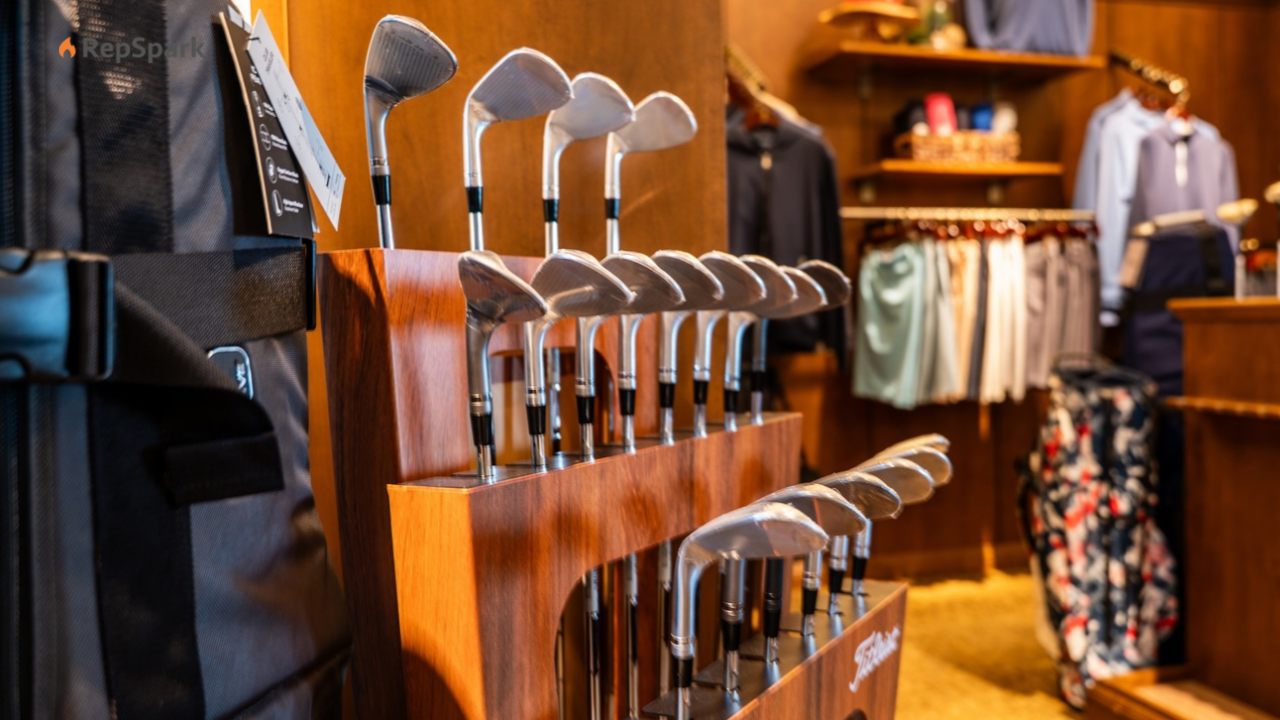
RepSpark Launches PerfectSpec™ to Simplify Wholesale Golf Club and Configurable Products Directly in the Wholesale Order

Why Sales, Ops, and Finance Rarely Agree on When It's Time to Switch Platforms

Why Some Brands Delay a Wholesale Platform Switch Until It's Too Late

What's Really Behind Declining Reorder Rates in Wholesale Apparel

Why Buyers Ghost Wholesale Reps After the First Order (and What to Do About It)

Why It's Hard to Replace In-Person Line Showings With Digital Showrooms

What Makes Choosing a Full Wholesale Platform So Difficult for Apparel Brands

What Problems Arise When Enterprise Brands Rely on Disconnected Wholesale Platforms?

Every Manual Step in a Wholesale Order, and What Replaces It

Charlie Golf Co. Brings Premium Junior Golf Bags and Clubs to Golf Retail on RepSpark

Who Should Be on the Business in Golf 100? Help Us Find Them

What Makes Implementing 24/7 Online Ordering So Difficult for Brands Growing Through Wholesale?

What Problems Do Independent Reps Face When Buyers Can't Place Orders Online, Anytime They Want

What Makes It Hard for Independent Sales Reps to Run Virtual Product Showings

How Wholesale eCommerce Platforms Actually Help Enterprise Brands Scale B2B Sales