
Best Alternatives to In-Person Trade Shows for Wholesale Apparel Selling
- Chapter 1 The Trade Show Math That Most VP Sales Leaders Are Finally Running — What the Full Cost of an In-Person Event Actually Looks Like
- Chapter 2 Event Microsites — The Highest-Conversion Trade Show Alternative Already Built Into Your Ordering Platform
- Chapter 3 Digital Trunk Shows and Rep-Led Virtual Market Events — How Your Reps Run Territory-Level Selling Events Without the Logistics
- Chapter 4 RepSpark Community as the Always-On Discovery Layer — The Equivalent of a Trade Show Floor That Never Closes
- Chapter 5 Pre-Season Launch Windows — Creating the Ordering Urgency of a Market Week Without a Physical Event
- Chapter 6 The Persistent Ordering Environment — Turning the Gap Between Events Into a Selling Channel
- Chapter 7 Measuring Digital Selling Alternatives Against Trade Show ROI — The Metrics That Actually Compare
- Chapter 8 Glossary & Frequently Asked Questions
The Trade Show Math That Most VP Sales Leaders Are Finally Running — What the Full Cost of an In-Person Event Actually Looks Like
Every VP Sales at an apparel brand has a version of the same uncomfortable conversation at the end of a major industry market event: the team is exhausted, the booth looked great, the conversations were strong — and then the order conversion numbers come in. The gap between how many buyer meetings happened during the event and how many orders were placed during and immediately after it is the number that makes the trade show ROI calculation uncomfortable. Not because trade shows don't work — they do work, for specific objectives — but because the full cost of a trade show has a habit of being underestimated, and the full return has a habit of being overestimated, and the VP Sales who has been running the same event calendar for three years has often not done the complete arithmetic on what each event actually costs against what it actually returns. This page is for VP Sales leaders who are ready to run that math, compare it honestly against what digital selling alternatives actually cost and return, and decide where their event budget belongs.
The full cost of an in-person trade show — the line items most event budgets leave out. The direct costs of trade show participation are visible and budgeted: booth space, booth design and fabrication, shipping and drayage, travel and hotel for the team, marketing materials, pre-event promotional spend. These are real costs and most VP Sales leaders know roughly what they add up to. The costs that most event budgets undercount are the indirect ones. The team's time — not just the days at the event, but the two weeks before the event spent on preparation (sample pulls, catalog printing, booth design reviews, logistics coordination) and the week after the event spent on follow-up (re-engaging buyers who didn't order on-site, processing the orders that did come in, managing the sample and display return). The opportunity cost of the team's time — the accounts that weren't prospected, the follow-up calls that weren't made, the pre-book outreach that didn't happen — during the three-week bubble of trade show preparation and recovery. The cost of orders that were started at the event but not completed — buyers who had productive conversations, took samples home, expressed strong intent, and then didn't convert to a submitted order in the weeks after the show. Full Turn Custom Apparel, a premium custom-branded apparel partner whose product is sold through green grass facilities, specialty retailers, and corporate event accounts, ran this arithmetic before deploying RepSpark and found that major industry trade shows were costing the brand nearly $100,000 per event — a figure that included not just the booth and travel costs but the full scope of team time and the trade show's true operational footprint on the organization.
What trade shows are actually good at — and the gap they leave open. This is not an argument that trade shows have no value. They are excellent at a specific set of things: creating relationship intensity between reps and buyers in a concentrated period, exposing the brand's new season to a large audience of buyers in a short window, generating the kind of face-to-face product interaction (picking up the polo, feeling the weight of the material, seeing the embroidery quality in person) that photographs and digital swatches can't fully replicate, and creating competitive awareness (what the brand down the aisle is showing this season, what buyers are responding to across the floor). These are real advantages and they are hard to replicate digitally. The gap that trade shows leave open is everything that happens before, between, and after the event: the buyer who couldn't attend but would have ordered, the account that had a great conversation at the booth but needed two more weeks to finalize their buying decision, the green grass facility head professional who places their at-once reorders independently but only gets exposed to the brand's new pre-book assortment when a rep follows up after the show. The best trade show alternatives don't try to replicate the in-person chemistry of a great booth conversation. They fill the gaps that in-person events structurally leave open. See how RepSpark Event Microsites extend a brand's market event reach beyond the buyers in the room.
Questions to Run the Trade Show ROI Calculation at Your Brand
- For the major industry trade shows and market events on your brand's current annual calendar — the events where the team physically attends with a booth, samples, and marketing materials — have you built a complete cost model for each event that includes direct costs (booth space, fabrication and drayage, travel and hotel, materials), indirect labor costs (the team's fully loaded time before, during, and after the event, estimated in hours and valued at burdened compensation), and opportunity costs (the accounts the team wasn't servicing and the outreach that wasn't happening during the event preparation and recovery window), and when you add all three categories together and divide by the number of orders placed during and in the 30 days following the event, what does the blended cost per order look like compared to the cost per order from your digital selling channels?
- For the buyers who attended your brand's booth at the most recent major market event and had what your team described as a productive conversation — the buyers who expressed interest in specific product categories, took samples or look books, and left with what felt like ordering intent — what percentage of those buyers placed an order within 60 days of the event, and for the buyers who didn't, what do you know about whether the dropout cause was preference change (they decided not to order), rep follow-up failure (the rep didn't re-engage at the right moment), or ordering friction (the buyer tried to order and hit a barrier in your ordering environment), and does that dropout profile tell you anything about which of those causes a digital selling alternative could address?
- For the buyers in your brand's target account base who did not attend the most recent major market event — the green grass facilities, specialty retailers, and corporate accounts that are on the brand's target list but whose head professionals weren't in the room during the event — what was the rep's mechanism for exposing those buyers to the new season's assortment after the show, and how does the conversion rate from those post-show rep outreach contacts compare to the conversion rate from buyers who saw the product in person at the event, and does that comparison tell you anything about how much of your event's ordering return comes from the in-person exposure specifically versus the rep relationship and assortment that could be delivered digitally?
- For the samples that your brand invests in producing and shipping to major trade show events — the quantity of samples, the production cost, the shipping and drayage cost, and the return logistics cost — have you estimated the per-sample cost of the trade show sample program and compared it to the cost of producing the high-quality product photography and digital presentations that a digital selling alternative would require, and does that comparison suggest that some portion of the sample investment is currently subsidizing a buyer experience (seeing the product in person) that a digital-first brand could replace with a significantly lower-cost digital equivalent?
- For the trade show events on your brand's calendar that have been on the calendar for three or more years — the events that the brand attends because it has always attended them, not because a recent analysis confirmed their return — when was the last time the brand conducted a fresh ROI calculation comparing the full cost of each event against the orders attributable to that specific event (not the orders that came in during the same season, but the orders that the brand's data or the rep's follow-up notes suggest were specifically influenced by the event), and does the absence of a recent analysis suggest that the event calendar's composition has been driven more by industry convention and competitive visibility than by a systematic evaluation of which events produce the best return on the brand's commercial investment?
Event Microsites — The Highest-Conversion Trade Show Alternative Already Built Into Your Ordering Platform
The most direct structural alternative to a physical trade show booth is a digital selling environment that the brand controls, the buyer accesses on their own schedule, and that converts browser intent to submitted orders without requiring the rep to be present for every transaction. RepSpark's Event Microsites are that environment: curated digital ordering storefronts published specifically for a market event, a territory selling period, or a buyer category — accessible via QR code or shared link, designed to surface the brand's new season or featured assortment in the same way a booth presentation does, and built to convert from first visit to submitted order within a single buyer session. The microsite doesn't replace every function of a trade show booth — it doesn't replicate the rep's physical presence or the buyer's ability to handle the product — but it replaces the booth's ordering function entirely, and it does something the physical booth cannot: it stays open after the last day of the show, it's accessible to buyers who couldn't attend, and it captures ordering intent from buyers in multiple time zones without requiring the rep to personally follow up with each of them.
How Full Turn Custom Apparel replaced its trade show model with microsites — and what changed. Full Turn's pre-digital trade show model involved producing, shipping, and staffing physical events that cost the brand nearly $100,000 per event. After deploying RepSpark, Full Turn rebuilt its event strategy around digital alternatives: digital trunk shows for independent sales events, member-guest tournament programs for green grass facility ordering, and regional employee uniform portals for corporate account fulfillment — all running on RepSpark microsites, all accessible via QR code or shared link, and none of them requiring the team to be physically present. A member-guest tournament at a green grass facility that would previously have required a rep to be on-site for two days to take orders became a QR-code-accessible ordering experience where club members could browse the curated tournament collection and place their orders on their own schedule. The team wasn't present. The orders were placed. The invoicing flowed through AIMS360. The microsite model didn't just reduce Full Turn's event cost — it changed which events the brand could cover. A rep who can run a microsite for 10 events simultaneously covers 10 markets. The same rep covering 10 events physically is a logistics impossibility. RepSpark powered 1,582 Event Microsites in 2025, generating $13.9 million in total revenue at an average of $8,800 per site — revenue captured through a digital ordering channel that required no booth, no drayage, and no hotel bill.
What makes an Event Microsite different from a standard product catalog link. The distinction that VP Sales leaders should understand is that an Event Microsite is not simply a link to the brand's ordering environment. It is a curated, purpose-built selling experience that reflects the specific context of the event it's supporting. The brand controls which products appear in the microsite (the market week assortment, the tournament collection, the corporate uniform options — not the full catalog), how they're organized and presented (a curated editorial flow rather than a full category browse), and when the microsite is active (the event window plus whatever post-event ordering period the brand chooses to maintain). That curation is what creates the event-like urgency that drives conversion: the buyer who accesses the microsite encounters an assortment that has been selected for them and a window that has a close — the same dynamics that drive ordering behavior at a physical event, without the physical event. The rep who shares the microsite link before the event window opens, mentions it during any direct buyer contact during the event period, and follows up with the link for buyers who haven't submitted before the window closes is running a digital selling event that parallels the physical booth's commercial function at a fraction of the cost. See how RepSpark Event Microsites are configured for market week selling, tournament ordering, and corporate programs.
Questions to Build Your Event Microsite Strategy
- For the market events and trade shows currently on your brand's annual calendar — the events where the team is physically present with a booth — have you mapped which events have a clearly defined target buyer list (the accounts you are trying to reach during that event's selling window) versus which events are general brand presence plays, and for the events with a clearly defined target buyer list, have you estimated what percentage of that list actually attends the physical event versus what percentage would have been reachable through a digital microsite that your rep team promoted to the full target list rather than waiting for buyers to come to the booth?
- For the tournament and event-based selling opportunities in your brand's golf channel — the member-guest tournaments, club championship events, invitational events, and corporate outings at green grass facilities where the brand's product is relevant — have you estimated the number of such events that your rep team is currently not covering (because the rep can't physically attend every tournament in their territory and the brand has no mechanism for ordering that doesn't require rep presence), and does that uncovered territory represent a meaningful revenue opportunity that a microsite-based ordering model (the head professional shares the QR code at the event registration desk) would capture without adding rep capacity?
- For the post-event ordering window that follows your brand's physical trade show participation — the 30 to 60 days after the show during which reps are following up with buyers who expressed interest but didn't order on-site — does your brand currently have a mechanism for directing those post-event buyers to a curated ordering experience that reflects the event's assortment and maintains the event's energy, or are post-event follow-ups directing buyers to the full ordering catalog without the curation and urgency that made the booth presentation compelling, and does the lack of a post-event digital ordering environment contribute to the dropout rate between event-period intent and submitted orders?
- For your brand's corporate and uniform program selling — the employee uniform portals, company outing programs, and branded merchandise programs for corporate accounts — does the current ordering model for those programs require a rep to be involved in every order (collecting sizes, quantities, and customization specifications manually and submitting them on the buyer's behalf) or do you have a self-serve ordering mechanism where the program's participants can order directly within a curated brand environment, and if the former, does the per-order rep time cost of your corporate program selling represent a margin compression that a microsite-based self-serve model would address?
- For the measurement of your brand's current trade show performance — the metrics you use to evaluate whether each event is producing the return that justifies its cost — does your measurement framework capture the difference between orders influenced by the event (the buyer had a productive conversation at the booth and placed an order within 60 days) versus orders coincidentally concurrent with the event (the buyer placed an order during the event window but would have placed it regardless of the event), and when you apply that distinction, does the ROI calculation for your highest-cost events still justify their position on the calendar, or does the corrected calculation suggest a reallocation of event budget toward digital alternatives that reach a larger buyer universe at a lower cost per influenced order?
Digital Trunk Shows and Rep-Led Virtual Market Events — How Your Reps Run Territory-Level Selling Events Without the Logistics
The traditional trunk show model — the rep who books a date at a green grass facility pro shop, ships samples two weeks in advance, spends two days on-site presenting to the shop's regular customers and club members, packs up the samples, and ships them to the next location — is a model whose economics made sense when it was the only mechanism for giving buyers a curated product presentation outside of a formal trade show or market week. It still works. It's also expensive, slow to scale, and limited in geographic coverage by the number of physical days in the rep's calendar. A rep who can physically attend 20 trunk shows per year in their territory is covering 20 selling events per year. The same rep who can run a digital trunk show on a RepSpark Event Microsite can run a selling event in any account in their territory during any week without leaving their home market — and they can run multiple events simultaneously, covering territory that physical travel makes inaccessible without adding rep days or hiring additional coverage.
What a digital trunk show looks like in practice — the rep's workflow from setup to order. A digital trunk show runs on the same Event Microsite infrastructure that powers Full Turn's member-guest tournament programs and corporate uniform portals. The rep creates or requests a microsite configured for the target account: the brand's current seasonal assortment, filtered to the product categories appropriate for that account's customer base, presented with the account's buying context in mind (a resort account gets resort-appropriate category curation; a private club gets club-appropriate private label options if the brand offers them). The rep shares the microsite link with the account's head professional or buyer before the event window opens — giving the buyer time to browse the assortment and build a draft order before the rep follows up. During the event window, the rep can be on a call with the buyer to answer questions and guide the selection, but the ordering itself happens in the buyer's environment, not on a form the rep fills out manually. The buyer submits. The order flows. The rep doesn't re-key anything. The event's ordering window stays open for the week after the rep's initial outreach, capturing any buyers who needed more time to finalize their selections after the initial presentation. What used to require a sample shipment, two days of travel, and a week of follow-up now requires a 30-minute setup and a 15-minute buyer call — with the same curated assortment presentation and the same ordering capability.
Territory coverage as the rep leverage argument for digital trunk shows. From a VP Sales perspective, the most important implication of the digital trunk show model is not the cost reduction — it's the territory coverage expansion. The constraint on how many accounts a rep can present to in a given season is the number of physical days available for travel-based events, minus the time the rep needs for administrative work, pre-book follow-up, at-once order servicing, and the other activities that consume a rep's calendar. For a rep who currently covers 80 accounts in a territory with enough geographic spread that physical visits to all 80 require overnight travel, the physical trunk show model means that some accounts get a presentation and most get only a rep check-in call and a catalog. The digital trunk show model means that all 80 accounts can get a curated product presentation during the season's selling windows — not instead of the in-person relationship, but in addition to it, filling the presentation gap for accounts that the physical calendar can't reach. That presentation gap is where ordering intent is lost to competitors who happen to have more physical presence in the territory. Closing it doesn't require hiring additional reps. It requires a platform that lets one rep run territory-level selling events digitally. See how RepSpark's microsite infrastructure supports territory-level digital selling event strategy.
Questions to Design Your Rep-Led Digital Selling Event Program
- For the accounts in your rep network's territory that are not currently receiving a curated product presentation during your brand's pre-book selling seasons — accounts where the rep's check-in consists of a catalog drop and a follow-up call rather than a structured presentation of the new season's assortment — have you estimated the revenue impact of that presentation gap, specifically, how the pre-book order size from accounts that received a rep-led product presentation compares to the order size from accounts that received only a catalog and a call, and does that comparison suggest a meaningful revenue lift available from extending presentation coverage digitally to accounts the physical calendar can't reach?
- For the reps in your network who are managing the highest-volume territories — the territories with the most accounts, the most geographic spread, and the most seasonal selling activity — how many selling events (defined as a structured product presentation followed by an ordering window) are those reps able to run per season given their current physical calendar, and if you could increase that number by 50% through digital trunk shows that don't require physical travel, what would the incremental revenue from the additional selling events represent at the average order size those reps produce from presentation-led accounts?
- For the accounts in the golf channel that your reps serve — the green grass facilities, resort shops, and club pro shops that represent the brand's distribution network — what is the typical decision-making timeline from a buyer's first exposure to a new seasonal assortment to a submitted pre-book order, and for the accounts where that timeline extends beyond the physical event window (the rep can be on-site for two days but the buyer needs two more weeks to finalize their selection), does your brand have a mechanism for keeping the assortment and the ordering window available to that buyer after the rep has moved on to the next account, or does the rep's departure from the account close the effective ordering window even when the buyer's intent is still open?
- For your brand's sample investment — the quantity and cost of samples produced for the rep network's physical selling activities — have you analyzed the relationship between sample depth (the number of physical samples in a rep's kit) and ordering conversion for different account types, and specifically, for the account types where digital presentations (high-quality photography, configured product visualization through PerfectSpec™, video of the product in wear context) produce ordering conversion rates comparable to physical sample presentation, does the brand have a framework for reducing physical sample depth in those account types and redirecting the sample budget toward digital content production that serves more accounts at a lower per-presentation cost?
- For the administrative overhead of your brand's physical trunk show program — the sample shipping logistics, the event scheduling coordination between reps and account buyers, the sample return tracking, and the post-event order entry that follows each physical event — have you estimated the total administrative time cost per physical trunk show (across the rep, the customer service team member who coordinates, and the operations team member who handles sample logistics), and does that per-event administrative cost, multiplied by the number of physical trunk shows your rep network runs per year, represent a budget that could fund a digital event infrastructure supporting significantly more selling events at a lower total cost?
RepSpark Community as the Always-On Discovery Layer — The Equivalent of a Trade Show Floor That Never Closes
One of the most valuable things a trade show floor does for a brand's VP Sales is something that never appears in the event ROI calculation: it surfaces buyers who are actively in discovery mode — looking for new brands, evaluating alternatives to their current suppliers, open to adding a new line to their assortment — in a concentrated, navigable environment. A buyer walking the trade show floor is a buyer who has already self-selected as being in an open-minded, evaluating posture, and whose discovery of your brand's booth is an inbound signal that costs the brand only the booth placement fee to capture. The equivalent inbound signal outside of a trade show event requires either a marketing investment to drive awareness (digital advertising, email acquisition, SEO) or a rep-driven prospecting effort to identify and develop the target account. Neither of these is free. The question for a VP Sales who is re-evaluating the trade show calendar is not just "what does the event cost?" but "how do we replace the inbound discovery function of a trade show floor when we're not at a show?"
RepSpark Community as the inbound discovery infrastructure that runs between events. RepSpark Community is a buyer-facing network connecting 100,000+ active wholesale buyers — green grass facility head professionals, specialty retail buyers, and corporate event decision-makers — with brands on the platform. The discovery function works in both directions: buyers browse Community to discover new brands, and brands have visibility into which Community buyers are actively looking at their catalog or requesting access. When a head professional at a green grass facility discovers the brand through Community and requests access, that discovery required no booth, no travel, no drayage, and no $100,000 event investment. The brand's cost of acquiring that inbound buyer is the cost of approving the access request and onboarding the buyer to the ordering environment. In 2025, buyer requests through Community grew 65% year over year with a 94% approval rate — across the platform's 100,000+ active buyer network. For a VP Sales who is questioning whether the brand's trade show calendar is the most efficient mechanism for reaching new buyers, Community is the structural alternative: a discovery network where buyers find brands at their own initiative, year-round, without the brand needing to be present at an event to be found.
The difference between event-driven discovery and always-on discovery — what it means for buyer pipeline development. An event-driven discovery model — the trade show model — produces buyer discovery in concentrated bursts: for three days in January at one event, the brand is discoverable to every buyer attending. For the other 362 days of the year, the brand's discoverable-to-new-buyers surface area is limited to whatever marketing and rep outreach the team runs outside of events. An always-on discovery model — the Community model — produces a continuous inbound signal: new buyers are requesting access to brands on the platform every day, not just during event windows. The VP Sales who monitors the brand's Community request rate on a weekly basis is watching the leading edge of distribution growth in a way that the trade show model's buyer pipeline doesn't support. The buyers requesting access in February are pipeline for spring pre-book. The buyers requesting access in August are pipeline for fall pre-book. That pipeline is building continuously rather than in the event-defined bursts that trade show participation produces, and it requires no event budget to generate. See how RepSpark Community connects brands with the wholesale buyer network between market events.
Questions to Evaluate RepSpark Community as a Trade Show Discovery Alternative
- For the new accounts your brand has acquired over the past 12 months — the accounts that placed their first order with the brand during this period — have you analyzed the acquisition source of each new account (trade show event meeting, rep outbound prospecting, inbound referral, digital discovery through Community or marketing), and when you calculate the cost per new account by acquisition source (all costs associated with trade show participation divided by trade show-attributed new account acquisitions; rep time per outbound-prospected new account; marketing spend per digitally-acquired new account), which acquisition channel produces the lowest cost per new account, and does that comparison suggest a reallocation of acquisition budget toward the lower-cost channels?
- For the buyers currently in your brand's ordering environment — the accounts that are actively ordering — what percentage discovered the brand through a trade show or market event versus through a digital channel (Community, the brand's website, a rep referral to an existing account that they then connected digitally), and for the accounts that discovered the brand digitally, how does their average lifetime value trajectory compare to the accounts that discovered the brand through event participation, and does the comparison suggest that digitally-acquired accounts are commercially equivalent to event-acquired accounts in terms of long-term value?
- For the head professionals and buyers in your target market who are not currently ordering from your brand — the green grass facilities, resort shops, and specialty retailers that fit your brand's distribution profile but haven't yet made contact — what is the rep's current mechanism for creating brand awareness and discovery with those accounts outside of event seasons, and does that mechanism produce a consistent inbound signal (buyers requesting access after seeing the brand in a rep presentation, at a referred account, or through Community), or does new account discovery happen primarily during event windows and slow to a trickle between shows?
- For the trade shows and market events where your brand is currently participating specifically to generate new account discovery — events where the team's primary objective is brand awareness and new relationship initiation rather than deepening relationships with existing accounts — have you compared the cost of generating a new account inbound signal through trade show participation (the event's full cost divided by the number of new discovery conversations) against the cost of generating the same signal through Community (a buyer request requiring only approval and onboarding), and does that comparison suggest that the event's discovery function is worth its incremental cost relative to what Community provides year-round?
- For the buyer discovery that happens at trade show events your brand attends — the new contacts that reps collect, the business cards exchanged, the new account forms filled out at the booth — what is your brand's conversion rate from trade show discovery contact to placed first order within 90 days, and how does that conversion rate compare to the conversion rate from RepSpark Community buyer requests where the buyer has already self-identified as interested in the brand's products by requesting access, and does the comparison of conversion rates across the two discovery channels suggest a meaningful difference in buyer qualification that affects the ROI calculation for each channel?
Pre-Season Launch Windows — Creating the Ordering Urgency of a Market Week Without a Physical Event
One of the structural functions that trade shows perform for wholesale apparel brands — a function that VP Sales leaders often don't name explicitly when evaluating event ROI — is urgency creation. A trade show event creates a natural ordering deadline: there is a window (the duration of the event plus the post-show follow-up period) during which the season's new assortment is featured and during which ordering conversations are actively happening across the market. Buyers who don't engage with the brand during that window don't miss the product — they can still order it after the show — but they do miss the concentrated attention, the rep presence, and the social proof of seeing other buyers engaging with the same assortment. That urgency is commercially valuable. It is also possible to create without a physical event, and the brands that have figured out how to create it digitally have unlocked a selling model that isn't constrained by event calendars, booth budgets, or geographic attendance.
The launch window model — what it requires and how it works. A pre-season launch window is a time-bounded digital selling event: a specific period during which the brand's new seasonal assortment is published to the buyer's ordering environment with an explicit close date. The close date creates the same urgency that a trade show's last day creates, without requiring anyone to get on a plane. The brand controls the duration of the window (typically two to four weeks for a pre-book launch), the assortment presented (the full pre-book assortment or a curated collection within it), the communication cadence that drives buyers to the window (a launch announcement, a mid-window reminder, an expiring window alert in the final days), and the terms that incentivize early submission (early order benefits, production priority, pre-book specific pricing if the brand's model uses it). RepSpark's platform supports each of these elements: the microsite provides the curated assortment environment, Always-On Cart preserves buyer draft orders across sessions so that buyers who start their order in week one can complete it in week three, and expiring draft alerts automate the closing-window urgency for buyers who have started an order but haven't submitted. The launch window model is not a simplified trade show — it is an intentionally designed digital selling event that uses time, curation, and communication to produce the urgency that drives ordering decisions in the absence of a physical event.
How the launch window model changes the VP Sales planning calendar. The trade show event calendar constrains the VP Sales planning function in a specific way: the events are fixed dates (most major industry trade shows have set dates that the brand works around), and the brand's product development, sample production, and marketing timelines have to align to those fixed dates even when the internal timeline suggests a different readiness date would produce better commercial outcomes. The launch window model is brand-controlled: the window opens when the brand is ready, runs for the duration the brand determines produces the best submission rate, and closes at a date the brand sets. For a VP Sales who has watched a season's pre-book window get compressed because the trade show date is fixed and the brand's product development ran two weeks late, the ability to set the window date independently of a third-party event calendar is a meaningful planning advantage. The brand's launch window is on the brand's schedule. The products are ready when they go to buyers. The selling window runs as long as the brand's submission data suggests it should. And none of that depends on a hotel block reservation made eight months in advance. See how RepSpark's pre-book window management tools support launch window selling strategy.
Questions to Design Your Pre-Season Launch Window Strategy
- For the pre-book selling windows in your brand's most recent selling year — the periods during which the rep team was actively selling the new season's assortment and buyers were placing pre-book orders — was the timing of those windows determined by the brand's internal product readiness (the assortment was ready and the samples or digital presentations were available to buyers when the window opened) or by external event dates (the trade show date was fixed, and the brand timed its pre-book window to align with or immediately follow the show), and in seasons where the two were misaligned (the brand opened the pre-book window at the trade show date even though the assortment wasn't fully ready), what was the impact on buyer engagement and submission rates in the first two weeks of the window?
- For the buyers in your account base who are most likely to respond to digital pre-book urgency signals — buyers who have historically submitted in the first two weeks of the window, who engage with rep outreach proactively, and who have demonstrated self-directed ordering behavior in your platform — have you segmented those buyers and designed a launch window communication sequence that rewards their early engagement (early-submission acknowledgment, production priority, early-window exclusive access to new styles), and does the submission timing data from those buyers suggest that a well-structured launch window with a clear open date, a mid-window check-in, and an expiring window alert in the final days would produce submission rates comparable to what a trade show event produces from the same buyer segment?
- For the buyers in your account base who are most reliant on the trade show environment to make their pre-book ordering decisions — buyers who historically don't submit until they've attended the event and seen the product in person, who need the tactile product experience to commit to their pre-book selection — have you estimated what percentage of your pre-book order volume depends on this event-reliant buyer behavior, and for those buyers, does your brand's digital launch window strategy include a mechanism for replicating the product experience that drives their ordering decision (high-quality product photography, available-to-sell inventory data, configured product visualization, or a targeted invitation to a physical rep presentation before the digital window opens)?
- For the communication sequence that your brand currently uses to drive pre-book submissions during the selling season — the rep outreach cadence, the marketing emails, the platform notifications — have you tested the impact of a structured, platform-supported launch window communication sequence (a launch announcement when the window opens, a mid-window submission rate check shared with buyers to create social proof, an expiring draft alert for buyers who have started but not submitted, and a final-day closing announcement) against your current unstructured communication approach, and does the data from any such test suggest that a more structured communication cadence produces meaningfully better submission rates within the same window length?
- For the accounts that miss your brand's pre-book window entirely — buyers who don't submit during the window and shift to at-once reorders for the season — what is the typical revenue differential between a pre-book order and the equivalent at-once order from the same buyer (the volume commitment the buyer makes in pre-book versus what they order at-once when the inventory is available), and does that differential, multiplied by the number of accounts that miss your pre-book window in an average season, represent a recoverable revenue number if a better-designed launch window with a clearer structure and a more automated communication sequence converted even a portion of those at-once buyers back into pre-book submitters?
The Persistent Ordering Environment — Turning the Gap Between Events Into a Selling Channel
The trade show model creates a commercial calendar structured around peaks and gaps: the peak is the event (or the month following it), and the gap is everything between events where the brand's ordering environment is technically accessible but isn't being actively sold into. Most wholesale apparel brands have significantly more gap than peak in their commercial calendar. A brand that participates in three major industry market events per year has approximately 12 weeks of event-driven commercial peak and 40 weeks of gap. What happens in those 40 weeks is determined almost entirely by rep outreach, buyer initiative, and the degree to which the brand's ordering environment makes independent buying easy enough that buyers take it upon themselves to order without a rep prompting them. For VP Sales leaders who have optimized the peak well and left the gap to chance, the gap is where a significant amount of potential revenue isn't being captured — not because buyers don't want to order, but because the brand doesn't have a coherent commercial strategy for the weeks between events.
Always-On Cart and the buyer who orders on a Sunday evening without calling the rep. The at-once reorder — the buyer who is running low on a core style and needs to replenish before the season ends — is the clearest example of gap-period ordering that most wholesale apparel brands are not capturing as efficiently as they could. The buyer's intent is clear, their need is immediate, and their ordering should be frictionless. But if the buyer's draft order from their last session expired because the platform's session timeout cleared their cart, the buyer has two options: rebuild the order from scratch (friction) or call the rep (time cost for both). RepSpark's Always-On Cart eliminates that failure mode. Draft orders persist indefinitely — no session timeout, no cart expiration — so that the buyer who browsed the catalog on Tuesday, added 12 styles to their draft, and then got pulled into a club event on Wednesday can come back on Sunday evening and pick up exactly where they left off. The order submits. The rep wakes up Monday morning to a submitted order that required no involvement. That's not a feature. That is a commercial strategy for the 40 weeks between events when the rep can't be present for every ordering decision.
Expiring draft alerts as the automated outreach that fills the gap without consuming rep time. The gap between events is also where pre-book draft orders go unsubmitted. A buyer who started a pre-book draft in week two of the selling window and hasn't come back to complete it by week five is a buyer with open intent and a time-sensitive deadline. The rep who is responsible for following up with every buyer in this situation is the rep who is spending 30% of the last two weeks of the pre-book window on submission-chasing outreach rather than on the relationship-development activities that produce better orders from the accounts that need proactive attention. RepSpark's expiring draft alerts automate that submission-chasing activity: the buyer receives a notification with the window's close date, a summary of what's in their draft, and a direct link back to their cart. The rep receives visibility into which accounts have submitted after receiving the alert and which accounts still haven't. The automated alerts handle the routine follow-up. The rep's attention goes to the accounts where automated alerts weren't sufficient and a personal rep outreach is the escalation that closes the submission. The gap-period ordering strategy isn't just about at-once reorders — it's about every draft order that's sitting in the platform that the rep can't personally follow up on before the window closes. See how RepSpark Flow's always-on ordering tools turn the gap between events into a continuous selling channel.
Questions to Build Your Between-Events Ordering Strategy
- For your brand's at-once ordering volume — the orders placed outside of pre-book selling windows for immediate replenishment of sold-through inventory — how is that volume distributed across the year (are there at-once ordering peaks that correlate with specific buyer behaviors or selling seasons, and are there gap periods where at-once volume drops to near zero), and for the gap periods where at-once volume is low, do you have data on whether the low volume reflects a genuine absence of buyer demand or whether it reflects ordering friction (buyers who would order if the process were easier choosing to wait for the next rep contact or the next event rather than navigating the ordering environment independently)?
- For the buyers in your account base who have demonstrated self-serve ordering capability — buyers who have placed at-once orders independently without rep initiation, who log into the ordering platform without being prompted, and who have a track record of building draft orders across multiple sessions — what is the average order size and ordering frequency for those buyers compared to the buyers who order primarily through rep-assisted transactions, and does that comparison suggest that the self-serve buyers are commercially equivalent to the rep-assisted buyers in terms of order value, and if so, does the brand have a strategy for increasing the percentage of the account base that is capable of and comfortable with self-serve ordering?
- For the pre-book drafts that are sitting unsubmitted in your ordering environment in the final two weeks of each selling window — the orders that buyers started but haven't completed — does your brand have a data view that shows the rep and sales leadership the aggregate value of unsubmitted drafts by account, by rep territory, and by days remaining in the window, and if not, is the absence of that data view contributing to a reactive submission-chasing approach (the rep contacts buyers who haven't submitted without knowing which of those buyers have an in-progress draft that's close to completion versus which have never started an order) rather than a prioritized intervention approach (the rep focuses on the buyers with the largest unsubmitted drafts and the most recent platform activity, because those are the buyers closest to submitting with a small push)?
- For the accounts in your brand's network that consistently place at-once reorders for core styles between pre-book seasons — the buyers whose at-once activity represents a predictable revenue stream that the rep team doesn't need to actively sell — does your brand have a strategy for making that at-once reorder experience as frictionless as possible (a saved order history that the buyer can reorder from, a core style assortment view that surfaces the buyer's most frequently ordered styles first, available-to-sell visibility so the buyer can see what's in stock before they build an order), and if the buyer's current reorder experience requires them to rebuild their order from scratch each time, is there a retention risk in that friction that a better-designed ordering environment would reduce?
- For the correlation between pre-book window submission timing and at-once reorder behavior in the season that follows — specifically, whether accounts that submit earlier in the pre-book window also tend to place larger at-once reorders during the season, and whether accounts that miss the pre-book window have higher or lower at-once reorder rates than accounts that submitted — does your brand have enough data to establish that pattern, and if so, does the pattern suggest that the commercial strategy for the gap period between events (which accounts to prioritize for at-once reorder outreach, which accounts to prioritize for pre-book window engagement in the following season) could be informed by submission timing data from prior windows?
Related Resources
- What Is a B2B Sales Portal, and Why Do Retailers Expect One in 2026?
- Modern Alternatives to Spreadsheets for Managing Wholesale Orders
- What Is a B2B Retailer Marketplace, and How Do They Work for Brands?
- Wholesale vs. Retail: What Every Growing Apparel Brand Needs to Know
- Multi-Warehouse Inventory Allocation Guide for B2B
Measuring Digital Selling Alternatives Against Trade Show ROI — The Metrics That Actually Compare
The reason most wholesale apparel brands haven't shifted more of their event budget to digital alternatives isn't that the digital alternatives don't work. It's that the comparison between trade show ROI and digital alternative ROI is usually made on the wrong terms, using the wrong metrics, and with an asymmetry in how thoroughly each is measured. Trade shows are measured generously: the revenue that comes in during the event season gets attributed to the event, the new accounts who ordered for the first time in the event month get counted as event-acquired accounts, and the brand-awareness and relationship-maintenance value of the event is treated as an unquantifiable positive that tips the ROI calculation in the event's favor even when the quantifiable numbers are thin. Digital alternatives are measured skeptically: each microsite's revenue is compared against the trade show's total revenue (a comparison that ignores the fact that the trade show costs ten to twenty times as much), and the distributed inbound discovery value of Community isn't measured at all because it doesn't produce a clean attribution report. The VP Sales leader who wants to make an honest comparison needs to establish the same measurement standards for both sides of the analysis.
The metrics that make the comparison honest — what to measure on both sides. On the trade show side, the measurement standard should be: total event cost (all direct and indirect costs, including the team's fully loaded labor time before, during, and after the event) divided by attributed orders (orders placed by buyers who attended the event and placed their order during the event or within 30 days of it, minus orders that would have placed regardless of event attendance based on historical ordering behavior). On the digital alternative side, the measurement standard should be: total microsite and Community investment (platform subscription allocation, content production for microsites, rep time spent setting up and promoting digital events) divided by attributed orders (orders placed through microsites during the event window and Community-sourced orders from buyers who discovered the brand through the platform). The comparison is not cost per order on the trade show side versus revenue on the digital side — it is cost per influenced order on both sides, using a consistent attribution methodology. When the comparison is made on those terms, the digital alternative's cost-per-influenced-order is typically lower by a significant margin, because the microsite's cost structure doesn't include booth fabrication, drayage, and hotel bills.
The metrics that belong in the digital alternative measurement framework — what RepSpark's platform data makes possible. The VP Sales leader who moves budget from trade shows to digital alternatives needs a measurement framework that gives leadership confidence in the digital model's commercial performance. RepSpark's platform data supports that framework: Event Microsite revenue by site (which events produced the most orders and at what order value), Community buyer request rate by week (the leading indicator of distribution growth), pre-book window submission rate by account and territory (the efficiency of the digital selling window), draft-to-submitted conversion rate (what percentage of buyers who started an order completed it), and at-risk account identification (which accounts are deviating from their historical ordering pattern before the window closes). These metrics collectively give the VP Sales leader a commercial picture of the digital selling environment that is at least as rich as — and in some dimensions richer than — the event-level data that most trade show participation produces. The trade show doesn't tell you which conversations influenced which orders. The platform tells you exactly which buyers engaged with which microsites and what they ordered. See how RepSpark's data layer gives VP Sales leaders the measurement framework for digital selling event strategy.
Questions to Build Your Digital Selling ROI Measurement Framework
- For the trade show events on your brand's current annual calendar, have you established a consistent attribution methodology for measuring each event's commercial contribution — specifically, a definition of which orders are "event-influenced" (placed by a buyer who attended the event, within a defined post-event window, and where the order was not predictable based on that buyer's historical ordering behavior independent of the event) versus which orders are "event-concurrent" (placed during the same period as the event but would have been placed regardless of event attendance), and when you apply that attribution methodology to your most recent event season's order data, how does each event's attributed revenue compare to its full cost?
- For the Event Microsites your brand has run or is planning to run as alternatives to physical event participation, have you established the same attribution methodology for microsite revenue as you are applying to trade show revenue — specifically, defining which orders placed through a microsite during the event window represent genuine incremental revenue (orders that would not have been placed without the microsite's curation and urgency) versus orders that would have been placed through the standard ordering environment regardless of the microsite — and does applying that methodology to your microsite data produce a cost-per-influenced-order metric that you can compare directly to the trade show's cost-per-influenced-order?
- For the Community buyer discovery that is happening on your brand's RepSpark environment — the buyers who are requesting access through the platform rather than through direct rep outreach or trade show contact — have you built a cohort analysis that tracks those Community-sourced accounts from their initial access request through their first order and their subsequent ordering history, and does the lifetime value trajectory of Community-sourced accounts support or undermine the case for investing in Community as a trade show discovery alternative, and specifically, do Community-sourced accounts produce lifetime value comparable to trade show-sourced accounts at a meaningfully lower acquisition cost?
- For the leadership reporting that your VP Sales function currently produces about commercial performance during and after trade show events — the reports that the brand's CEO or commercial leadership team reviews to evaluate event ROI — does that reporting framework apply the same rigor to attributing revenue to events that it applies to attributing cost (most brands have detailed cost reporting for events and loose attribution reporting for event-influenced revenue), and if the revenue attribution reporting is less rigorous than the cost reporting, does the asymmetry suggest that the brand's decision-making about event calendar composition is being made with an overestimate of event return and an underestimate of event cost?
- For the VP Sales leader who is building the internal business case for shifting event budget from trade shows to digital alternatives — the presentation to the CEO or CMO or board that justifies the reallocation — what is the most compelling data point from your brand's own ordering history that demonstrates a digital selling channel (a microsite that produced revenue from accounts that didn't attend the physical event, a Community discovery that produced a first order at lower cost than a trade show-sourced account) outperforming the equivalent trade show metric on a cost-per-order basis, and does presenting that data point alongside the trade show's full cost per influenced order produce a reallocation case that leadership can approve without requiring a pilot program, or does the internal culture around event participation require a pilot period that demonstrates digital alternative performance before leadership is comfortable with a material budget reallocation?
Glossary and FAQ
Glossary
- Event Microsite
- A curated digital ordering storefront published for a specific selling event — a market week, a rep-led territory selling period, a member-guest tournament program, a corporate uniform ordering event — accessible via QR code or shared link without requiring a physical rep presence. Event Microsites present a brand-controlled assortment appropriate for the event's buyer context, include a time-bounded ordering window that creates purchase urgency, and capture submitted orders directly through the RepSpark platform connected to the brand's ERP. RepSpark powered 1,582 Event Microsites in 2025, generating $13.9 million in total revenue at an average of $8,800 per site. Full Turn Custom Apparel replaced a trade show model that cost nearly $100,000 per event with microsite-based digital trunk shows, member-guest tournament programs, and regional employee uniform portals — events where the team is not physically present but orders are placed and processed through the platform.
- Digital Trunk Show
- A rep-led virtual selling event that replicates the commercial function of a physical in-store trunk show — a curated product presentation, a defined ordering window, and a structured buyer engagement sequence — without requiring the rep to ship samples to a physical location or be present at the account during the ordering period. A digital trunk show runs on a RepSpark Event Microsite configured for the target account's buyer context, shared by the rep before the event window opens, and accessible to the account's buyers across the event window without logistical constraints. For a VP Sales managing a territory-based rep network, digital trunk shows enable the same rep to run selling events across multiple accounts simultaneously — covering territory that physical travel makes impossible without hiring additional rep coverage.
- Launch Window
- A time-bounded digital selling event in which the brand's new seasonal assortment is published to the buyer's ordering environment with a defined open date and close date. The launch window creates the same commercial urgency that a trade show event creates — a period during which the new season is featured and buyers are actively making ordering decisions — without depending on a third-party event calendar or a physical event infrastructure. The brand controls the window's open date, duration, assortment presentation, and communication cadence (launch announcement, mid-window engagement, expiring window alert). Launch windows are typically used for pre-book selling periods but can also be used for curated at-once programs, end-of-season clearance events, and special program introductions.
- Always-On Cart
- A RepSpark capability that preserves buyer draft orders indefinitely — with no session timeout and no cart expiration — so that buyers can build orders across multiple sessions spanning days or weeks without losing their progress. In the context of trade show alternatives, Always-On Cart is the mechanism that keeps a buyer's ordering intent alive between the first engagement with a digital selling event and the moment they complete and submit their order. Without Always-On Cart, a buyer who browses a launch window on Tuesday and returns on Friday starts over — friction that disproportionately affects the gap-period ordering (between events) that the brand's between-event commercial strategy depends on. With Always-On Cart, the buyer's Tuesday session is exactly where they left it on Friday, and the submission friction is eliminated.
- Expiring Draft Alerts
- Automated notifications sent to buyers who have an unsubmitted draft order as a pre-book window approaches its close date, including the window's close date, a summary of the draft's contents, and a direct link back to the buyer's cart. Expiring draft alerts replace the rep's manual submission-chasing activity — contacting each buyer who hasn't submitted individually — with a platform-automated communication that handles routine follow-up without consuming rep time. The rep's attention is preserved for the accounts where automated alerts haven't been sufficient and a personal outreach is the escalation that converts the draft to a submitted order. In the context of digital selling alternatives to trade shows, expiring draft alerts are the mechanism that recovers ordering intent from buyers who engaged with a launch window or microsite, started an order, and didn't complete it before the window closed.
- At-Risk Flagging
- A RepSpark Flow capability that identifies wholesale accounts whose current ordering behavior deviates from their own individual historical pattern — not from a population average. An account that consistently submits in week four of a pre-book window is not at risk in week three. An account that has submitted in week one for three prior seasons and hasn't logged in by week three of the current window is flagged, because that specific account's deviation from its own pattern is the signal. At-risk flagging gives the rep and VP Sales a prioritized list of accounts that warrant proactive outreach before the window closes — so that rep time and leadership attention are concentrated on the accounts where intervention is most likely to produce a submitted order rather than being distributed uniformly across all non-submitting accounts.
- RepSpark Community
- The buyer-facing discovery network within RepSpark's platform, connecting 100,000+ active wholesale buyers — including green grass facility head professionals, specialty retail buyers, and corporate event decision-makers — with brands on the platform. In the context of trade show alternatives, Community is the always-on inbound discovery infrastructure that replaces the trade show floor's discovery function between events: buyers browse Community to find new brands and request access at their own initiative, year-round, without the brand needing to be present at an event to be discovered. In 2025, buyer requests through Community grew 65% year over year with a 94% approval rate. For VP Sales leaders evaluating trade show ROI, Community represents the inbound discovery channel whose cost-per-new-account compares favorably to trade show participation as an account acquisition mechanism.
- Available-to-Sell
- An inventory calculation that reflects what the brand can actually commit to a buyer order — not just current on-hand stock, but what is available after accounting for future-dated orders already placed against that inventory and any incoming production expected before the ship date. In digital selling environments where the buyer is ordering without a rep present to verify availability, accurate available-to-sell data is what gives buyers the confidence to submit orders independently without calling the customer service team to confirm that the brand can fill what they're ordering. Full Turn Custom Apparel's deployment of AIMS360's available-to-sell by date calculation — surfaced through the RepSpark API — eliminated the manual inventory verification step that had consumed 2–4 hours per week of operations time and required buyer questions to be routed through a human before they could be answered.
- Pre-Book Window
- The defined seasonal period during which wholesale buyers commit to advance orders for the following season's inventory. Pre-book windows are the highest-stakes commercial period in a wholesale apparel brand's calendar because pre-book submission rates determine production planning accuracy and inventory investment efficiency. In the context of trade show alternatives, the pre-book window is the digital selling event whose design — open date, close date, assortment curation, communication cadence, and ordering urgency structure — determines whether the brand can capture equivalent pre-book commitment from its buyer base through a digital launch window as it previously captured through trade show participation.
- PerfectSpec™
- RepSpark's configurable product ordering capability that allows buyers to select options for configurable products — shaft flex on a club, loft on a wedge, size and inseam on a pant, embroidery color on a polo — within the digital ordering environment, with pricing and available-to-sell inventory updating in response to each selection. In the context of digital selling events, PerfectSpec™ is the capability that extends a brand's configurable product line into the self-serve ordering environment — allowing buyers to specify and order configured products without the rep's assistance and without the physical product interaction that configured product selling previously required. For a brand whose product line includes configured or customized products, PerfectSpec™ is the technical prerequisite for including those products in a digital trunk show or launch window without routing every configured order through a rep-assisted transaction.
Frequently Asked Questions
Can digital selling alternatives fully replace trade show participation, or is some level of in-person event attendance always necessary?
Digital selling alternatives can fully replace the commercial functions of trade show participation — ordering, discovery, pre-book commitment, new account acquisition — but they cannot replicate the physical product interaction that some buyer decisions depend on. For categories where buyers need to feel the material, see the embroidery quality in person, or evaluate a product against competitors' physical samples, in-person events retain an advantage that digital presentations can't eliminate entirely. The practical answer for most VP Sales leaders is a hybrid model: strategic in-person events for the buyer segments and product categories where physical presence drives the highest ordering conversion, supplemented by digital alternatives (microsites, digital trunk shows, Community, launch windows) for the buyer segments, geographic markets, and time periods where in-person events are logistically impractical or commercially inefficient. The hybrid model typically reduces the number of physical events on the calendar rather than eliminating them entirely, concentrating physical event investment on the events with the strongest verified ROI and replacing the marginal events with digital alternatives that reach a broader buyer universe at a lower cost per influenced order.
How does a VP Sales team build internal organizational support for shifting event budget toward digital selling alternatives?
The most effective internal argument for the shift is a pilot-based approach: rather than proposing to eliminate major events from the calendar entirely, propose a pilot that runs digital alternatives in parallel with one event season, measuring the digital alternatives' performance against the event using consistent attribution methodology. The pilot should select one event that is currently the most questionable ROI on the calendar — the event where the full cost calculation looks least favorable relative to attributed orders — and replace it with a combination of microsites, a digital launch window, and Community engagement, measuring the results against the prior year's same event. If the pilot produces equivalent or better attributed orders at lower cost, the case for a broader reallocation is made with the brand's own data rather than with an external benchmark. The organizational resistance to reducing event participation is primarily cultural — there is a comfort in the familiarity of the event calendar and an anxiety about the brand's competitive visibility if it reduces presence at industry events — and that resistance is most effectively addressed by demonstrating digital alternative performance with real commercial data from the brand's own buyer base rather than by arguing from principle.
For a brand with a significant percentage of buyers who prefer to place orders in person with a rep — buyers who are not naturally inclined toward self-serve digital ordering — how does the digital alternative model address those buyers?
Digital selling alternatives don't require every buyer to be a self-serve digital orderer. The model works for the segments of the buyer base that are ready to order digitally, and it uses the digital infrastructure to free the rep's time for the accounts that genuinely need a person-to-person selling interaction. A buyer who will only order after a rep-led presentation in their shop is a buyer the rep should be physically visiting — and the digital alternative model increases the rep's available capacity for those visits by eliminating the rep's time commitment to digital trunk shows and launch window management for the buyers who can self-serve. The goal isn't to convert every buyer to self-serve ordering. It's to make self-serve available to the buyers who prefer it, capture the ordering intent from accounts the rep can't physically reach, and free the rep's attention for the relationship-intensive accounts that need and reward that investment. The rep who is freed from running 20 physical trunk shows per year has time to run five deep, high-quality in-person selling events for the accounts that need them — with better preparation, better follow-up, and better commercial outcomes than the rep who is physically present at 20 events but stretched thin across all of them.
What is the relationship between Event Microsites and the brand's main ordering catalog — is the microsite a separate system or part of the same platform?
Event Microsites in RepSpark are curated views within the same platform that hosts the brand's main ordering catalog — not separate systems requiring separate logins, separate account management, or separate reporting. The microsite is the platform's way of surfacing a specific, curated assortment for a specific buyer context and time window, while the full ordering catalog remains accessible to buyers with the appropriate permissions for their account type. This matters for VP Sales because it means that a buyer who places an order through a microsite and a buyer who places an at-once reorder through the main catalog are both ordering in the same environment, their order histories are in the same system, and the brand's ERP integration handles both order types through the same connection. There is no operational overhead of managing a separate system for microsite orders versus catalog orders — the event microsite is a commercial strategy built on the same platform infrastructure that the brand is already running, not an add-on that creates a parallel ordering channel with its own management requirements.
How do at-risk flagging and expiring draft alerts work together in a digital selling event strategy — are they the same capability or different tools for different problems?
They address different stages of the same problem — buyers who have ordering intent but haven't yet submitted — and they work in sequence rather than in parallel. Expiring draft alerts address buyers who have demonstrated active ordering intent by starting a draft order in the platform: those buyers have already engaged with the assortment, made product selections, and built partial orders. The alert's job is to reconnect them with their in-progress order and the window's close date before that intent expires. At-risk flagging addresses buyers who have not yet started a draft order in the current window but whose historical behavior suggests they should have: these are the accounts whose absence from the platform during this window represents a deviation from their own ordering pattern. The alert's job is to prompt the rep to reach out proactively before the buyer's window closes without engagement. In a well-designed digital selling event strategy, expiring draft alerts are the first automated intervention (sent to buyers who have started an order), and at-risk flagging is the second-tier intervention that surfaces the accounts where the rep's personal outreach is the appropriate escalation (buyers who haven't engaged with the window at all).
For a brand with both green grass facility accounts and specialty retail accounts, should the digital selling event strategy differ by account type?
The structure of the digital selling event is the same across account types — a microsite, a launch window, a communication cadence, an ordering environment — but the content of the curated assortment and the event's framing should reflect each account type's commercial context. A microsite for green grass facility accounts features the product categories appropriate for club members and green grass retail customers: polos, outerwear, headwear, and accessories in styles that fit the golf environment's dress code and aesthetic. A microsite for specialty retail accounts features the product categories appropriate for specialty retail floor sets and the buying patterns of specialty retail customers. A digital trunk show for a corporate account runs a uniform program microsite with the account's approved decoration options and size-run ordering. The platform's flexibility is in the curation — the brand configures each microsite's assortment to match the event's buyer context — not in running different systems for different account types. For VP Sales leaders managing a mixed account base, the digital selling event strategy's differentiating variable is curation: how the assortment is filtered, presented, and framed for each buyer segment within the same platform infrastructure.
What is the minimum product photography and digital content investment required to run effective digital selling events?
The minimum effective baseline for digital selling events is the same product photography and digital content that any brand needs to run a credible B2B ordering environment: clean on-figure or on-model photography for each style, accurate color and material representation, and clear product specifications (fabric content, fit, care). Brands that already have this content can run effective microsites immediately without additional content investment. Where additional investment tends to pay off in digital event performance is in content that makes the curation feel intentional rather than incidental: styled editorial photography that presents the season's collection as a cohesive story, lifestyle imagery appropriate to the account type (golf course imagery for green grass accounts, retail floor imagery for specialty retail accounts), and video content for products where motion improves the buyer's understanding of the product. For brands evaluating the ROI of additional content investment, the useful comparison is the cost of the incremental content against the incremental conversion lift it produces in the microsite's ordering window — a comparison that the platform's microsite performance data can support as the brand builds a track record of digital event results across content levels.
How should a VP Sales leader communicate to the rep network that the brand is shifting toward digital selling events — and what resistance should they expect?
The communication that works best is not "we're reducing trade show participation" — that framing activates the rep's concern about brand visibility and competitive disadvantage. The communication that works better is "we're giving your reps tools that let you run more selling events, in more accounts, without adding to your travel calendar." A rep who currently runs 15 physical trunk shows per year and covers 60 of their 100 accounts with structured presentations will respond more positively to the digital trunk show model when it's positioned as the mechanism for reaching the other 40 accounts they can't currently reach — not as a replacement for the 15 physical events they already run but as an addition to them. The resistance to expect is from reps whose existing account relationships are built around the rhythm of physical visits, who may be skeptical that digital presentations can maintain the relational quality that in-person selling produces. That resistance is best addressed by demonstrating the digital event's commercial performance in a pilot account before asking the broader rep network to adopt the model — giving the brand a proof point from the rep network's own territory rather than from an external case study.
Related Resources
- Digital Showroom Software for Wholesale Brands
- RepSpark Community: Wholesale Retailer Marketplace
- Branded Selling Tools: Digital Line Sheets and Lookbooks
- Modern Alternatives to Spreadsheets for Managing Wholesale Orders
- B2B Order Management Systems: A Complete Guide for Wholesale Brands
- Wholesale vs. Retail: What Every Growing Apparel Brand Needs to Know
- RepSpark Integrations: NetSuite, ApparelMagic, Shopify
- The Best B2B Wholesale Platforms for Apparel Brands in 2026: How to Choose
- NuOrder Alternatives for Wholesale Apparel Brands: A Buyer's Comparison
- Elastic Suite Alternatives: What to Look for in an Enterprise Wholesale Platform
- Why Brands Are Replacing Homegrown and Spreadsheet-Based Wholesale Systems
- What Is a B2B Sales Portal, and Why Do Retailers Expect One in 2026?
- The Best Wholesale Platform for Golf Apparel Brands
- The Best B2B Wholesale Platforms for Apparel Brands in 2026: How to Choose
- NuOrder Alternatives for Wholesale Apparel Brands: A Buyer's Comparison
- What Is Sell-Through, and Why Does It Matter to Wholesale Brands?
- 7 RFP Questions Every Brand Should Ask When Evaluating Wholesale Software
- Request a Demo
From Our Blog
Stay up to date with what is new in our industry, learn more about the upcoming products and events.

What Real-Time Inventory Data Actually Means for an Enterprise Wholesale Team

Why Forecasting Breaks Down When Wholesale Data Lives in Too Many Places

What Enterprise Buying Committees Get Wrong When Evaluating Wholesale Software

Why "Best Wholesale Platform" Means Something Different for Enterprise Brands

Which Customer Communication Software Should Enterprise Brands Choose for Centralized Wholesale Outreach?

What Is a Customer-Specific Catalog in B2B Ecommerce?

Bradley & Sons Partners with RepSpark to Bring Its Heritage Golf Gifts to Retailers and Events Worldwide
RepSpark Acquires Tee Commerce, Completing the Commerce Layer for Golf

What Happens When a Brand's Wholesale Platform Can't Keep Up With Retail Growth

What Makes Evaluating a New Wholesale Platform So Time-Consuming

Why Some Apparel Brands Outgrow a Second Wholesale Platform, Too

Cowboy Country Club Brings Its Western Meets Country Club Style to Retailers on RepSpark
Help Shape RepSpark's 2027 Golf Ecommerce Report: Survey
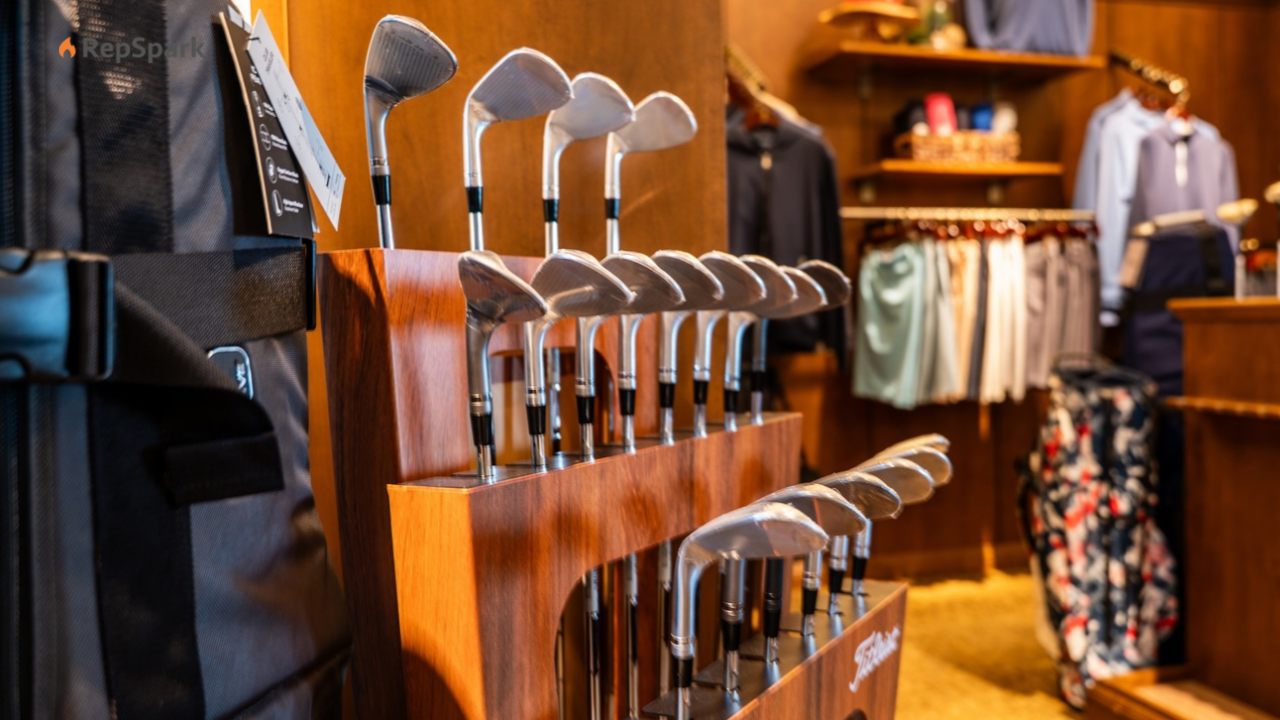
RepSpark Launches PerfectSpec™ to Simplify Wholesale Golf Club and Configurable Products Directly in the Wholesale Order

Why Sales, Ops, and Finance Rarely Agree on When It's Time to Switch Platforms

Why Some Brands Delay a Wholesale Platform Switch Until It's Too Late

What's Really Behind Declining Reorder Rates in Wholesale Apparel