
Independent Rep Territory Management: Tools That Actually Help in Golf and Decorated Apparel
- Chapter 1 Why Territory Management in Golf and Decorated Apparel Is Different — The Custom-Product Complexity
- Chapter 2 Configurable Product Ordering — How PerfectSpec™ Eliminates the SKU Chaos for Golf Clubs, Bags, and Gear
- Chapter 3 Logo Programs and Decorated Apparel — Managing Insignia and Customization Orders at Scale
- Chapter 4 Account Tracking — What the Territory View Needs to Show When Every Order Can Be Different
- Chapter 5 Pre-Book Window Management for Custom and Configured Products — The Workflow That Determines Commission
- Chapter 6 Event Commerce for Golf and Decorated Apparel — Capturing Configured Orders Without an Appointment
- Chapter 7 Order History and Custom-Product Intelligence — Walking Into Configuration Appointments Prepared
- Chapter 8 Glossary & Frequently Asked Questions
Why Territory Management in Golf and Decorated Apparel Is Different — The Custom-Product Complexity
An independent rep selling commodity apparel in standard sizes and colorways manages a complicated enough territory. An independent rep selling in the golf and decorated apparel channels manages something structurally harder. The products aren't finished when they ship from the manufacturer — they're finished when a buyer has chosen a hand, a shaft flex, a bag color, a divider configuration, a logo placement, a thread color, or a club set makeup. Every configurable product in the rep's portfolio arrives at the ordering conversation as a set of options rather than a finished SKU, and every decorated apparel product arrives as a base garment that the buyer needs to specify further before the order is complete. That's not a catalog problem. That's a workflow problem. It changes what appointments look like, what order forms look like, what follow-up looks like, and what the rep needs from their territory management tools in order to keep a book full of configured and decorated product orders accurate, complete, and moving through the system without corrections.
The configuration conversation changes the pre-book dynamic. In a standard apparel pre-book, the buyer browses a catalog of finished products, selects styles and sizes, enters quantities, and submits. The rep's job is to surface the right styles, confirm the buyer's selections align with their customer mix, and help them finalize their cart. In a golf equipment pre-book, the buyer isn't selecting a finished product — they're configuring one. A green grass facility head professional ordering iron sets for their pro shop needs to select hand (right or left), shaft material, shaft flex, and set makeup before a single quantity can be entered. If the ordering platform presents those choices as dozens of separate near-identical SKUs — a separate line item for each configuration — the buyer has to scroll through a confusing list, find the right combination, and hope they're selecting the right one. If the platform presents the product once and lets the buyer choose options with price and availability updating in real time with each selection, the same decision takes a fraction of the time and produces far fewer post-submission corrections.
Decorated apparel adds a second layer of complexity: the logo program. For an independent rep whose portfolio includes decorated apparel — polos, quarter-zips, bags, headwear, and other products that buyers want to place a club crest, a resort logo, or a corporate mark on — the order doesn't end when the buyer selects a product. The order ends when the buyer has specified the decoration: which logo, which placement location, which thread colors, which size, and which decoration method. Managing that specification accurately across dozens of green grass facilities and corporate accounts — each with their own approved logo file, their own placement standards, and their own history of past decoration orders — is a significant administrative burden for the rep. Without systematic tools for tracking decoration specifications by account, every decorated apparel order carries the risk of a logo error, a placement mistake, or a missed approval that delays the order or produces a remake the rep has to navigate.
What territory management tools need to do differently for custom-product reps. The rep whose book includes configurable golf equipment and decorated apparel needs territory management tools that go beyond what a standard wholesale ordering platform provides for finished-product lines. Those tools need to present configurable products in a way that guides buyers through the configuration decision without creating a catalog of confusing near-identical SKUs. They need to capture decoration specifications precisely and attach them to the correct order line — not as a note field the buyer fills in however they choose, but as structured specification data that flows into the brand's production workflow without a manual transcription step. And they need to give the rep the account-level decoration history — which logo files are on file, what was specified in the last order, which accounts have standing decoration preferences — so that repeat decorated apparel orders start from the prior specification rather than requiring the buyer to re-specify from scratch every season. See how RepSpark's PerfectSpec™ and Insignia capabilities address the custom-product ordering challenge.
Questions to Assess Your Current Custom-Product Territory Management Toolset
- For each configurable product in your portfolio — golf clubs, golf bags, putters, carts, configured tactical or duty gear, or other products sold in combinations of options — how does your current ordering platform present those products to buyers, and specifically, does the buyer see one listing per product with selectable options or one listing per configuration combination, and have you observed a correlation between how the platform presents configurable products and the frequency of post-submission order corrections that require the rep or brand's customer service team to resolve?
- For the decorated apparel products in your portfolio — embroidered polos, logo'd headwear, decorated bags, embossed leather goods, or other products that buyers specify with a logo, placement, or decoration choice — how does your ordering platform capture the decoration specification, and is that specification structured data that flows into the brand's production system automatically or is it a free-text note field that a production team member has to manually interpret before the order can be processed?
- When a green grass facility re-orders decorated apparel from a prior season — the same style, the same logo, the same placement — does your current ordering workflow automatically pull the prior decoration specification as the starting point for the new order, or does the buyer (or the rep on the buyer's behalf) have to re-specify the decoration from scratch, and how often does the re-specification process introduce errors that weren't in the original order?
- Across the accounts in your territory that order decorated apparel, how do you currently track each account's approved logo files, their placement preferences, and their standing decoration standards — and for the accounts that have multiple logo options (a primary club crest, a secondary wordmark, a corporate event logo) and multiple decoration location preferences depending on the product type, how do you ensure that the right logo and the right placement get specified on each order without relying on the buyer to remember and correctly re-specify every time?
- If you were designing the ideal territory management system for a rep whose book includes 40% configurable golf equipment and 30% decorated apparel alongside standard finished-product lines, what would that system need to do that none of your current tools do — and how much of the time you currently spend on post-submission order correction, decoration re-specification, and configuration error resolution would that system eliminate?
Configurable Product Ordering — How PerfectSpec™ Eliminates the SKU Chaos for Golf Clubs, Bags, and Gear
The configurable product ordering problem in the golf equipment channel is not new. Golf clubs come in right-hand and left-hand versions, in steel and graphite shaft options, in multiple shaft flex ratings, and in set makeups that vary by the number and configuration of clubs included. Golf bags come in multiple colorways, divider layouts, strap systems, and material combinations. Putters, carts, and other configured gear have their own option structures. In a traditional wholesale ordering catalog, each of these combinations is its own SKU — which means a product that comes in six option dimensions with three or four choices each can generate hundreds of individual catalog lines, all with near-identical names, all requiring the buyer to scan through the list to find the exact combination they want.
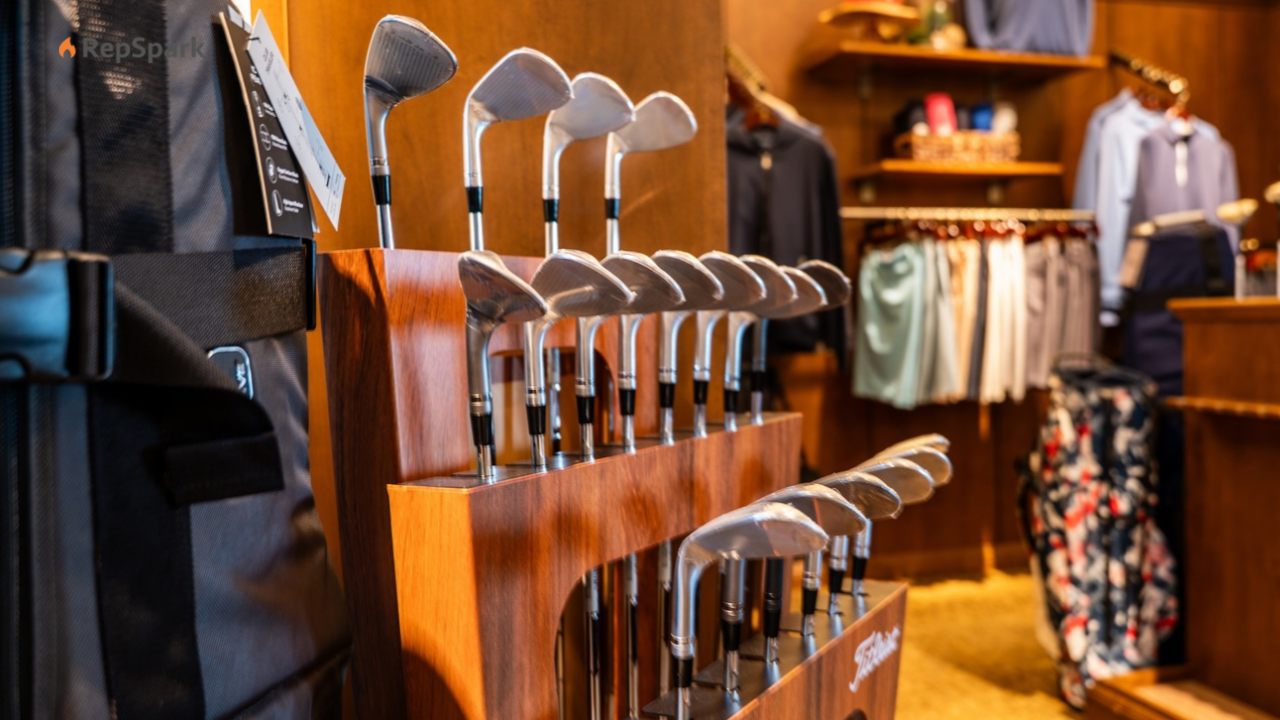
What PerfectSpec™ does differently. PerfectSpec™ is configurable ordering built into RepSpark Flow. Every configurable product appears once — one listing per product, with the buyer's applicable price range visible at the product level. When the buyer selects that product, they choose their options on the product page itself: hand, shaft material, shaft flex, set makeup, colorway, divider configuration, strap system, or whatever attributes that product uses. After each option selection, the price for that specific configuration, the product number, the imagery, and the available-to-sell date for that combination update automatically on the same page. The buyer sees exactly what they're ordering and what they'll pay for it, without navigating away or consulting a separate pricing sheet.
No orders for combinations that don't exist. One of the most common problems in configurable product ordering is the buyer selecting a combination the brand doesn't actually make — a shaft flex in a material that isn't available in that grip style, a colorway that doesn't come in a particular divider layout. In a catalog where each configuration is a separate SKU, unavailable combinations may still appear as catalog listings with zero inventory, creating buyer confusion and post-submission correction work. PerfectSpec™ grays out option combinations that the brand doesn't offer, so buyers can only choose what actually exists. Filters return only products that come in the combination the buyer is looking for. The result is that every order placed through PerfectSpec™ is an order for a real product combination — and post-submission corrections for impossible configurations are eliminated at the source.
Multiple configurations in one visit, without starting over. A green grass facility head professional ordering iron sets for their pro shop may need to order both right-handed and left-handed versions of the same set in different shaft configurations to cover their member demand. In a traditional catalog, that's two separate product searches, two separate product pages, two separate quantity entries. In PerfectSpec™, the buyer configures the first version, adds it to the order, adjusts the options for the second version on the same product page, and adds that without ever leaving the product listing. Each configuration appears as its own line item on the order with its full specification clearly visible — the buyer can review every configuration they've added before submitting, confirm that each is what they intended, and edit options on a draft order if something needs to change without re-entering quantities. See a live demo of PerfectSpec™ with a real golf equipment catalog.
Questions to Evaluate Your Configurable Product Ordering Workflow
- For the golf clubs and configured equipment in your portfolio, how many separate SKU lines does your current ordering platform display for a single product model — and for a head professional at a green grass facility who needs to order both right and left hand versions of an iron set in multiple shaft flexes, how many catalog lines do they have to navigate to find and order all of the combinations they need, and have you measured the correlation between catalog complexity for configured products and the time your appointments spend on the ordering portion versus the relationship and product recommendation portions?
- In the most recent season, how many orders for configurable golf equipment required post-submission correction — because the buyer selected the wrong hand, the wrong shaft flex, the wrong set makeup, or a combination that doesn't actually exist — and for each of those corrections, what was the total elapsed time from order submission to resolution, and what was the impact on the buyer's expected delivery date?
- When a buyer is configuring a golf club or bag order that involves multiple configuration combinations — right and left hand versions, multiple shaft flexes for a fitting inventory, different bag colorways for different shop display needs — does your current ordering platform let them add multiple configurations from the same product listing without navigating away, or do they have to find the product in the catalog separately for each configuration they need?
- For accounts in your territory that order configured golf equipment — green grass facilities, pro shops, sporting goods accounts with dedicated golf departments — have you found that the complexity of the configuration ordering process affects their self-serve adoption rate, and specifically, are those accounts more likely to call or email the rep to place configured product orders rather than using the ordering platform because the platform's configuration workflow is difficult enough that buyer-assisted ordering is faster than self-serve?
- If PerfectSpec™ were available for all of the configurable products in your portfolio — presenting each product once with option selectors that update price and availability with each choice, graying out impossible combinations, and allowing multiple configurations to be added from a single product page — how would that change the proportion of your appointment time spent on the mechanics of configuring and entering orders versus the proportion spent on product recommendations, relationship management, and identifying new category opportunities?
Logo Programs and Decorated Apparel — Managing Insignia and Customization Orders at Scale
Decorated apparel ordering is one of the most administratively intensive workflows in the specialty retail and golf channel — and one of the most underserved by standard wholesale ordering platforms. A green grass facility that wants to order embroidered polos with their club crest isn't placing a commodity order. They're placing a specification order: the product, the logo file, the placement location on the garment, the thread color match, the size of the embroidered image, and in some cases the decoration method (embroidery versus heat transfer versus screen print). Each of those specification elements has to be captured accurately, attached to the correct order line, and communicated to the brand's decoration production team in a format they can act on without calling the rep or the buyer for clarification. When that specification workflow works well, decorated apparel orders flow from buyer to production without friction. When it doesn't — when the specification is captured in a note field the production team has to interpret, when the logo file referenced in the order isn't on file with the brand, when the placement specified doesn't match what's possible on the garment — decorated apparel orders generate a disproportionate share of the rep's post-submission customer service work.
RepSpark's Insignia experience — what structured decoration management looks like in practice. RepSpark's Insignia capability is designed for brands that sell decorated products with licensed logos, club crests, resort marks, or other approved decoration programs. Rather than capturing decoration specifications as free-text notes that production teams have to interpret, Insignia manages approved logo files, placement options, and decoration specifications as structured data within the ordering workflow. When a green grass facility buyer orders embroidered polos through a brand using RepSpark's Insignia capability, they select from the approved logo options on file for their account, choose from the available placement locations for that garment type, and confirm the decoration specification before the order submits — all within the standard ordering workflow, not in a separate specification form or email thread that has to be manually matched to the order later.
Decoration history and repeat order efficiency. The most significant territory management benefit of structured decoration management is repeat order efficiency. A green grass facility that orders embroidered polos with their club crest every spring season has a standing decoration specification: the same logo file, the same placement location, the same thread colors, the same embroidery size — unless something has changed. A platform that carries the account's prior decoration specification forward as the starting point for each new order eliminates the re-specification step entirely for repeat orders, reducing the buyer's time investment in placing the order and virtually eliminating the risk of specification drift (the logo shrinking by a quarter inch or the placement shifting slightly each season because a specification was re-entered rather than carried forward). For the rep, decoration history access means walking into a seasonal appointment for a decorated apparel account with the prior specification already confirmed — the conversation can focus on whether to add new styles or change anything, rather than re-specifying from scratch.
Logo program management across a multi-account territory. An independent rep serving 30 green grass facilities and 15 corporate accounts in a decorated apparel territory is managing 45 different logo programs — 45 different approved logo files, 45 different placement histories, and 45 different accounts with their own decoration standards that may have evolved over multiple seasons. Without systematic logo program management, that administrative load falls on the rep: maintaining logo files outside the ordering system, manually communicating decoration specifications to the brand's production team, and tracking whether each account's file on file with the brand is the current approved version. With structured Insignia management within the ordering platform, the logo files, placement approvals, and decoration history live in the system — searchable, retrievable, and attached to the correct account without the rep having to serve as a manual pass-through for every decorated apparel order in their territory. See how RepSpark's Insignia capability manages logo programs and decoration specifications for brands in the golf and decorated apparel channel.
Questions to Improve Your Decorated Apparel Order Workflow
- For the decorated apparel orders in your territory, what percentage require at least one post-submission contact between the rep, the buyer, and the brand's production team to resolve a specification question — and for those that do require a follow-up contact, what is the most common specification element that generates the question (logo file not on file, placement location unclear, thread color not specified, decoration method not confirmed), and would that question be preventable if the specification were captured as structured data within the ordering workflow rather than as a free-text note?
- When a green grass facility that ordered decorated polos last season places a repeat order this season, what does the re-specification process look like in your current workflow — does the buyer (or the rep on their behalf) re-enter the full decoration specification from scratch, refer to a prior order confirmation email or invoice, or does the platform carry the prior specification forward automatically — and for the accounts where re-specification is manual, how often does the current-season specification differ from the prior season's in ways that weren't intentional?
- For accounts in your territory that maintain multiple logo options — a primary club crest, a secondary wordmark, a temporary event logo, or a seasonal variation — how do you currently ensure that the correct logo is specified on each decorated apparel order, and have you experienced situations where an account's order was decorated with the wrong logo because the specification process didn't clearly distinguish between the account's multiple logo options?
- For a corporate or event account in your territory that wants to place decorated apparel for a specific tournament or golf outing — a one-time order with custom event branding that differs from the account's standard logo program — how does your current ordering workflow handle the specification of event-specific decoration that needs to be distinguished from the account's standing logo program so that the production team decorates correctly and the event spec doesn't accidentally get applied to future standard orders?
- If you could have one improvement to your current decorated apparel ordering workflow — structured specification capture, automatic carry-forward of prior decoration specifications, logo file management within the ordering platform, or real-time decoration preview before order submission — which would produce the largest reduction in post-submission corrections and customer service overhead, and how would that improvement change the proportion of your territory management time that currently goes toward decorated apparel order resolution versus selling and account development activities?
Account Tracking — What the Territory View Needs to Show When Every Order Can Be Different
Account tracking for a rep whose portfolio includes standard finished-product lines alongside configurable golf equipment and decorated apparel is more complex than account tracking for a pure finished-product rep — because "account status" for a custom-product rep isn't just submission status. A green grass facility that has submitted a pre-book order for standard apparel but hasn't yet completed their decorated polo specification, or that has configured a right-handed iron set order but hasn't yet placed the matching left-handed version they discussed in the last appointment, is an account with incomplete activity that a submission-status view doesn't capture. The territory view for a custom-product rep needs to surface not just which accounts have submitted but which accounts have unresolved specification work, open configuration decisions, or incomplete order sequences that need rep follow-up before they can be considered complete.
Configuration completion versus order submission as separate tracking dimensions. In a standard wholesale ordering workflow, a submitted order is a complete order — the buyer entered all the necessary information, and the order is in the brand's fulfillment queue. In a configurable product ordering workflow, an order can submit with gaps: a configured golf club order that's missing the shaft flex specification for one line item, or a decorated apparel order that submits without a confirmed logo file because the buyer didn't have the file accessible during the ordering session. Those gap orders require follow-up — not because the buyer didn't intend to order, but because the specification wasn't complete at submission time. The rep who can see which submitted orders have specification gaps, alongside which accounts haven't submitted at all, is the rep who can prioritize follow-up by the actual completeness of the territory's order activity rather than just by submission binary.
Logo program currency as an account tracking dimension. For decorated apparel accounts, one of the most operationally important account tracking dimensions is logo program currency: is the logo file on file with the brand for this account the current approved version, or has the account updated their logo since the last decorated order and the brand's file is out of date? A green grass facility that rebranded and updated their club crest between seasons needs their new logo file uploaded and approved before the next decorated apparel order can process correctly. A rep who doesn't know which of their decorated apparel accounts have logo program currency issues before the pre-book window opens will discover those issues when orders submit and the production team flags them — adding delay and customer service work at exactly the point when everyone is busiest. Proactive logo currency tracking — knowing before the pre-book window which accounts need a logo update and resolving it before orders come in — is an account management activity that custom-product reps need and standard platform account views don't surface.
Order complexity as an account characteristic that shapes appointment planning. Not all accounts in a custom-product rep's territory have the same order complexity. A green grass facility that orders 50% configured equipment and 50% decorated apparel requires a longer appointment than an account that orders exclusively finished apparel. A corporate event account that orders exclusively decorated product with event-specific branding requires a different appointment type than a specialty retailer ordering standard seasonal apparel. Account tracking that captures order complexity — the mix of standard, configured, and decorated product in each account's history — lets the rep plan appointment time more accurately, allocate more time to high-complexity accounts, and avoid underestimating the time required for accounts that always end up needing 90 minutes rather than 45 because of the configuration and specification work involved. See how RepSpark Flow's territory view supports account tracking for complex custom-product order portfolios.
Questions to Strengthen Account Tracking for Custom-Product Territories
- For each of your decorated apparel accounts, do you know today whether the logo file on file with the brand is the current approved version of each account's logo program — and for accounts where the logo may have been updated since the last order, what is your process for identifying the discrepancy before the pre-book window opens, and how do you typically discover logo currency issues if you don't proactively track them (the production team flags the order, the buyer notices the wrong logo on their decorated product, or you catch it during order review)?
- For accounts in your territory that order both configured golf equipment and decorated apparel, how do you track the completion status of each order type separately — and specifically, do you have a way to know that an account has a submitted configured equipment order but an incomplete decorated apparel specification that still needs resolution before their full seasonal order can be considered done?
- When you are planning your appointment calendar for a pre-book season, how do you account for appointment length differences between accounts that order standard finished product, accounts that order primarily configured equipment, and accounts that order primarily decorated apparel — and for accounts that order all three, how do you allocate appointment time to cover the standard selection, the configuration decisions, and the decoration specification without the appointment running significantly over its scheduled time?
- For accounts in your territory that have been ordering decorated apparel for multiple seasons, what account-level information do you have readily accessible about their decoration history — what styles they've decorated, what logo they've used, what placement location they prefer, what their standing thread color specifications are — and does that information live in your ordering platform's account record, in a separate notes file the rep maintains, or primarily in the rep's memory?
- Among your green grass facility accounts that order configured golf equipment, do you track which accounts have fitting inventory needs — accounts that stock both right and left hand options in multiple shaft configurations to service member fitting sessions — versus accounts that order to known customer demand in specific configurations, and does that distinction affect your pre-appointment preparation, the configuration options you surface during the ordering conversation, and the configuration completeness follow-up you do after the appointment?
Pre-Book Window Management for Custom and Configured Products — The Workflow That Determines Commission
Pre-book window management is complicated for any independent rep. For a rep whose portfolio includes configured golf equipment and decorated apparel, it's complicated in an additional dimension: the pre-book window closes not when all accounts have submitted orders, but when all accounts have submitted complete, specification-accurate orders. An account that submits a configured equipment order with a placeholder shaft flex, or a decorated apparel order that will require a follow-up specification call before it can process, hasn't really closed their pre-book contribution — they've submitted a partial order that creates a post-submission customer service queue that runs past the window close. The rep's pre-book window management workflow for custom-product lines needs to track not just submission but specification completeness, because incomplete specification is the custom-product equivalent of a missing submission.
The configuration conversation during the pre-book window — when it happens and how it closes. For configured golf equipment, the pre-book conversation is most efficient when it happens during an appointment: the rep and the buyer work through the configuration options together — hand, shaft material, shaft flex, set makeup — confirm the price for each combination, review the available-to-sell timing, and add the configurations to the order. With PerfectSpec™, that conversation happens on a single product page for each item: the buyer selects options, sees the price and availability update with each choice, and adds the configurations to their order without the rep having to navigate to multiple catalog entries. After the appointment, the rep's follow-up work for configured equipment is primarily at accounts that had questions they wanted to think about — shaft flex decisions that require a member fitting result before they can confirm, set makeup decisions that the head professional wants to review against their fitting data before finalizing.
The decoration specification timeline and its relationship to the pre-book close. Decorated apparel orders have a different timeline problem than configured equipment orders. The product selection portion of a decorated apparel order can happen during the pre-book window on the same schedule as a standard finished-product order — the buyer selects styles, sizes, and quantities before the window closes. But the decoration specification — the logo selection, the placement confirmation, the thread color approval — sometimes requires coordination with the account's leadership, facilities management, or marketing team to get the correct approved specification before the order can be processed. That coordination takes time that may extend past the pre-book window even when the buyer's ordering intent was established well before the close. The rep who understands which of their decorated apparel accounts have complex logo approval processes — multiple stakeholders, brand standards that require a committee sign-off, event logos that need a tournament committee approval — can start the decoration specification conversation earlier in the window to give the approval process enough lead time to complete before the close.
Monitoring configuration and decoration completeness alongside submission status during the window. The standard pre-book submission dashboard shows which accounts have submitted and which haven't. For a custom-product rep, that view needs a third category: which accounts have submitted orders with incomplete specifications — configuration placeholders, pending logo approvals, or decoration details that the production team will flag when they process the order. The rep who can see that distinction during the window — not after it closes, when the post-submission correction queue is already forming — can direct follow-up resources to the accounts that need specification completion rather than treating every submitted order as done and every non-submitted order as the priority. That three-category view (complete, incomplete specification, not yet submitted) is the custom-product equivalent of the at-risk flagging workflow that standard pre-book management tools provide for finished-product orders. See how RepSpark Flow supports pre-book management for configurable and decorated product lines.
Questions to Improve Pre-Book Window Management for Custom Products
- In the most recent pre-book season for your configured golf equipment and decorated apparel lines, what percentage of submitted orders required at least one post-submission contact to resolve a specification issue — a missing shaft flex, an unconfirmed logo file, a placement location that the production team needed to verify before they could process — and how does that percentage compare to your post-submission correction rate for finished-product lines in the same window?
- For your decorated apparel accounts with complex logo approval processes — accounts where the decoration specification requires buy-in from a club general manager, a resort marketing director, or a corporate events committee — how early in the pre-book window do you typically initiate the decoration specification conversation, and have you experienced seasons where the approval process wasn't complete before the window closed, resulting in a delayed order start or a post-window submission that missed the pre-book pricing and terms?
- During a pre-book window for configured golf equipment, what is your current process for tracking which accounts have fully specified their configured product orders versus which have submitted orders with placeholder specifications or open configuration questions — and does that tracking happen in your ordering platform's reporting, in a manual tracking spreadsheet, or primarily in your memory of which appointment conversations ended with unresolved configuration decisions?
- For a green grass facility that needs to place both a configured golf equipment pre-book order and a decorated apparel pre-book order in the same window, do you run those two ordering conversations in the same appointment or separate ones — and if you run them separately, is the sequencing driven by a deliberate strategy about which conversation is more time-sensitive or by logistical constraints about appointment length and scheduling, and does the sequencing affect your ability to close both order types before the window ends?
- If your pre-book window management dashboard showed three categories for each account — complete orders, orders with open specification work, and not-yet-submitted accounts — and let you filter by order type (configured equipment, decorated apparel, standard finished product) within each category, how would that visibility change your follow-up prioritization during the window, and would it change the proportion of your between-visit outreach time going to specification completion follow-up versus first-submission recovery?
Event Commerce for Golf and Decorated Apparel — Capturing Configured Orders Without an Appointment
Event commerce — the ability to publish a curated digital ordering experience for a specific event, accessible via QR code or shared link — is a particularly powerful capability for reps in the golf and decorated apparel channel. The golf tournament calendar is one of the most concentrated ordering-intent environments in all of specialty retail: a member-guest tournament at a private club generates purchasing intent among pro shop staff, club members, and event organizers for exactly the kinds of products a golf and decorated apparel rep carries. The head professional is thinking about merchandise for the tournament. Event organizers are thinking about gifts. Members who see new styles during the event may want to place orders of their own. That intent is time-bound and context-specific — it's most acute during and immediately before the event, and it dissipates quickly after the event concludes if there's no ordering mechanism available to capture it at the moment of peak intent.
Event microsites for configured product — what works and what requires planning. RepSpark's Event Microsite capability publishes a curated digital storefront for a specific event, accessible via QR code or shared link. For standard finished-product lines, the microsite is relatively straightforward: select the styles to feature, confirm inventory, publish the QR code. For configured product lines — iron sets, golf bags, putters with handedness and shaft options — the event microsite setup requires additional planning: which configurations to feature (the most popular hand/shaft combinations for the event audience, not the full configuration matrix), how to present configured products in a way that works in the event's ordering context, and whether the event's buying intent is for configured fitting inventory or for specific configurations the head professional has pre-identified for tournament merchandise. The rep who thinks through those questions before activating an event microsite for a configured product line will produce a better buyer experience and fewer post-submission specification questions than the rep who activates a full configured product catalog without curation.
Decorated apparel event microsites — the tournament merchandise opportunity. For decorated apparel, the event microsite creates a specific opportunity that doesn't exist in the standard pre-book calendar: the ability to sell event-branded decorated product — apparel and accessories with the tournament's logo or the club's event branding — to tournament participants in the days surrounding the event. A green grass facility hosting a 200-person member-guest can publish a microsite with curated apparel styles decorated with the event logo, accessible via QR code in the clubhouse or the tournament gift bags, allowing participants to order their own decorated commemorative apparel directly without the pro shop having to guess pre-event order quantities. The orders route to the brand, the rep earns commission on every order placed through the microsite, and the green grass facility's head professional looks like they've delivered a sophisticated member experience without having to manage the pre-event ordering logistics themselves. RepSpark powered 1,582 Event Microsites in 2025, generating $13.9 million in total revenue at an average of $8,800 per site.
Using event microsites to introduce new configurations to buyers without an appointment. For configured golf equipment, the event microsite serves a secondary purpose beyond order capture: product introduction. A new iron set model that just entered a brand's catalog — with a new shaft option or a new set makeup configuration that wasn't available in the prior season — can be featured in an event microsite before the rep has had a chance to introduce it in appointments at every account. A head professional who discovers a new configuration through an event microsite QR code, experiences the PerfectSpec™ ordering interface for the first time, and places an order successfully has effectively had their product introduction and first configuration ordering experience in one self-serve interaction — reducing the rep's time investment in introduction and the brand's time to first order for that account on the new configuration. See how RepSpark's Event Microsite capability works for configured and decorated product lines in the golf channel.
Questions to Develop Your Event Commerce Strategy for Golf and Decorated Apparel
- For the golf tournament and club event calendar in your territory over the past 12 months, how many events had merchandise ordering intent that wasn't captured through any digital ordering mechanism — where tournament participants, club members, or event organizers expressed interest in ordering apparel or equipment related to the event but didn't have a mechanism to order without contacting the pro shop or the rep directly — and for each of those events, how would you estimate the order volume that intent represented if there had been a QR-accessible ordering mechanism available?
- For your configured golf equipment lines, how would you curate an event microsite that presents configurable products in a way that works for self-serve buyers who are at a tournament venue without a rep present — which configurations would you feature (pre-selected popular combinations rather than the full option matrix), how would you present the configuration decision in a context where buyers can't easily ask the rep for guidance, and have you thought about whether the PerfectSpec™ configuration interface is intuitive enough for a first-time buyer to use without coaching?
- For your decorated apparel lines in the golf channel, have you had a conversation with any of your green grass facility accounts about using a decorated event microsite as a mechanism for selling event-branded commemorative apparel to tournament participants — and if not, what would the pitch look like: the microsite as a service the pro shop offers to its members (a premium event merchandise experience), as a revenue tool for the head professional (commission on event merchandise sold without inventory risk), or as a branded marketing touchpoint that reinforces the club's identity for event participants?
- For the corporate accounts in your territory that organize golf outings and want decorated apparel for event participants, do you currently use any mechanism to take pre-event decorated apparel orders from event participants directly, or does the entire order come from the corporate event organizer as a single bulk order — and would an event microsite that allowed individual participants to order their own sizes and decorated commemorative items reduce the organizer's administrative burden while increasing total order volume and giving the rep commission on a larger number of individual orders?
- RepSpark's average event microsite generates $8,800 in revenue per site. For the events in your territory where you estimate decorated apparel or configured equipment ordering intent at or above that level, how many microsites would it be worth activating per season — and for the events that fall below that threshold, is there a category of lower-complexity events (smaller member outings, smaller trade show appearances, regional pro-am events with modest merchandise interest) where the setup cost and effort of a microsite is still justified by the expected order volume?
Related Resources
- What Is a B2B Sales Portal, and Why Do Retailers Expect One in 2026?
- Modern Alternatives to Spreadsheets for Managing Wholesale Orders
- What Is a B2B Retailer Marketplace, and How Do They Work for Brands?
- Wholesale vs. Retail: What Every Growing Apparel Brand Needs to Know
- Multi-Warehouse Inventory Allocation Guide for B2B
Order History and Custom-Product Intelligence — Walking Into Configuration Appointments Prepared
Pre-appointment preparation is more consequential for a custom-product rep than for a finished-product rep — because the decisions made in an appointment for configured golf equipment or decorated apparel are harder to reverse than standard apparel selections. A buyer who selects the wrong colorway in a standard apparel order can exchange it; the margin hit is minor. A buyer who specifies the wrong shaft flex in a configured iron set order, or the wrong logo placement on a decorated polo, may be looking at a full remake — and in the case of configured golf equipment, a remake lead time that leaves the account without product when they expected it. The rep who walks into a configuration appointment knowing exactly what the account ordered last season, which configurations are now their best-sellers based on what they've reordered at-once, and whether any of their standing configuration preferences have changed based on conversations from the last visit is the rep whose appointment produces fewer post-submission corrections and more confident buyer decisions.
Configuration history as the foundation of the configuration recommendation. For a green grass facility that has been ordering iron sets through the rep for three seasons, the configuration history — which hand, which shaft material, which flex, which set makeup — is both a baseline to build recommendations on and a source of insight into what's working for that account's customer mix. An account that has been ordering exclusively right-handed steel-shaft sets for three seasons and whose head professional mentioned an increasing number of left-handed member inquiries is an account where the rep can come to the next appointment with a specific recommendation: "Based on what you've told me about left-handed member interest, I'd like to walk through the left-hand configurations for the new model and see what makes sense to add to your fitting inventory." That recommendation requires knowing the account's prior configuration history and remembering the left-hand conversation from the last appointment — both of which are easier to recall accurately with a structured order history view than from memory alone.
Decorated apparel history as the specification starting point. For decorated apparel accounts, pre-appointment order history access changes the nature of the specification conversation entirely. The rep who arrives at an appointment knowing that an account's last decorated polo order was 72 pieces of Style X in sizes S–2XL with the primary club crest at left chest, Thread Color A for the main body and Thread Color B for the outline, can open the specification conversation by confirming or updating rather than starting from scratch: "For this season's polos, do you want to keep the same logo placement and thread colors as last season, or are there any changes?" That question takes 30 seconds to ask and answer. The alternative — asking the buyer to re-specify a specification they've already given the rep once — takes several minutes and introduces the possibility of specification drift if the buyer's verbal description doesn't match what was actually ordered last time.
Using order history to identify specification upgrade opportunities. Order history access for a custom-product rep also reveals upgrade opportunities that a rep working from memory tends to miss. An account that has been ordering a standard embroidery decoration on their club's bags for three seasons may not know that the brand now supports a premium embossing option for leather bag accents that produces a higher-quality result for the same price point. A green grass facility that has been ordering steel-shaft iron sets may have customers asking about graphite options that the head professional hasn't considered for fitting inventory because they ordered steel last time and assumed that's what they needed. The rep who reviews order history before each appointment can identify these upgrade conversations — where the account's prior specification was the right choice at the time but a platform upgrade or new product introduction has created a better option — and bring them to the appointment as specific, relevant recommendations rather than generic product introductions. See how RepSpark's order history and account intelligence tools support custom-product appointment preparation.
Questions to Improve Pre-Appointment Intelligence for Custom Products
- For your top 20 configured golf equipment accounts, how quickly can you access the full configuration history for each account — every configured order placed in the last two seasons, broken down by model, hand, shaft material, shaft flex, and set makeup — and for the accounts where you can't access that history quickly, how often do you discover during or after an appointment that a configuration decision was made in the current season that conflicted with something from the prior season's conversation that you didn't have in front of you?
- For your decorated apparel accounts, what pre-appointment preparation do you currently do to confirm each account's standing decoration specification — logo file version, placement location, thread colors — and is that preparation sourced from your ordering platform's account record, from a notes document the rep maintains externally, or from emailing the brand's customer service team to confirm what file they have on file for the account, and how confident are you that the specification you're confirming is actually current as of today?
- For configured equipment accounts that order multiple configurations — fitting inventory accounts with both right and left hand coverage in multiple shaft flexes — do you review the full configuration mix from their prior orders before the appointment to identify which configurations they're likely to need to refresh, which new configurations might be worth adding based on their member fitting data, and which configurations from the prior season haven't been reordered at-once and may be overstocked, and does that pre-appointment analysis materially change the configuration recommendations you make in the appointment versus going in with a general knowledge of the account's preferences?
- For decorated apparel accounts that place event-specific decorated orders — corporate golf outing clients, tournament committee accounts, club milestone events — do you maintain a separate tracking record of event-specific decoration specifications (distinct from the account's standing program), and for accounts that run the same event annually, do you use the prior year's event specification as the starting point for the current year's event decoration conversation, or do you start the event specification from scratch each year?
- If you could have one pre-appointment preparation capability for your custom-product accounts that you don't currently have — complete configuration history by account and season, current logo program status including file currency confirmation, prior decoration specification by order, or at-once reorder data for configured products showing which configurations are selling through fastest — which would produce the largest improvement in your appointment conversion rate and the largest reduction in post-submission correction work, and does that capability exist today in your ordering platform or is it a gap that requires manual tracking outside the platform?
Glossary and FAQ
Glossary
- PerfectSpec™
- RepSpark's configurable ordering capability built into RepSpark Flow. Products that come in many option combinations — golf clubs with hand, shaft material, shaft flex, and set makeup options; golf bags with colorway, material, and divider configuration options; tactical gear with size, colorway, and attachment options — appear as a single listing in PerfectSpec™, with the buyer choosing options on the product page and price, product number, imagery, and availability updating with each selection. PerfectSpec™ grays out option combinations that don't exist, so buyers can only order real configurations, and allows multiple configurations to be added from the same product listing without navigating away. PerfectSpec™ is built into RepSpark Flow with no custom code or separate pricing.
- Configurable Product
- A product sold in combinations of options that must be specified before the order can be processed — where the "finished product" the buyer receives is determined by the choices they make at order time rather than by a pre-set catalog SKU. In the golf channel, iron sets (hand, shaft material, shaft flex, set makeup), golf bags (colorway, material, divider layout, strap system), and putters are common examples of configurable products. In the decorated apparel channel, products that require logo placement, thread color, and decoration method specification are a form of configurable product where the configuration is the decoration rather than the physical product structure.
- Insignia
- RepSpark's capability for managing licensed logos, club crests, resort marks, and other approved decoration programs within the ordering workflow. Insignia manages approved logo files, placement options, and decoration specifications as structured data — so that when a green grass facility buyer orders decorated apparel, they select from approved logo options and placement choices rather than specifying decoration in a free-text note field. Insignia supports the rep's account management workflow by maintaining each account's logo program history, making prior decoration specifications available for carry-forward on repeat orders, and ensuring that logo files on file with the brand match the account's current approved version.
- Decoration Specification
- The complete set of instructions that defines how a decorated apparel or accessory order is to be produced: the logo file (which mark, at which version), the placement location on the garment, the decoration method (embroidery, heat transfer, screen print, embossing), the thread or ink colors, and the size of the decorated image. A complete, accurate decoration specification is the prerequisite for a decorated apparel order to process without post-submission customer service contact. Structured specification capture — where each specification element is a defined data field rather than a free-text note — is the most reliable mechanism for ensuring that every decorated order submitted contains a complete, unambiguous specification the production team can act on without clarification.
- Logo Program Currency
- The status of whether the logo file on file with a brand for a specific decorated apparel account represents the account's current approved logo version. Logo programs change: club crests get redesigned, resorts update their wordmarks, corporate clients rebrand. If an account's logo on file with the brand reflects an outdated version of the mark, decorated orders will be produced with the wrong logo until the file is updated — and that production error may not surface until the decorated product arrives at the account. Proactive logo program currency tracking — knowing before the pre-book window which accounts need a logo file update and resolving it before orders submit — is a territory management activity that reduces decoration error rates in decorated apparel territories.
- Configuration History
- The account-level record of which configurations a buyer has ordered across prior seasons — which hands, shaft materials, shaft flexes, and set makeups for a configured golf equipment account; which colorways, divider layouts, and strap systems for a configured golf bag account. Configuration history is the rep's primary input for pre-appointment configuration recommendations: knowing what an account ordered last season, what they reordered at-once (indicating which configurations are selling through well), and what they mentioned during prior conversations about their customer mix helps the rep arrive at each appointment with specific configuration recommendations rather than re-opening the full configuration discussion from scratch.
- Event Microsite
- A curated digital ordering storefront published for a specific event — a golf tournament, a club outing, a corporate golf event, a trade show — accessible via QR code at the venue or a shared link before the event. For configured golf equipment and decorated apparel, event microsites capture ordering intent in the event context without requiring a rep appointment: a green grass facility can feature event-branded decorated apparel accessible by tournament participants via QR code, or a configured product line can be featured with pre-selected popular configurations to enable self-serve ordering at a pro shop event. RepSpark powered 1,582 Event Microsites in 2025, generating $13.9 million in total revenue at an average of $8,800 per site.
- Specification Drift
- The incremental deviation that occurs in a decoration specification when a buyer re-enters the specification from memory or verbal description rather than from a structured carry-forward of the prior specification. Specification drift is most common in decorated apparel repeat orders: the logo size decreases by a fraction of an inch, the placement shifts from left chest center to left chest upper, or a thread color that was specified with a thread color code gets re-specified as a verbal color name that the production team interprets slightly differently. Structured specification management — where the prior season's specification is carried forward as the starting point and the buyer confirms or modifies it rather than re-entering from scratch — eliminates specification drift at the source.
- Fitting Inventory
- Configured golf equipment stock that a green grass facility maintains to support member fitting sessions — a range of configurations (hands, shaft materials, shaft flexes, set makeups) that allows the facility to fit members to the right configuration through a try-before-you-buy or fitting experience rather than ordering to a pre-specified configuration. Fitting inventory accounts order configured golf equipment differently from standard pro shop accounts: they need breadth of configuration coverage rather than depth in specific configurations, and their pre-book orders reflect the full range of configurations they want to maintain in their fitting inventory rather than the specific configurations they expect to sell through on the basis of known customer demand.
- RepSpark Community
- The buyer-facing discovery network within RepSpark's platform, connecting 100,000+ active wholesale buyers with brands on the platform. For reps in the golf and decorated apparel channel, Community generates inbound access requests from green grass facilities, pro shops, corporate event accounts, and other wholesale buyers who discover a brand on the platform and request access without the rep initiating the contact. In 2025, 94% of buyer requests through Community were approved, and buyer requests grew 65% year over year. Community is particularly valuable for configured and decorated product lines because buyers who self-discover a brand through Community tend to be more pre-motivated to learn the ordering workflow — including the PerfectSpec™ configuration experience or the Insignia decoration specification workflow — than buyers who are introduced to a new platform through a rep-assisted onboarding.
Frequently Asked Questions
What types of products work best with PerfectSpec™ configurable ordering?
PerfectSpec™ was built first for golf clubs — the channel where configurable product complexity is highest and the catalog presentation of multiple near-identical SKUs creates the most buyer confusion. It also supports golf bags, putters, carts, and other configured gear. The requirement is that the product is sold in combinations of options that can be defined as attributes — hand, shaft material, flex, set makeup, colorway, divider layout — where each attribute has a defined set of choices and the valid combinations can be systematically defined so that impossible combinations are grayed out. Products where the configuration is more open-ended — custom length specifications, unusual material combinations, non-standard set makeups — are better handled through a direct specification conversation with the brand rather than a self-serve configuration interface.
How does PerfectSpec™ handle products with sizes as well as configuration options?
Products that have both configuration options and size runs — a decorated apparel item with logo options and a size range, or a configured bag that also comes in a size variant — handle both within the same product ordering experience. The buyer selects their configuration options and then enters size-level quantities as they would for a standard size-run product. Each configuration is its own item on the order, and each item has its own size-run quantity entry, so a buyer ordering the same bag model in two different colorways enters quantities by size for each colorway separately within the same product page session.
What happens when a configured order needs to be changed after it's been submitted?
On a draft order in RepSpark Flow, the "Edit options" function switches a configuration to a different combination without requiring the buyer to delete the line item and re-add it — quantities carry over when options are edited, reducing the risk of quantity errors during a configuration change. This is particularly valuable for configured golf equipment where a buyer realizes they need a different shaft flex or set makeup after they've already added the configuration to their draft: they change the options, the price and product number update to reflect the new configuration, and the quantities they entered remain in place. For submitted orders that need configuration changes, the process depends on where the order is in the brand's fulfillment workflow — changes before production processing are typically handled through a customer service contact, while changes after production has started may not be possible without a remake.
How should an independent rep approach a green grass facility that wants event-branded decorated apparel for a tournament but has never placed a decorated order before?
The most effective approach is to simplify the first order as much as possible — limit the scope of the decoration decision to one logo, one product category, and one placement location, so that the novelty of the specification workflow doesn't become a barrier to the account placing their first decorated order. Walk the head professional through the specification process in an appointment: open the ordering platform, select the product, show how the logo selection works, confirm the placement option, and complete the specification together so that the buyer understands the workflow and has confidence in what they've ordered. Completing the first decorated order in a joint session eliminates the uncertainty that causes first-time decorated apparel buyers to delay or abandon the order, and establishes the specification on file so that subsequent orders — whether repeat of the same design or updates for a new event — can start from a confirmed prior specification rather than a blank specification form.
How does RepSpark's Insignia capability differ from a standard product-note field for decoration specifications?
A standard product note field captures whatever the buyer types — which may be complete, ambiguous, or missing entirely — and routes it to the brand's production team as unstructured text that a team member has to interpret. Insignia captures decoration specifications as structured data: logo file selection from an account's approved file library, placement selection from the available options for that garment type, thread color selection from a defined color system. That structured capture means every Insignia-specified order arrives at the production team with the same structured data format, with no missing fields, no ambiguous verbal color descriptions, and no logo files that need to be sourced separately because the buyer referenced a mark by name rather than by file. The difference in post-submission correction rates between structured and unstructured decoration specification capture is the primary operational reason that decorated apparel brands invest in Insignia capability rather than relying on product note fields.
Can event microsites feature configurable golf equipment alongside decorated apparel in the same storefront?
Yes — a RepSpark Event Microsite can feature any combination of products from the brand's catalog, including both configured equipment and decorated apparel in the same curated storefront. For a golf event microsite that serves multiple buyer intents — the pro shop head professional who wants to place a configured iron set order, the tournament organizer who wants event-branded decorated apparel for participants, and the club member who wants to order the new bag they saw at the event — a multi-category microsite with a curated selection from each product type gives each buyer the ordering experience relevant to their intent without requiring separate microsites for each category.
How do I start the logo program update conversation with a green grass facility whose club crest has been recently redesigned?
The most direct framing is a practical one: "I wanted to make sure the logo file we have on file for your club reflects the current version of your crest before your decorated apparel orders start processing this season. Can you confirm whether the mark has been updated, and if so, connect me with whoever has the current approved file?" That framing positions the logo currency check as a service the rep is providing to prevent a production error — which is accurate — rather than as an administrative task the rep is delegating to the buyer. If the club's logo has been updated, the process is: the account's marketing director or club management provides the current approved file in the correct format (typically vector/EPS or high-resolution PDF), the brand uploads and approves it in the platform, and future decorated orders for that account draw from the current file. Getting that update completed before the pre-book window opens — rather than discovering the currency issue when the first decorated order of the season is flagged by the production team — is the practical payoff of the proactive logo currency conversation.
What's the most common configuration error in golf equipment orders, and how does PerfectSpec™ prevent it?
The most common configuration error is the impossible combination: a buyer selecting a shaft flex that isn't available in the shaft material they chose, or a set makeup that doesn't exist in the hand orientation they need. In a catalog where each combination is a separate SKU, impossible combinations may still appear as catalog entries with zero inventory — and buyers who don't realize the combination is impossible may select it, submit the order, and receive a correction request from the brand's customer service team that delays their order. PerfectSpec™ prevents this error at the point of selection: option combinations that don't exist are grayed out in the configuration interface, so the buyer can only reach a valid "Order" button if they've selected a real, producible combination. The error never enters the order system, which means there's no correction to process and no delay to explain to the buyer.
Related Resources
- Digital Showroom Software for Wholesale Brands
- RepSpark Community: Wholesale Retailer Marketplace
- Branded Selling Tools: Digital Line Sheets and Lookbooks
- Modern Alternatives to Spreadsheets for Managing Wholesale Orders
- B2B Order Management Systems: A Complete Guide for Wholesale Brands
- Wholesale vs. Retail: What Every Growing Apparel Brand Needs to Know
- RepSpark Integrations: NetSuite, ApparelMagic, Shopify
- The Best B2B Wholesale Platforms for Apparel Brands in 2026: How to Choose
- NuOrder Alternatives for Wholesale Apparel Brands: A Buyer's Comparison
- Elastic Suite Alternatives: What to Look for in an Enterprise Wholesale Platform
- Why Brands Are Replacing Homegrown and Spreadsheet-Based Wholesale Systems
- What Is a B2B Sales Portal, and Why Do Retailers Expect One in 2026?
- The Best Wholesale Platform for Golf Apparel Brands
- The Best B2B Wholesale Platforms for Apparel Brands in 2026: How to Choose
- NuOrder Alternatives for Wholesale Apparel Brands: A Buyer's Comparison
- What Is Sell-Through, and Why Does It Matter to Wholesale Brands?
- 7 RFP Questions Every Brand Should Ask When Evaluating Wholesale Software
- Request a Demo
From Our Blog
Stay up to date with what is new in our industry, learn more about the upcoming products and events.

Cowboy Country Club Brings Its Western Meets Country Club Style to Retailers on RepSpark

Help Shape RepSpark's 2027 Golf Ecommerce Report: Survey
RepSpark Launches PerfectSpec™ to Simplify Wholesale Golf Club and Configurable Products Directly in the Wholesale Order

Why Sales, Ops, and Finance Rarely Agree on When It's Time to Switch Platforms

Why Some Brands Delay a Wholesale Platform Switch Until It's Too Late

What's Really Behind Declining Reorder Rates in Wholesale Apparel

Why Buyers Ghost Wholesale Reps After the First Order (and What to Do About It)

Why It's Hard to Replace In-Person Line Showings With Digital Showrooms

What Makes Choosing a Full Wholesale Platform So Difficult for Apparel Brands

What Problems Arise When Enterprise Brands Rely on Disconnected Wholesale Platforms?

Every Manual Step in a Wholesale Order, and What Replaces It

Charlie Golf Co. Brings Premium Junior Golf Bags and Clubs to Golf Retail on RepSpark

Who Should Be on the Business in Golf 100? Help Us Find Them

What Makes Implementing 24/7 Online Ordering So Difficult for Brands Growing Through Wholesale?

What Problems Do Independent Reps Face When Buyers Can't Place Orders Online, Anytime They Want

What Makes It Hard for Independent Sales Reps to Run Virtual Product Showings

How Wholesale eCommerce Platforms Actually Help Enterprise Brands Scale B2B Sales