
Enterprise Virtual Showrooms: Running Product Presentations Across Regions and Teams
- Chapter 1 What "Virtual Showroom" Actually Means for an Enterprise Brand Operating Across Regions and Teams
- Chapter 2 The Consistency Problem — How Product Presentations Diverge Across Regions Without a Unified Showroom Infrastructure
- Chapter 3 Market Week and Trade Show Execution — Running High-Stakes Presentations Without the Overhead of a Physical Booth
- Chapter 4 Regional Rollouts — Coordinating Product Launch Presentations Across Multiple Sales Teams Simultaneousl
- Chapter 5 The Always-On Showroom — What Happens to Buyer Access Between Market Events
- Chapter 6 Configured and Customized Product Presentations — Showing What Buyers Can Actually Order
- Chapter 7 Measuring Showroom Performance — What Enterprise Brands Need to Know Beyond "Did They Show Up"
- Chapter 8 Glossary & Frequently Asked Questions
What "Virtual Showroom" Actually Means for an Enterprise Brand Operating Across Regions and Teams
Enterprise brands use the term "virtual showroom" to describe a range of things that are meaningfully different from each other: a static digital lookbook that a rep emails to buyers before a meeting, a brand-controlled ordering portal where buyers browse and purchase without rep involvement, a video-conference-based presentation where a national sales manager walks regional teams through a new line, and a curated digital ordering environment activated for a specific event like a trade show or market week. Each of these is legitimately called a virtual showroom. What distinguishes them — and what determines whether a virtual showroom actually changes the brand's commercial outcomes at the enterprise level — is whether the showroom connects presentation to transaction. A digital lookbook that showcases a new product line is a presentation tool. A virtual showroom that lets a buyer move from product discovery to order placement within the same environment, without a handoff to a separate ordering workflow, is a commerce tool. The distinction matters because an enterprise operating across multiple regions and multiple sales teams can't rely on the quality of the handoff from presentation to transaction being consistent across all of its regions and all of its reps. The handoff is where consistency breaks down, where ordering intent dissipates between the meeting and the follow-up, and where the revenue a product presentation generates becomes untrackable because the order that followed the presentation was placed through a phone call or email rather than a mechanism the brand can attribute to the showroom.
The enterprise scale problem — why consistency across regions and teams is harder than it looks. A single-region brand with a tight, well-managed rep team can achieve reasonable consistency in product presentations through training, review processes, and active sales management. An enterprise operating across four sales regions, with 60 independent reps carrying the brand across diverse account segments — green grass facilities, specialty retailers, corporate and event accounts — cannot achieve that consistency through management oversight alone. The rep in the Southwest who has been carrying the brand for eight years and knows the product line intuitively presents differently from the rep in the Northeast who picked up the line six months ago. The regional sales manager who trained the new rep gave them the brand's national presentation materials, but the version of those materials that the rep is actually using with buyers is a customized subset of the national deck filtered through the rep's own judgment about which products are right for their territory. Neither of these is a failure of management — they're the predictable result of a presentation system that relies on individual judgment to bridge the gap between the brand's national positioning and the buyer's local context. A virtual showroom infrastructure that gives reps and regional teams a consistent, brand-controlled presentation environment — one they can curate for their buyer segment without losing the national brand positioning — is the tool that makes presentation consistency achievable at enterprise scale without eliminating the rep's ability to adapt to local context.
The transaction gap — where most enterprise virtual showrooms fail to deliver commercial ROI. The most common failure mode in enterprise virtual showroom deployments is the gap between presentation and transaction. A brand invests in a beautifully designed digital lookbook, trains the regional sales teams on how to use it in buyer meetings, achieves higher buyer engagement with the new season's line, and then watches as a meaningful percentage of the buyers who expressed strong intent during the showroom presentation route their orders through a phone call or email rather than the brand's ordering platform. That routing decision — the buyer calling the rep the next day to order rather than clicking through from the showroom to the cart — isn't malicious or irrational. It's the path of least resistance when the showroom and the ordering environment are separate systems that don't share the buyer's context from the presentation. A virtual showroom where the buyer can move from "I want that" to "I'm ordering that" within the same session — adding products to a cart while the rep is still presenting, returning to that cart the next day through Always-On Cart persistence, and submitting without having to rebuild the intent that was established in the showroom — is a fundamentally different commercial instrument than a presentation tool that generates intent but relies on a separate follow-up transaction to capture it. See how RepSpark Flow connects the virtual showroom presentation experience to the ordering workflow in a single environment.
Questions to Define Your Enterprise Virtual Showroom Strategy
- For your enterprise's current product presentation workflow — the process from the first time a buyer sees a new season's line to the point where an order is submitted — how many distinct steps, systems, or handoffs exist between the presentation and the order, and for each handoff (from lookbook to ordering portal, from meeting to follow-up email, from rep presentation to buyer's internal approval process), what percentage of the ordering intent established in the presentation survives that handoff and results in a submitted order, and is that conversion rate measured and tracked as a commercial metric?
- For each of your enterprise's sales regions, how does the product presentation experience a buyer receives from your brand differ from the presentation experience a buyer in a different region receives — and specifically, are the product selections featured, the brand storytelling used, and the ordering instructions provided after the meeting consistent enough across regions that a buyer in one region would recognize the presentation as being from the same brand as a buyer in a different region, or has regional customization produced such divergence that the brand's national positioning is functionally invisible in individual-rep presentations?
- When your enterprise releases a new product line — a new iron set, a new decorated apparel collection, a new accessories category — how long does it take from the internal product launch (the date the brand's product team considers the line ready for market presentation) to the date when every rep across every region has presented that line to their buyer base at least once, and what factors determine the length of that gap (rep training timelines, presentation asset production, regional sales meeting calendars), and does the gap create a competitive disadvantage if a competitor's regional teams launch the same product category earlier in your territory?
- For the buyers in your most important account segments — green grass facility head professionals, specialty retail buyers, corporate event decision-makers — what format of product presentation produces the highest conversion rate from presentation exposure to submitted order: an in-person meeting with physical samples, a virtual presentation where the rep walks through a digital catalog, a self-directed digital browsing experience where the buyer explores the line at their own pace, or a combination of a live presentation followed by a self-directed ordering window where the buyer can explore and order what they saw?
- For your enterprise's most recent major product launch, how did you measure the commercial performance of the launch presentation — and specifically, did you track the correlation between buyers who attended a product launch presentation (in person or virtual) and the timing and volume of their subsequent pre-book orders for the new line, and does that correlation data tell you anything about which presentation format or which regional presentation approach produced the highest conversion from presentation to order?
The Consistency Problem — How Product Presentations Diverge Across Regions Without a Unified Showroom Infrastructure
Enterprise brand presentations diverge from the national standard through a process that's slow enough to be invisible at the individual presentation level and obvious enough to be damaging at the aggregate level. A regional sales manager takes the national presentation materials and removes the three products that don't sell in their region. A rep takes the regional manager's customized version and adds two products from a different brand they carry that they think complement the line. A buyer asks the rep to focus on just the apparel in the next meeting, so the rep builds a meeting-specific deck that's apparel-only. Over two or three selling seasons, the "national product presentation" has become whatever the rep in front of a specific buyer thinks is most relevant for that buyer — which may be exactly the right thing for that buyer, or may be systematically excluding a product category that the brand needs to grow penetration in that account's segment. The brand has no visibility into which products are being presented in which regions, which products are being excluded by rep judgment rather than buyer preference, or whether the national brand positioning — the story the brand wants buyers to understand about why this product line is the right choice — is being communicated consistently or being replaced by whatever narrative the rep finds easiest to use in their territory.
The exclusion problem — what happens when reps decide what buyers see. Rep-curated product presentations produce two types of exclusion that cost enterprise brands revenue in ways that aggregate reporting rarely captures. The first type is deliberate exclusion: the rep who doesn't carry Category X from the brand's line because they think their buyers won't be interested, and who therefore never presents Category X to those buyers, creating a self-fulfilling low-penetration outcome in that category for that region. The second type is inadvertent exclusion: the rep who presents a catalog that's too large for a buyer meeting format, who therefore focuses on the products they know the buyer has ordered before, and who systematically under-presents new introductions and category extensions that require active presentation to generate first-order interest. Both types of exclusion are invisible in the brand's order data because the metric available is what was ordered — not what was presented and not ordered. A virtual showroom infrastructure that gives the brand visibility into what buyers are seeing in showroom sessions — which products buyers dwell on, which they skip, which they add to carts during the presentation — makes the exclusion problem visible and addressable rather than a permanent blind spot in the brand's commercial analytics.
Brand storytelling consistency — what a unified showroom infrastructure preserves that rep-curated presentations lose. Enterprise brands invest significantly in brand positioning — the narrative about why their product line is designed for the buyer's customer, how it fits into the buyer's merchandise strategy, and what the brand stands for in the market. That narrative requires consistent presentation to accumulate into a brand position that buyers recognize and prefer. When the national brand narrative is the starting point for a rep who then layers their own product knowledge and buyer relationship context on top of it, the result can be additive — a richer, more contextually relevant version of the national narrative. When the national brand narrative is replaced by the rep's default selling approach — which may be entirely transactional, product-and-price without a brand story — the buyer's experience of the brand is as thin as the rep's appetite for brand communication. A virtual showroom infrastructure that embeds the national brand narrative into the presentation environment — so that every buyer who views the showroom encounters the brand's seasonal story, the product's design intent, and the brand's market positioning — makes brand consistency achievable at the presentation layer without requiring every rep to be a skilled brand storyteller.
What a brand-controlled, rep-customizable showroom architecture looks like. The resolution to the consistency problem isn't eliminating rep customization — buyers benefit from rep curation, and reps who can contextualize a brand's line for their specific buyer segment produce better conversion rates than reps who present a standardized national catalog without adaptation. The resolution is separating the brand-controlled elements of the showroom (the seasonal narrative, the product descriptions, the photography and video assets, the pricing that appears for that buyer's account tier) from the rep-customizable elements (the product selection featured for a specific buyer meeting, the sequencing of the presentation, the annotation the rep adds to explain why a specific product fits that buyer's customer mix). A showroom architecture where the brand controls the presentation infrastructure and the rep curates the selection within that infrastructure preserves brand consistency where it matters — the buyer's experience of the brand — while preserving rep flexibility where it matters — the rep's ability to adapt to local context. RepSpark's curated product environment gives brands exactly this architecture: the brand controls the catalog, the pricing, and the imagery; the rep selects the products to feature for a specific buyer or event context. See how RepSpark's showroom architecture balances brand control with rep customization across regional teams.
Questions to Diagnose Your Product Presentation Consistency Gaps
- For the five best-performing reps across your enterprise's regional sales teams and the five lowest-performing reps — controlling for territory size and account quality — how does the product presentation they deliver to buyers differ in terms of the breadth of the line covered, the consistency of the brand narrative used, the quality of the product imagery and assets shared, and the follow-through from presentation to order submission, and does your analysis suggest that the performance gap is primarily a presentation quality gap (the better reps show more and tell the brand's story better) or a relationship gap (the better reps have accounts with higher ordering intent regardless of presentation quality)?
- For the new product categories or product extensions your enterprise has introduced in the past two seasons, how does market penetration differ across your sales regions — and specifically, for the regions where penetration is lowest, have you investigated whether the low penetration reflects low buyer interest (the category isn't right for those buyers) or low presentation rate (the reps in those regions aren't presenting the new category consistently, either because they don't carry it, don't understand it well enough to present it confidently, or have excluded it from their standard buyer meeting format)?
- For a buyer who attends an enterprise product presentation from your brand — whether in person, virtually, or through a digital showroom experience — what information do you have about what they specifically looked at during the presentation, what products generated questions or expressions of interest, and what they didn't engage with, and does that behavioral data from the presentation inform the rep's follow-up and the brand's assessment of which products need more presentation support in which buyer segments?
- When a rep who carries your brand in two regions — one where a product category has strong buyer demand and one where the category hasn't been presented at all — builds their presentation for buyers in the second region, what mechanism does your brand have for ensuring that the rep includes the category that's performing well in the first region, and does your enterprise have data comparing the ordering outcomes for buyers who saw a full-line presentation versus buyers who saw a rep-curated subset, and does that comparison support the value of brand-controlled showroom architecture over rep-curated presentations?
- For your enterprise's national brand positioning — the seasonal narrative and product philosophy that your marketing team develops for each new product launch — how does that positioning reach the 60 reps who are actually delivering product presentations to buyers across your territory, and for the reps who attended a national sales meeting six months ago where the positioning was presented, what percentage of that positioning do you estimate is consistently present in their buyer-facing presentations today, versus what percentage has been filtered, simplified, or replaced by the rep's own selling narrative?
Market Week and Trade Show Execution — Running High-Stakes Presentations Without the Overhead of a Physical Booth
Market weeks and trade shows are the highest-stakes product presentation moments in a brand's commercial calendar — the moments when the largest number of buyers, from the widest range of accounts, are exposed to the new season's line within the shortest window of time. For enterprise golf and specialty retail brands, the market week schedule typically concentrates in a small number of key events each year: the PGA Merchandise Show, regional golf trade events, and brand-specific market weeks where retailers and reps come together for focused pre-book presentations. The investment in these events — physical booth design and construction, travel and lodging for brand and sales staff, sample production for in-person presentation — is significant, and the ROI is measured in the orders placed and the relationships advanced during the event window. What enterprise brands often undercount in that ROI calculation is the ordering intent that the event generates but that doesn't convert into orders during the event itself: the buyer who had a strong meeting at the brand's booth on Day 1, left with a catalog and a promise to order, and then returned to a list of 15 competing priorities when they got back to their pro shop the following week.
Event Microsites — what the trade show ordering window actually is. RepSpark's Event Microsite capability publishes a curated digital ordering environment for a specific event, accessible via QR code at the venue or a shared link distributed to attendees before the event. For a market week or trade show, an Event Microsite means that a buyer who had a strong presentation at the brand's booth can scan a QR code and place an order before they leave the floor — capturing ordering intent at the moment of peak product engagement, before the buyer's attention is dispersed by the competing claims of the rest of the show. It also means that a buyer who didn't make it to the brand's booth but received the event link can browse the new line and place an order without scheduling a separate rep appointment — extending the event's ordering window beyond the physical booth's reach. And it means that buyers who attended the brand's market week presentation but went home intending to order "this week" have a frictionless ordering mechanism available exactly when their intent is still high, rather than having to navigate to the brand's full ordering portal and reconstruct which products they wanted from a presentation they attended days ago. RepSpark powered 1,582 Event Microsites in 2025, generating $13.9 million in total revenue at an average of $8,800 per site — a figure that reflects the commercial value of capturing ordering intent at the event rather than relying on post-event follow-up to convert it.
Virtual trade show presence — what brands without booth budgets can do with an Event Microsite. Not every enterprise brand has the budget for a physical booth at every relevant market event, and not every market event is worth the cost of a full physical presence. For events where the brand's target buyer segment is present but the investment in a physical booth isn't justified, an Event Microsite creates a virtual presence — a curated product environment that the brand can promote through event channels, distributed to attendees through the event's QR code infrastructure or through a pre-event email to the brand's account base attending the show. Buyers who don't have a booth meeting with the rep can still experience a curated version of the brand's seasonal line and place orders within the event window without requiring a rep to be present at the event venue. For enterprise brands managing multiple events across a regional sales calendar — a national show in January, regional golf trade events in February and March, brand market weeks in the fall — the Event Microsite model makes it commercially viable to have a brand presence at events where a physical booth wasn't in the budget, extending the brand's market week reach beyond the events where the booth investment was justified.
The multi-team coordination challenge — how enterprise brands run the same product presentation across simultaneous regional events. Enterprise brands with wide distribution footprints often face the challenge of presenting a new season's line at multiple regional events simultaneously — the PGA Merchandise Show in Orlando at the same time as a regional golf trade event on the West Coast, with different regional sales teams running each event. Without a unified showroom infrastructure, those simultaneous regional presentations produce the consistency problems described in Chapter II at an accelerated cadence: each regional team runs their own version of the national presentation, buyers at each event get a different experience of the brand, and the national brand team has no visibility into how the line is being presented at events they're not physically present at. A unified Event Microsite architecture — where the national brand team controls the showroom environment and the regional sales teams activate it at their respective events — makes simultaneous multi-event brand consistency achievable without requiring national brand staff to be present at every regional show. See how RepSpark's Event Microsite capability supports trade show and market week execution for enterprise brands.
Questions to Improve Trade Show and Market Week Showroom Execution
- For your enterprise's most recent major trade show or market week, what percentage of the buyers who had a product presentation at your booth placed an order during the event window — and for the buyers who expressed strong purchase intent during the meeting but didn't order before leaving the show floor, what follow-up mechanism did your brand have in place to convert that intent to an order, how long did the follow-up take to reach each buyer after the event, and what was the conversion rate on the post-event follow-up relative to the conversion rate for buyers who ordered during the event itself?
- For the events in your annual market calendar where your brand has a physical presence, how does the ordering activity during the event window compare to the ordering activity in the two weeks following the event — and specifically, is there a measurable "post-show decay" in ordering intent where buyers who didn't order during the event are progressively less likely to order the further removed they are from the event presentation, and does that decay curve suggest that earlier capture of ordering intent (during the event rather than in the post-event follow-up) would materially increase the commercial return on your event investment?
- For the trade show and market week events in your calendar that are attended by both the brand's national team and multiple regional sales teams — events where the brand wants a nationally consistent presentation and the regional teams want to adapt to their local buyer context — what is the current process for aligning the regional teams on the national presentation standards before the event, and how do you verify during and after the event that the regional presentations are meeting the national brand consistency requirement, and is there a mechanism for the national team to course-correct a regional presentation that has diverged significantly from the national standard?
- For events where your brand has not historically had a physical booth presence — regional trade events, local golf association meetings, specialty retail buying events that draw your target buyers — is there a cost-effective mechanism for your brand to have a product presentation presence without the expense of a physical booth, and have you evaluated an Event Microsite model where a curated digital ordering environment is promoted through the event's channels and accessible to attendees via QR code, and if so, does the expected order volume from that virtual presence justify the activation cost relative to the opportunity cost of having no brand presence at those events?
- For buyers who attend multiple events in a season where your brand has a presence — the head professional at a green grass facility who attends both a regional golf trade event in February and a brand market week in March — does each event presentation build on the prior one (does the February presentation context inform what the March presentation emphasizes), or does each event present a fresh start without continuity from the buyer's prior engagement with the brand's presentation, and does the absence of presentation continuity affect those buyers' ordering behavior across the season's pre-book windows?
Regional Rollouts — Coordinating Product Launch Presentations Across Multiple Sales Teams Simultaneously
Product launches are the moments when the gap between enterprise brand intent and regional sales team execution is most consequential. A new iron set, a new decorated apparel collection, or a new accessories category that the brand has invested months in developing needs to reach the market in a form that matches the brand's design and positioning intent — not in whatever form the regional sales team is able to produce within the time and presentation resources they have available when the launch assets arrive in their inbox. At the enterprise scale, a product launch that is rolled out with perfect consistency in one region and with varying degrees of dilution across the other three regions isn't a successful launch — it's a launch that succeeded in one region and underperformed in the others, for reasons that the aggregate launch reporting often attributes to "market conditions" rather than to the presentation quality and consistency gap that actually explains the regional performance differences.
The launch window problem — why regional rollouts need to happen simultaneously. Product launch timing in the golf and specialty retail channels is sensitive to competitive dynamics that enterprise brands don't always build into their rollout planning. The head professional at a green grass facility who sees a competitor's new iron set in a rep presentation before your brand's equivalent product is presented has formed an initial consideration set that your brand needs to displace rather than enter first. The specialty retail buyer who sees four brands' new decorated apparel collections at a regional trade event builds their buying plan based on what they've seen — and brands whose regional teams couldn't get the new line in front of buyers before the event lose that buying plan allocation entirely. The practical implication for enterprise rollout planning is that "regional rollout" should mean "simultaneous regional rollout" — all regions presenting the new line in the same window, not a staggered rollout where Region 1 launches in week one and Region 4 launches in week four, by which time the early regions' buyers have already told buyers in Region 4 about the new line's reception before the regional team has presented it.
What unified showroom infrastructure enables for simultaneous regional launches. A virtual showroom architecture that allows the brand's national marketing team to publish a launch-ready product environment — curated product selections, launch narrative assets, product photography and video, pricing configuration — that every regional sales team can activate simultaneously is the mechanism that makes simultaneous regional rollouts operationally feasible at enterprise scale. Without that infrastructure, simultaneous rollout requires the national team to produce and distribute presentation assets to every regional team and verify that every regional team has received, reviewed, and is prepared to present those assets by a specific date — a coordination overhead that grows with the number of regions and the complexity of the launch. With a shared showroom infrastructure, the national team publishes once and every regional sales team has access to the same launch-ready environment, with the ability to curate the product selection for their specific buyer segment without rebuilding the presentation from the national assets.
The launch ordering window — why the showroom needs to connect to the cart from day one. A product launch that generates strong buyer presentation interest but doesn't have an ordering mechanism ready at the moment of launch is a launch that's spending its interest before it can convert it. A buyer who sees a new iron set in a virtual showroom on launch day, tries to order it, and is told "pre-book ordering opens in three weeks" is a buyer whose intent has to survive for three weeks before it can be captured — and intent is a perishable asset. The enterprise brand that connects its launch showroom to a pre-book ordering window from day one of the launch — so that buyers who see the new line in the showroom can start a draft order immediately, save it through Always-On Cart, and submit when the pre-book window opens — captures ordering intent at its peak rather than hoping that three weeks of intent persistence converts without any mechanism for preserving it. RepSpark's showroom and ordering environment are the same platform — there is no handoff from the presentation to a separate ordering system, and buyers who engage with the showroom are already in the ordering environment from the moment they enter. See how RepSpark supports coordinated product launch rollouts across regional sales teams.
Questions to Improve Regional Product Launch Coordination
- For your enterprise's most recent major product launch, how long was the gap between the first regional team that presented the new line to buyers and the last regional team that presented it — and for the regions that lagged the first movers, have you analyzed whether the lag produced measurable differences in buyer ordering behavior for that product line, specifically whether buyers in lag regions who encountered competitor products in the interim had lower conversion rates on the new line than buyers in regions where the new line was presented before competitive alternatives?
- For the presentation assets your enterprise produces for a national product launch — photography, video, product descriptions, brand narrative, pricing configurations — how are those assets distributed to regional sales teams, and for each asset type, what is the average time between the national team producing the asset and the regional teams having it in a form they can use in buyer-facing presentations, and does that distribution lag create meaningful differences in presentation quality between the early-adopting regional teams who build their own versions of the national assets while waiting for the official ones and the regional teams who wait for the official assets before presenting?
- For a regional sales manager who is responsible for coordinating the product launch presentation for 12 reps across their region — ensuring that all 12 reps present the new line consistently and within the launch window — what tools and processes does that regional sales manager currently have for verifying that each rep has received the launch assets, understands the launch narrative, and is ready to present the new line to their buyer base by the target launch date, and for the reps who don't meet that readiness standard, what is the intervention available to the regional manager before the launch window opens?
- For your enterprise's product categories that have the highest first-season penetration rates — categories where buyers order in their first season of exposure rather than needing two or three seasons before they order — does the presentation approach for those categories differ from categories with low first-season penetration, and if so, what does that difference look like (is it the quality of the product imagery, the strength of the brand narrative, the availability of a self-serve ordering mechanism immediately after the presentation, or the presence of a rep who can answer configuration questions in the moment), and can that higher-penetration presentation approach be systematized and applied to categories with currently lower first-season performance?
- For buyers who place a pre-book order for a new product category in the same season they first see it in a presentation, compared to buyers who see the presentation but order in a later season — what does the data show about what distinguishes early-adopting buyers from later-adopting buyers, and is there a showroom or ordering experience design intervention (a curated selection of the new category in a dedicated showroom view, a direct link from the showroom to the pre-book ordering environment for that category, a time-limited ordering incentive tied to the launch window) that would improve first-season conversion rates for the later-adopting buyer segment?
The Always-On Showroom — What Happens to Buyer Access Between Market Events
Enterprise brands concentrate enormous commercial energy into market weeks and trade show events — the weeks when the brand's sales team, regional reps, and key buyers are all engaged simultaneously with the new season's line. What most brands concentrate much less energy on is what happens to buyer access to the brand's product line between those events: the 46 weeks of the year that aren't market week, when a green grass facility head professional who wants to review the brand's line for a second time, introduce a colleague to the brand, or place an at-once reorder for a product they discovered at the last show has to rely on the rep's availability rather than the brand's showroom infrastructure. An "always-on" virtual showroom — a buyer-accessible digital environment where the brand's current line is available for browsing, specification review, and ordering at any time the buyer is ready — is the commercial infrastructure that extends the market week's commercial momentum into the full year rather than concentrating it in a two- or three-week event window.
RepSpark Community as the always-on discovery layer. For enterprise brands on RepSpark, the always-on showroom layer begins with RepSpark Community — the buyer-facing discovery network where 100,000+ active wholesale buyers can browse brands, request access, and enter the brand's ordering environment without a rep initiating the introduction. A green grass facility head professional who discovers the brand through Community at 9 PM on a Saturday isn't waiting for market week to see the brand's line — they're requesting access, browsing the catalog, and potentially placing their first order before the rep even knows they've expressed interest. Community's 94% buyer request approval rate and 65% year-over-year growth in buyer requests reflect the scale at which self-directed buyer discovery is already happening through the platform — and for enterprise brands whose regional sales teams are focused on managing existing accounts during the non-event weeks, Community is the mechanism that makes new account discovery self-serve rather than dependent on rep-driven outreach during periods when the rep's attention is concentrated on pre-book window management and existing account service.
The at-once reorder showroom — how the always-on environment extends pre-book revenue into the full year. Pre-book ordering windows are the high-intensity ordering periods when the largest volume of wholesale orders is placed. Between those windows, at-once ordering — a buyer placing an order for items they need immediately rather than as a pre-season commitment — represents a revenue opportunity that the always-on showroom is specifically positioned to capture. A buyer who sold through their allocation of a particular iron configuration faster than expected in the first half of the season, and who wants to reorder before their inventory is fully depleted, needs access to the brand's current available-to-sell inventory for that configuration — not a scheduled appointment with the rep, not a trip to the brand's full catalog to find the specific configuration they need, but a direct path from "I need more of this" to "I've ordered it." The always-on showroom, with accurate available-to-sell data synchronized from the ERP and a buyer experience that makes reordering a previous configuration straightforward, is the commercial infrastructure that turns at-once reorder intent into captured revenue rather than a call the rep has to take during a busy pre-book window.
Seasonal continuity — how the always-on showroom maintains buyer engagement between market events. Buyer engagement with a brand isn't binary — present at market week and absent the rest of the year. It's a continuous relationship that the brand's commercial infrastructure either maintains or allows to atrophy between events. A buyer who leaves market week with strong intent to order, has access to the brand's showroom environment for the next four months before the next event, and can browse, build draft orders, and place at-once orders through that environment is a buyer whose engagement with the brand is maintained through the full year. A buyer who leaves market week with strong intent to order, has no mechanism for engaging with the brand's line except through rep-initiated contact, and doesn't have a rep contact in the six weeks following market week because the rep is focused on other accounts, is a buyer whose ordering intent has atrophy time to dissipate before it's captured. The always-on showroom is the infrastructure that closes that engagement gap — not by replacing the rep's relationship management role, but by ensuring that buyers who are ready to engage with the brand's line can do so at any moment rather than only when the rep or a market event initiates the contact. See how RepSpark Community powers always-on buyer discovery and showroom access for enterprise brands.
Questions to Build an Always-On Showroom Strategy
- For your enterprise's buyer base across all regions — green grass facilities, specialty retailers, corporate event accounts — how does buyer engagement with your brand's product line (measured by logins to your ordering environment, catalog views, and at-once order volume) distribute across the calendar year, and specifically, what percentage of buyer engagement activity happens in the four weeks surrounding each market event versus the remainder of the year, and does that distribution suggest that your brand's current showroom infrastructure is optimized for event-period engagement at the expense of between-event engagement?
- For buyers who have placed at least one order with your brand through your digital ordering environment, what is the average time between their most recent platform login and today — and for buyers whose most recent login was more than 90 days ago, do you have visibility into whether their absence from the platform reflects a deliberate decision to route orders through a different channel (the rep, email, phone) or reflects a genuine lapse in ordering intent that a between-event engagement mechanism (an always-on showroom with proactive at-risk alerts) might recover?
- For at-once reorders — orders placed between pre-book windows for immediate replenishment of sold-through inventory — what percentage of your enterprise's at-once order volume comes through your digital ordering environment versus through rep-assisted channels, and for the rep-assisted at-once orders (phone calls to the rep, email orders that the rep enters), what fraction of those orders could have been placed self-serve through an always-on ordering environment if the buyer had easy access to their prior order history and the brand's current available-to-sell for the specific SKU they needed to reorder?
- For the buyers in your enterprise's account base who have never placed a self-serve digital order — buyers who have always ordered through rep-assisted channels — is the barrier to self-serve adoption primarily a platform access issue (they don't know the brand has a digital ordering environment, they don't have login credentials, they've never been walked through the ordering workflow), a product complexity issue (the products they order are configured or decorated in ways they don't feel confident specifying without rep guidance), or a behavioral preference issue (they prefer rep-assisted ordering regardless of platform quality), and how does the proportion of each barrier type inform your always-on showroom strategy for converting those buyers to self-serve digital ordering?
- RepSpark Community generated 65% year-over-year growth in buyer requests in 2025, with a 94% approval rate. For your enterprise, what would an equivalent inbound buyer discovery rate — buyers finding your brand and requesting access without outbound rep-driven prospecting — mean for your distribution growth targets, and specifically, does your current rep team have the capacity to service the new accounts that an inbound Community discovery rate at that scale would produce, or would an inbound buyer discovery model of that magnitude require a different account activation and onboarding infrastructure than your current rep-driven account management model supports?
Configured and Customized Product Presentations — Showing What Buyers Can Actually Order
Product presentations for configured and customized product lines carry a specific challenge that presentations for finished-product lines don't: the product the buyer sees in the showroom isn't the product they order. A buyer who sees an iron set in the brand's showroom sees what the set looks like — the head shape, the shaft, the grip. What they order is a specific configuration: right or left hand, steel or graphite shaft, regular or stiff flex, partial or full set makeup. If the showroom presents the iron set as a single finished product without making the configuration decision visible, the buyer leaves the presentation knowing they want "that iron set" but uncertain exactly which configuration they need — and the conversion from presentation to order requires a second conversation, often with the rep, to nail down the configuration before the buyer can commit. If the showroom presents the iron set through a configurable ordering experience — one where the buyer can select their configuration options in the showroom itself, see the price and available-to-sell for their specific configuration, and add the configured product to a draft order during the presentation — the conversion from presentation intent to order commitment happens in the same moment, in the same environment, without a follow-up conversation required.
PerfectSpec™ in the showroom context — how configurable products become presentations buyers can act on. RepSpark's PerfectSpec™ capability transforms the configured product presentation from a showroom experience that requires a follow-up ordering conversation into a showroom experience where the configuration decision and the ordering commitment happen together. A buyer who browses iron sets in a RepSpark showroom powered by PerfectSpec™ sees each set once — not a catalog of 200 near-identical SKU entries — and can select their configuration options on the product page during the showroom visit. The price for their specific configuration updates with each selection, the available-to-sell date for that combination is visible before they commit, and they can add the configuration to a draft order during the showroom session itself. The showroom becomes the ordering environment, not a preview of an ordering environment they'll navigate separately. For enterprise brands whose iron set, bag, and equipment lines include configurable products, presenting those products through PerfectSpec™ in the showroom context is the difference between a presentation that generates interest and a presentation that generates orders.
Decorated apparel in the virtual showroom — showing the decoration, not just the garment. For enterprise brands whose product line includes decorated apparel — embroidered polos, logo'd headwear, decorated bags, and accessories that green grass facilities and corporate accounts order with their club crest or corporate logo — the virtual showroom presentation challenge isn't just showing the garment. It's showing the garment as the buyer will actually order it: with a logo in the placement location the buyer uses, in the thread colors that match the buyer's brand standards. A virtual showroom that presents decorated apparel as a base garment without logo imagery leaves the buyer doing creative work — imagining what the garment will look like with their logo applied — that reduces their ordering confidence relative to a showroom that presents the decorated option with representative imagery or lets the buyer select their approved logo and see a placement preview before ordering. RepSpark's Insignia capability manages decoration specifications within the ordering workflow, and for enterprise brands with defined logo programs for their key accounts, the showroom experience for decorated apparel is one where the buyer selects from their approved logo options and placement choices — making the decorated product ordering experience as concrete and confident as the standard finished-product ordering experience.
Presentation-to-order conversion for complex products — what the data from configurable showroom experiences shows. Enterprise brands that have moved from static lookbook presentations to configurable showroom experiences for their configured product lines consistently report higher first-session conversion rates — more buyers adding configured products to draft orders during the showroom session rather than leaving with the intent to order and needing a follow-up to convert that intent. The structural reason is that the configuration decision, when deferred to a follow-up conversation, introduces friction that erodes intent: the buyer who leaves the showroom intending to order an iron set but uncertain which configuration they need has to remember that intent, reconnect with the rep to clarify the configuration, and then complete the ordering step — a three-step process that any one of which can fail. The buyer who makes the configuration decision in the showroom and adds the configured product to a draft order during the presentation has completed the intent-to-commitment conversion in one step. The showroom experience's commercial return is a direct function of how many steps remain between the showroom and the submitted order, and for configured products, PerfectSpec™ removes the most common intermediate step that separates presentation intent from ordering commitment. See how PerfectSpec™ makes configurable product presentations into ordering experiences buyers can act on immediately.
Questions to Improve Configured and Customized Product Presentation Conversion
- For the configurable products in your enterprise's line — golf clubs, bags, and other equipment sold in option combinations — what is the current conversion rate from a presentation exposure (a buyer who sees the product in a showroom or rep meeting) to a submitted order within 30 days of the presentation, and for the buyers who saw the presentation but didn't order within 30 days, what is the primary reason — they decided not to order (a preference outcome the presentation couldn't change), they wanted to order but the configuration decision was unclear and they haven't had a follow-up conversation to resolve it (a presentation-to-order handoff gap), or they started an order but couldn't complete the configuration without rep guidance (a self-serve capability gap)?
- For a buyer who attends a virtual showroom presentation for your configured equipment line and expresses strong intent to order a specific product configuration, what is the exact sequence of steps between that expressed intent and a submitted order in your current workflow — and for each step in that sequence, what is the dropout rate (what percentage of buyers who reach that step don't complete the next one), and does the total dropout across the full sequence suggest that the conversion gap is primarily in the first step (the handoff from presentation to ordering environment) or distributed across multiple steps in the post-presentation ordering workflow?
- For your enterprise's decorated apparel accounts — green grass facilities and corporate accounts that order embroidered and decorated products — does your virtual showroom present those products in a way that helps buyers visualize the decorated end product (with logo placement imagery representative of what the buyer's account would order), or does the showroom present the base garment without decoration context, and if the latter, have you measured whether the absence of decoration visualization in the showroom presentation correlates with longer time-to-order for decorated apparel accounts relative to accounts ordering standard finished product?
- For the rep-led virtual presentations your enterprise conducts for configured product lines — meetings where the rep walks a buyer through the iron set or bag line — does the rep have the ability to add products to the buyer's draft order on the buyer's behalf during the presentation (adding the configured product the buyer selects in the meeting to the buyer's cart without the buyer having to navigate to the ordering environment separately), and if so, what percentage of configured product orders placed within 48 hours of a rep-led virtual presentation were initiated by the rep adding to the buyer's cart during the meeting versus by the buyer navigating to the ordering environment independently after the meeting?
- For the buyers who have placed configured golf equipment orders through your digital ordering environment after a showroom or presentation experience, what does the average time between the showroom exposure and the order submission look like — and does the distribution of that lag time suggest that buyers who complete the configuration decision during the showroom session (same-session order starts) submit faster and at higher completion rates than buyers who leave the showroom with the intent to order but haven't started a configured order yet?
Related Resources
- What Is a B2B Sales Portal, and Why Do Retailers Expect One in 2026?
- Modern Alternatives to Spreadsheets for Managing Wholesale Orders
- What Is a B2B Retailer Marketplace, and How Do They Work for Brands?
- Wholesale vs. Retail: What Every Growing Apparel Brand Needs to Know
- Multi-Warehouse Inventory Allocation Guide for B2B
Measuring Showroom Performance — What Enterprise Brands Need to Know Beyond "Did They Show Up"
Enterprise brands typically measure virtual showroom performance through attendance metrics — how many buyers participated in the market week presentation, how many unique visitors accessed the event microsite, how many accounts opened the lookbook email. Those metrics answer the question of reach: did the presentation find the buyers it was supposed to reach? They don't answer the more commercially important questions: which products generated enough interest to drive consideration, which buyers who attended the presentation placed an order afterward and at what time lag, and which presentation formats in which regions converted interest to orders at the highest rates. Without those second-order metrics, the enterprise's investment in virtual showroom infrastructure is evaluated on reach rather than conversion, and the decisions about what to invest in next — better assets, more events, larger audiences — are made without the data that would distinguish between presentations that drove revenue and presentations that drove traffic.
From attendance to attribution — the data the virtual showroom should generate. A virtual showroom that's connected to an ordering environment generates a data layer that a static lookbook or a physical trade show presentation can't: the ability to connect a specific buyer's showroom engagement to a specific order. When a buyer accesses a RepSpark Event Microsite and places an order, that order is attributed to the event that activated the microsite — giving the brand's commercial team visibility into which events are generating orders, not just which events are generating traffic. When a buyer accesses the brand's ordering environment through RepSpark Community after discovering the brand there, the brand knows where that buyer came from. When a buyer opens a draft order during a virtual showroom session and submits it three days later, the ordering platform's data shows the draft creation during the showroom and the submission time — giving the brand the data to understand how much of their ordering volume has a showroom touchpoint in the buyer's conversion path, and how the lag between showroom engagement and order submission varies by account segment, product type, and regional sales team.
Product engagement data — what the showroom reveals about new line reception before the pre-book data does. One of the most commercially valuable capabilities of a showroom connected to an ordering environment is early-window product engagement data: which products buyers are adding to draft orders, dwelling on in the catalog, or explicitly engaging with during the showroom session. This engagement data is a leading indicator of pre-book ordering that arrives before the pre-book window's submission data — giving the brand's sales and product teams early visibility into which products are generating buyer interest and which are being passed over, weeks before the pre-book window closes and the submission data reveals the outcome. An enterprise brand that sees, two weeks into a six-week pre-book window, that a specific iron set configuration is generating unusually high draft order activity in the mountain region and unusually low activity in the Southeast can respond: the sales leadership can investigate whether the Southeast gap reflects buyer preference (the configuration isn't right for that market) or presentation quality (the rep team in the Southeast isn't presenting that configuration prominently), and can act on that information while the pre-book window is still open rather than discovering the gap in the post-window reporting.
Regional showroom performance comparison — the operational intelligence that supports sales management. An enterprise brand operating across four sales regions can use showroom performance data to support sales management decisions in ways that aggregate order volume data doesn't enable. A regional sales team whose showroom sessions consistently produce high presentation-to-draft conversion rates but low draft-to-submission conversion rates is a team with a different problem than a regional team whose showroom sessions produce high traffic but low presentation engagement — and the intervention for each problem is different. RepSpark's platform data gives enterprise sales leadership the visibility to distinguish between those patterns at the regional level, identify the reps and accounts within each region that are driving the pattern, and make targeted interventions — additional training on draft order conversion follow-up for the first team, showroom curation guidance for the second — rather than applying a uniform "fix the region" intervention to a region whose problem is actually concentrated in three accounts and two reps. See how RepSpark's enterprise reporting supports regional showroom performance management.
Questions to Build a Showroom Performance Measurement Framework
- For your enterprise's current virtual showroom and product presentation investments, what metrics are you tracking to evaluate whether those investments are producing commercial returns — and specifically, are you tracking the conversion rate from showroom session to draft order, from draft order to submitted order, and from submitted order to repeat order, or are your showroom performance metrics primarily reach-based (number of attendees, unique visitors, email open rates) and therefore unable to distinguish between presentations that drove revenue and presentations that drove traffic?
- For your enterprise's Event Microsites and virtual market week presentations, do you have the data to attribute a specific portion of your pre-book order volume to buyers who had a showroom engagement before placing their order — and for buyers who had both a showroom engagement and placed a pre-book order, does the data show a correlation between earlier showroom engagement (buyers who accessed the showroom in the first week of the pre-book window) and higher order volume or faster order submission relative to buyers who placed pre-book orders without a showroom session in their ordering history?
- For the product categories in your enterprise's line that have the highest first-season penetration rates, does your showroom data show that those categories also have higher draft order creation rates during showroom sessions — suggesting that the presentation experience is converting interest to commitment in the same session — and for the categories with the lowest first-season penetration rates, does the showroom data show low draft creation during sessions (buyers are seeing the product but not starting an order), high draft creation with low submission (buyers are starting orders but not completing them), or low showroom engagement entirely (buyers aren't spending time with those products in the showroom)?
- For your four sales regions, what does the comparison of showroom performance metrics across regions reveal about the quality and consistency of the showroom experience each regional team is delivering — and specifically, are there regional performance gaps in presentation-to-draft conversion, draft-to-submission conversion, or average order value per showroom session that suggest targeted sales management interventions (additional training, showroom curation guidance, draft order follow-up coaching) rather than general regional performance management?
- For the buyers in your enterprise's account base who have never placed a self-serve digital order — buyers who always route through rep-assisted channels — does your showroom data include those buyers' engagement history, and specifically, have any of those buyers accessed a virtual showroom or Event Microsite without placing an order, and if so, at what point in the showroom experience did they stop engaging, and does that dropout point reveal a specific friction in the presentation-to-ordering-environment handoff that a different showroom design or ordering workflow would address?
Glossary and FAQ
Glossary
- Virtual Showroom
- A digital product presentation environment that allows buyers to browse a brand's current line — with product imagery, pricing, and available-to-sell information — and to move from product discovery to order placement within the same experience. In a wholesale commerce context, the commercial distinction between a virtual showroom and a digital lookbook is the presence of an ordering mechanism: a virtual showroom is a presentation tool connected to a transaction layer, while a lookbook is a presentation tool that requires a separate ordering workflow to capture the intent it generates. For enterprise brands, the most commercially valuable virtual showrooms are those where the showroom experience and the ordering environment are the same platform rather than connected systems.
- Event Microsite
- A curated digital ordering storefront published by a brand for a specific event — a trade show, a market week, a golf tournament, a brand preview day — accessible via QR code at the venue or a shared link distributed to attendees before the event. Event Microsites serve as both a virtual showroom (a curated view of the brand's products for the event context) and an ordering environment (buyers can place orders directly from the microsite without navigating to the brand's full catalog). RepSpark powered 1,582 Event Microsites in 2025, generating $13.9 million in total revenue at an average of $8,800 per site.
- Always-On Showroom
- The commercial infrastructure that makes a brand's product line accessible to buyers for browsing, specification review, and ordering at any time — not just during market events and scheduled rep appointments. An always-on showroom is the between-event counterpart to the concentrated presentation investment of market weeks and trade shows, maintaining buyer engagement and ordering access through the full year rather than concentrating it in event-period windows. For enterprise brands on RepSpark, the always-on showroom layer begins with RepSpark Community — where 100,000+ active wholesale buyers can discover brands and request access at any time — and extends into the brand's RepSpark ordering environment, where buyers can browse and place orders at any hour.
- Presentation-to-Draft Conversion
- The rate at which buyers who engage with a virtual showroom session — viewing products, spending time on specific catalog pages, attending a rep-led virtual presentation — start a draft order during or immediately after the showroom session. Presentation-to-draft conversion is the metric that distinguishes showroom experiences that generate ordering intent strong enough to survive the intent-to-commitment gap from showroom experiences that generate interest without producing an ordering commitment. For configured and customized product lines, PerfectSpec™ and Insignia improve presentation-to-draft conversion by allowing buyers to complete the configuration or specification decision within the showroom session rather than deferring it to a follow-up conversation.
- PerfectSpec™
- RepSpark's configurable ordering capability built into RepSpark Flow, applicable in virtual showroom contexts because it makes configured product presentations immediately actionable. A buyer who encounters a configurable iron set in a RepSpark showroom can select hand, shaft material, flex, and set makeup on the product page — seeing price and available-to-sell update with each selection, with invalid combinations grayed out — and add the configured product to a draft order without leaving the showroom experience. PerfectSpec™ eliminates the follow-up configuration conversation that separates showroom intent from ordering commitment for configured product lines, improving first-session conversion rates for buyers who arrive at the showroom ready to act.
- RepSpark Community
- The buyer-facing discovery network within RepSpark's platform, connecting 100,000+ active wholesale buyers with brands on the platform. In a virtual showroom context, Community is the always-on discovery layer that makes a brand's showroom accessible to buyers who haven't been introduced to the brand through a rep — buyers who find the brand through the Community network and request access are entering the brand's showroom environment self-sufficiently. In 2025, 94% of buyer access requests through Community were approved, and buyer request volume grew 65% year over year. Community represents the scale at which inbound, self-directed buyer discovery is already operating for brands on RepSpark.
- Always-On Cart
- RepSpark Flow's draft order persistence capability — a buyer's in-progress order is preserved indefinitely, without session timeouts or cart expiration, so that multi-session ordering behavior (starting an order in a showroom session, returning to it days later to add more, submitting at a third session) is supported without risk of losing the buyer's progress. In a virtual showroom context, Always-On Cart means that a buyer who starts a draft order during a market week Event Microsite session can return to that same draft order through the brand's full ordering environment after the event, add products they discovered later, and submit without starting over — connecting the event-period showroom experience to the post-event ordering window through persistent order state.
- Regional Rollout
- The coordinated process by which an enterprise brand's new product line or season is presented to buyers across multiple sales regions within the same launch window. A simultaneous regional rollout — all regions presenting the new line in the same period — is commercially preferable to a staggered rollout because it reduces the competitive exposure window (the period when a competitor's regional team may introduce an equivalent product to buyers in a region that hasn't yet had the enterprise's own launch presentation), and because it produces launch performance data that is regionally comparable (all regions' performance reflects the same market conditions rather than different stages of buyer awareness). Virtual showroom infrastructure that allows the national team to publish a launch-ready environment simultaneously for all regional teams makes simultaneous rollout operationally achievable without requiring national staff to be present in every region.
- Showroom Attribution
- The data layer that connects a specific buyer's showroom engagement — a visit to an Event Microsite, a session in the brand's RepSpark ordering environment, a Community discovery and access request — to a specific order placed after that engagement. Showroom attribution data answers the question of which presentation investments drove revenue rather than just traffic, and allows enterprise brands to calculate the commercial return on each virtual showroom investment (each Event Microsite activation, each market week presentation, each regional launch event) rather than evaluating showroom performance exclusively through reach metrics like attendance and unique visitors.
- Draft Order Activity
- The in-showroom and post-showroom behavior of a buyer who has started building an order — adding products to a draft — without yet submitting. Draft order activity during or immediately after a showroom session is a leading indicator of eventual order submission and a measure of presentation-to-draft conversion. For enterprise brands managing pre-book windows across large account bases, visibility into draft order activity (which accounts have open drafts, how large those drafts are, when the draft was last edited) allows the rep and sales management to distinguish between accounts that are actively building toward submission and accounts that haven't engaged with the ordering environment, enabling targeted follow-up that is proportionate to each account's ordering status rather than uniform across all non-submitting accounts.
Frequently Asked Questions
How does an enterprise brand control which products appear in a virtual showroom or Event Microsite versus giving reps access to the full catalog?
RepSpark's showroom architecture gives the brand's national or regional marketing team control over the product selection featured in each curated environment — an Event Microsite, a regional launch view, or a buyer-segment-specific showroom — while the brand's full catalog remains accessible through the standard ordering environment. A regional sales manager who activates an Event Microsite for a trade show can select which products from the brand's current line to feature in the microsite — curating the showroom for the event's buyer segment — without affecting the full catalog that's accessible to buyers through the brand's primary ordering environment. The national brand team can publish a launch-ready showroom with the selected products for a new season's release, and regional teams activate that showroom without rebuilding it from the national catalog. The curation controls are brand-managed; the activation is rep- and team-managed within those controls.
For an enterprise brand with international distribution, can the same virtual showroom infrastructure support buyer discovery and ordering across multiple regions with different currencies and catalogs?
RepSpark's multi-region architecture supports region-specific product catalog configurations, currency-specific pricing, and account segmentation by region within a single platform environment. An enterprise brand with separate product lines for North American and European markets — different colorways, different size standards, different market-specific products — can configure each region's ordering environment to show the regional catalog rather than the global catalog, while maintaining a unified platform infrastructure and consistent showroom design across regions. Event Microsites activated for regional events in each market show the regional catalog curated for that event's buyer segment. 5.11 Tactical operates RepSpark across more than 1,600 B2B buyers in four global regions — a deployment that demonstrates the multi-region showroom and ordering capability at enterprise scale.
How does RepSpark support a brand that wants to run a virtual product presentation for a group of buyers simultaneously — like a webinar-format market week?
A webinar-format market week presentation — where a brand's national sales team walks a group of buyers through the new season's line live — pairs with RepSpark's ordering environment when the presentation includes a direct link to the product ordering environment for each product featured. Buyers who are watching the presentation can open the ordering environment in a parallel window, find the products being presented, and start adding to their draft orders during the presentation itself. The rep conducting the presentation can direct buyers to specific products in the RepSpark catalog — "you can find this iron set and configure your options here" — and buyers who are ready to commit can start their draft order without waiting for a post-meeting follow-up. The live presentation drives product discovery and brand narrative; the RepSpark ordering environment provides the immediate ordering mechanism that captures intent at the moment of peak engagement.
Can the brand see which products buyers engaged with during a showroom session — even if the buyer didn't place an order?
RepSpark's platform data includes buyer engagement activity within the ordering environment — including catalog views, product page visits, and draft order creation — that gives enterprise brands visibility into which products are generating engagement from buyers who haven't yet submitted orders. For an Event Microsite specifically, the brand can see the traffic and engagement on each product featured in the microsite, providing early-window intelligence about which products are resonating with buyers at the event before the pre-book submission data is available. This engagement data is the leading indicator of first-season product performance that arrives before the pre-book window closes, enabling responsive sales management — regional outreach to drive engagement on low-performing products, inventory reservation guidance for products showing unusually high early engagement — during the pre-book window rather than after it.
What's the right number of products to feature in a virtual showroom or Event Microsite — should the brand feature the full catalog or a curated selection?
The research on buyer decision-making in digital retail environments consistently shows that curated selections outperform full-catalog displays for conversion — a narrower, well-chosen selection drives more buyers from browsing to committing than a comprehensive catalog that requires the buyer to do their own filtering and prioritization. For virtual showrooms, the practical implication is that a curated selection of the products most relevant to the event's buyer segment — typically 40 to 80 products in a well-designed Event Microsite — performs better than a full-catalog experience for conversion. The full catalog remains accessible for buyers who want to explore beyond the curated selection; the curated front page of the showroom is the presentation layer that guides buyers from arrival to the products most likely to match their intent. The brand's curatorial judgment — which products fit this buyer segment, this event, this season's priorities — is the commercial intelligence that the showroom architecture gives the brand the ability to apply at scale across every event where a curated experience is activated.
How do Event Microsites work for a green grass facility that wants to use the virtual showroom model for its own member ordering — rather than the brand using a microsite for a trade show?
A green grass facility that wants to offer its members a virtual ordering experience — allowing members to browse and order merchandise through a QR code in the clubhouse rather than purchasing only through the pro shop's physical inventory — can activate a RepSpark Event Microsite curated for that specific account. The pro shop head professional, working with the rep, selects the products to feature (club merchandise, decorated apparel, equipment that the club wants to make available to members for ordering), and the microsite is published as a member-facing ordering environment. Members scan the QR code, browse the curated selection, and place orders directly — with orders routing through the brand's standard ordering and fulfillment workflow rather than requiring the pro shop to manage inventory for the member ordering program. This model is the green grass facility equivalent of the enterprise market week Event Microsite — a curated virtual showroom deployed for a specific buyer context (club members rather than trade show attendees) that captures ordering intent at the moment of engagement.
How should an enterprise brand think about the relationship between its physical trade show booth and its virtual showroom presence at the same event?
The physical booth and the virtual showroom serve different buyer populations at the same event and different buyer populations after the event. The physical booth serves buyers who attend the show and visit the brand's space: it's the highest-engagement, highest-conversion format for buyers who make it to the booth. The virtual showroom (an Event Microsite accessible via QR code) serves three additional buyer populations: buyers at the show who don't make it to the booth but receive the event QR code; buyers at the show who had a booth meeting and want to place their order at the event rather than following up afterward; and buyers not at the show who receive the event link through the brand's pre-show communication and can access a curated product experience without attending. The virtual showroom and the physical booth are additive, not competitive — the physical booth drives the highest-intensity buyer engagement for the buyers it reaches, and the virtual showroom extends the event's commercial reach to the buyer populations the physical booth can't serve within the physical and time constraints of the event format.
What makes RepSpark's virtual showroom capability specifically relevant for enterprise golf brands with a PGA of America strategic alignment?
RepSpark's strategic alignment with the PGA of America means that RepSpark operates as the wholesale commerce infrastructure for the golf channel — and for enterprise golf brands, that alignment means that the 9,000 green grass retailers that are the core of the golf specialty retail channel are already familiar with RepSpark's showroom and ordering interface from ordering other brands through the platform. An enterprise golf brand that activates virtual showrooms, Event Microsites for tournament and trade show events, and an always-on ordering environment through RepSpark is activating those capabilities within the channel's existing infrastructure — buyers who already use RepSpark for other brands encounter the enterprise brand's showroom in an environment they already know, rather than encountering a separate ordering system that requires a new login, a new interface, and a new workflow to learn. The channel-network effect of operating within the golf channel's dominant ordering platform compounds the commercial return on the virtual showroom investment in ways that a standalone platform deployment in the same channel would not produce.
Related Resources
- Digital Showroom Software for Wholesale Brands
- RepSpark Community: Wholesale Retailer Marketplace
- Branded Selling Tools: Digital Line Sheets and Lookbooks
- Modern Alternatives to Spreadsheets for Managing Wholesale Orders
- B2B Order Management Systems: A Complete Guide for Wholesale Brands
- Wholesale vs. Retail: What Every Growing Apparel Brand Needs to Know
- RepSpark Integrations: NetSuite, ApparelMagic, Shopify
- The Best B2B Wholesale Platforms for Apparel Brands in 2026: How to Choose
- NuOrder Alternatives for Wholesale Apparel Brands: A Buyer's Comparison
- Elastic Suite Alternatives: What to Look for in an Enterprise Wholesale Platform
- Why Brands Are Replacing Homegrown and Spreadsheet-Based Wholesale Systems
- What Is a B2B Sales Portal, and Why Do Retailers Expect One in 2026?
- The Best Wholesale Platform for Golf Apparel Brands
- The Best B2B Wholesale Platforms for Apparel Brands in 2026: How to Choose
- NuOrder Alternatives for Wholesale Apparel Brands: A Buyer's Comparison
- What Is Sell-Through, and Why Does It Matter to Wholesale Brands?
- 7 RFP Questions Every Brand Should Ask When Evaluating Wholesale Software
- Request a Demo
From Our Blog
Stay up to date with what is new in our industry, learn more about the upcoming products and events.

What Makes Evaluating a New Wholesale Platform So Time-Consuming

Why Some Apparel Brands Outgrow a Second Wholesale Platform, Too

Cowboy Country Club Brings Its Western Meets Country Club Style to Retailers on RepSpark
Help Shape RepSpark's 2027 Golf Ecommerce Report: Survey
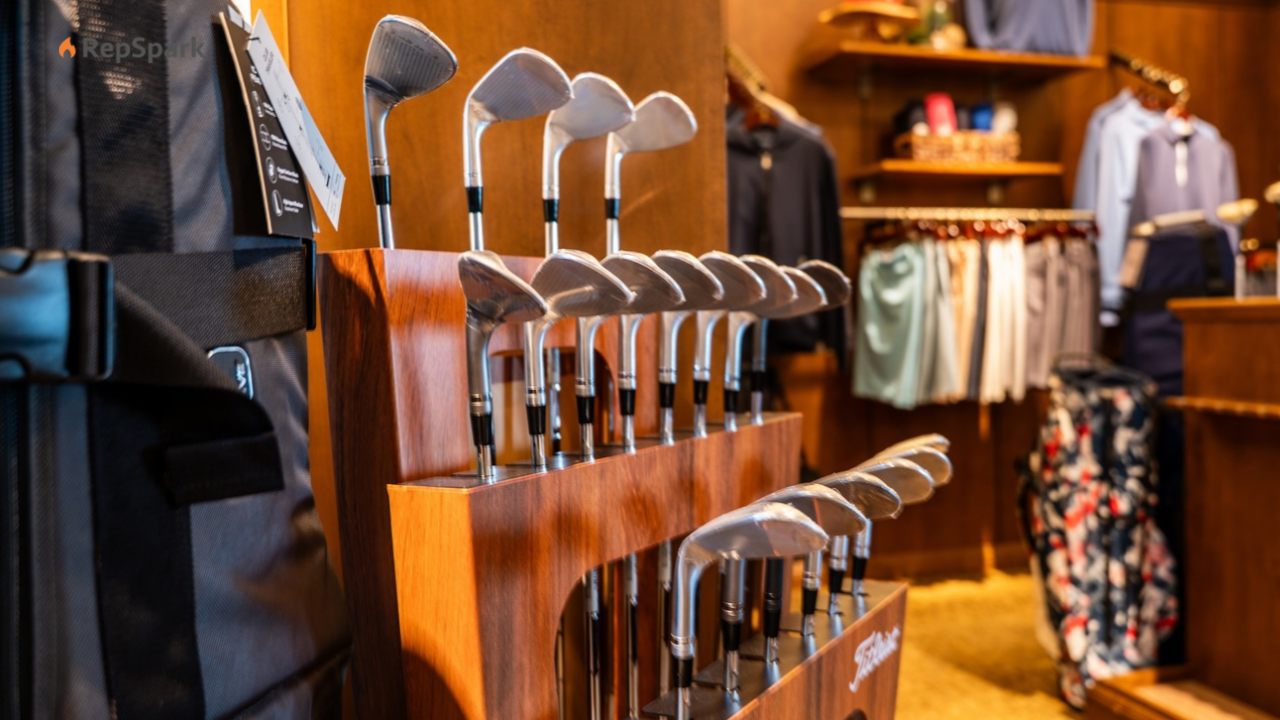
RepSpark Launches PerfectSpec™ to Simplify Wholesale Golf Club and Configurable Products Directly in the Wholesale Order

Why Sales, Ops, and Finance Rarely Agree on When It's Time to Switch Platforms

Why Some Brands Delay a Wholesale Platform Switch Until It's Too Late

What's Really Behind Declining Reorder Rates in Wholesale Apparel

Why Buyers Ghost Wholesale Reps After the First Order (and What to Do About It)

Why It's Hard to Replace In-Person Line Showings With Digital Showrooms

What Makes Choosing a Full Wholesale Platform So Difficult for Apparel Brands

What Problems Arise When Enterprise Brands Rely on Disconnected Wholesale Platforms?

Every Manual Step in a Wholesale Order, and What Replaces It

Charlie Golf Co. Brings Premium Junior Golf Bags and Clubs to Golf Retail on RepSpark

Who Should Be on the Business in Golf 100? Help Us Find Them

What Makes Implementing 24/7 Online Ordering So Difficult for Brands Growing Through Wholesale?

What Problems Do Independent Reps Face When Buyers Can't Place Orders Online, Anytime They Want